

How to CREATE MEMORABLE CHARACTERS
HOW TO GET THERE FROM HERE

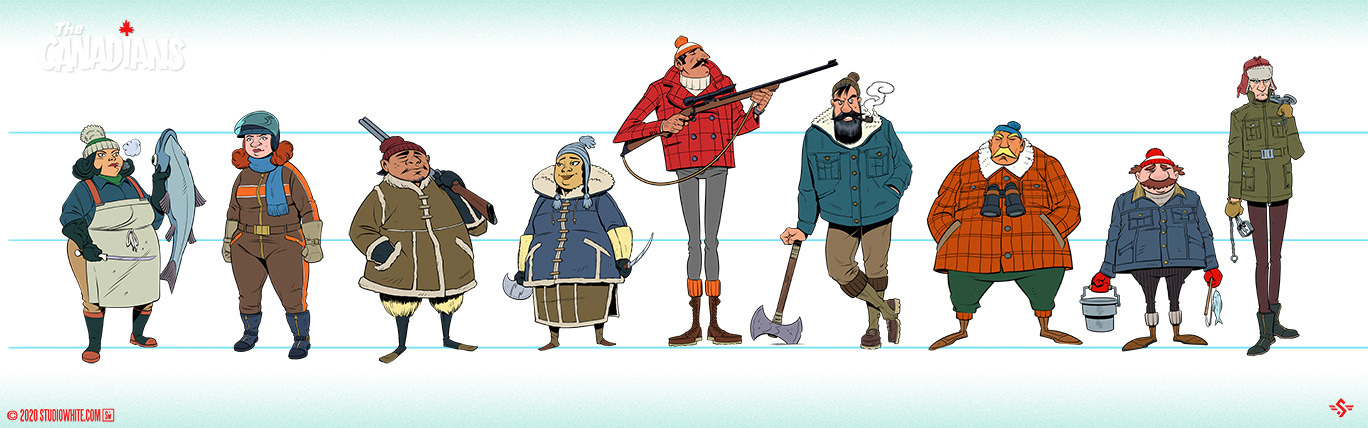
For me, a lot of projects start with a WHAT IF? but more often than not, they start with a character design of some sort. Then another...and another. Such is how I came about creating this lineup for an animated show I'm fleshing out called, THE CANADIANS.
Prefer a downloadable PDF? Get it here.
Just like with any creative endeavor, starting with the BIGGEST SHAPES will help simplify the approach and choices that follow. In terms of character development, I go with WHO IS/ARE THE LEAD CHARACTER(S). Sometimes I don't even know, but like the above line-up I can tell I don't have a lead character yet. It's a supporting cast at best and that's because I don't know what the story is. But let's explore that.
CHARACTER STORY
Most of the characters in this lineup are inspired by people I grew up around in northern New York. They're unique and yet share a common bond--the great outdoors. I wouldn't say I was an outdoorsman beyond hiking and camping. I slept in lean-tos, I built cabins and things but a lot of the people there worked year-round, toiling against the elements whether at work or play.
As the cast of characters started to grow I started thinking about legends, like Yetis and Wendigos...and aliens frozen in polar ice. My mind started grinding away on that for a bit. ENTER the What if?
What if a small town of practical-minded Canadians became involved in some kind of X-files story? What if it was more horror suspense than anything? What if not everyone was exactly who they seemed? What if the town itself was a destination for legends? See how these things work?
By creating a set of circumstances, you can ask questions of the world and the characters that inhabit that world. Remember, characters are the reflection of their world.
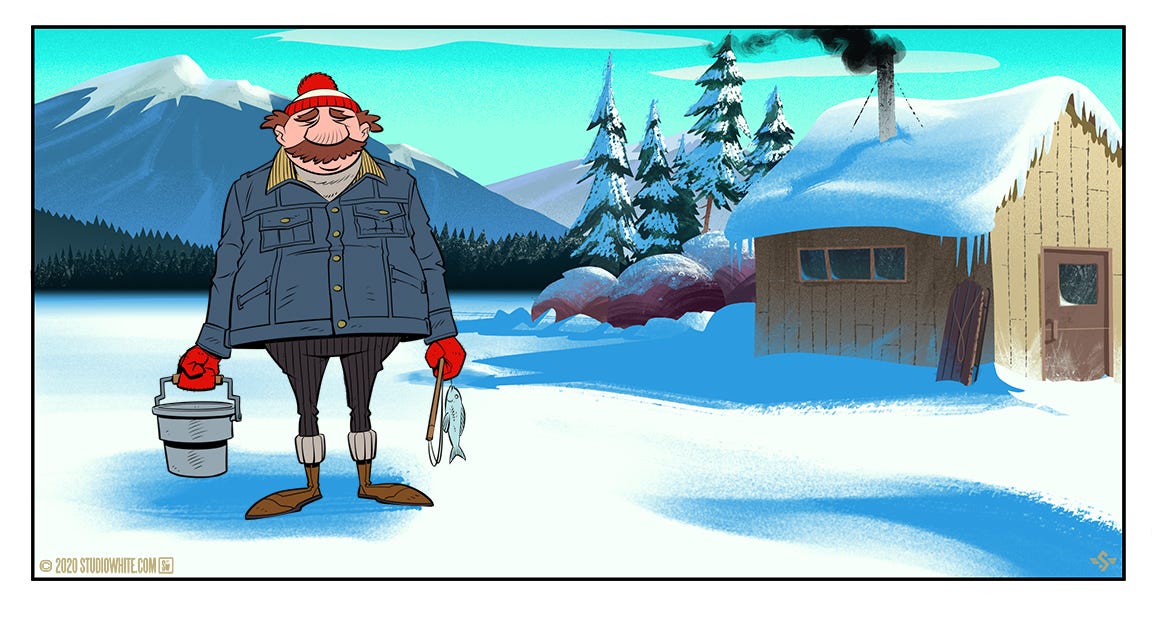
That's why when world-building I try to keep a few things in mind:
CONTRASTS- From the layout of the environment to class structure, current events, I want to make sure there are clear contrasts that are visually, emotionally, and physically compelling. This informs by writing and art.
STORY LAYERING- What is the Global Story (i.e. World War, Economic Strife)? What is the Local Story (i.e. Serial Killings, Corrupt Politician) and from there I can get a sense of the Personal Story for every character. What role do they play in these circumstances and how do their lives collide with others. Lastly there is an Inside Story, what is the story that nobody will see. The story that compels their day-to-day. Sometimes it's a backstory that creates the psychology of your character that will be the main thrust of how they move through the world.
EVENTS- What events are you planning that may bring together or repel characters? Is there a celebration, an execution, a coming together of world leaders that could be put at risk? Or perhaps there's a ticking clock element like three days until the asteroid hits earth. Sometimes this is called the inciting incident. The thing that moves the story forward. But sometimes it runs in parallel.
Usually this is enough for me to get an understanding of the characters I want to bring to life. But what about the hero character?
Since the hero is very specific, they have to be able to fulfill certain requirements of entertainment that are as old as stories themselves. In the situation I have gotten myself into here I need to find a way to express a WANT or a NEED that the hero can provide. They have to be terribly interesting and yet incredibly normal (relatable). They have to possess a skill, knowledge, or ability that makes them the keystone to the entire plot. But they also have to be flawed, like us in some way. It doesn't mean every hero needs a limp or some trendy psychological issue. Perhaps it's small, subtle, something that they can overcome or turn into an advantage.
What this phase of the process does, is makes me look at people I know as well as turning my thoughts inward.
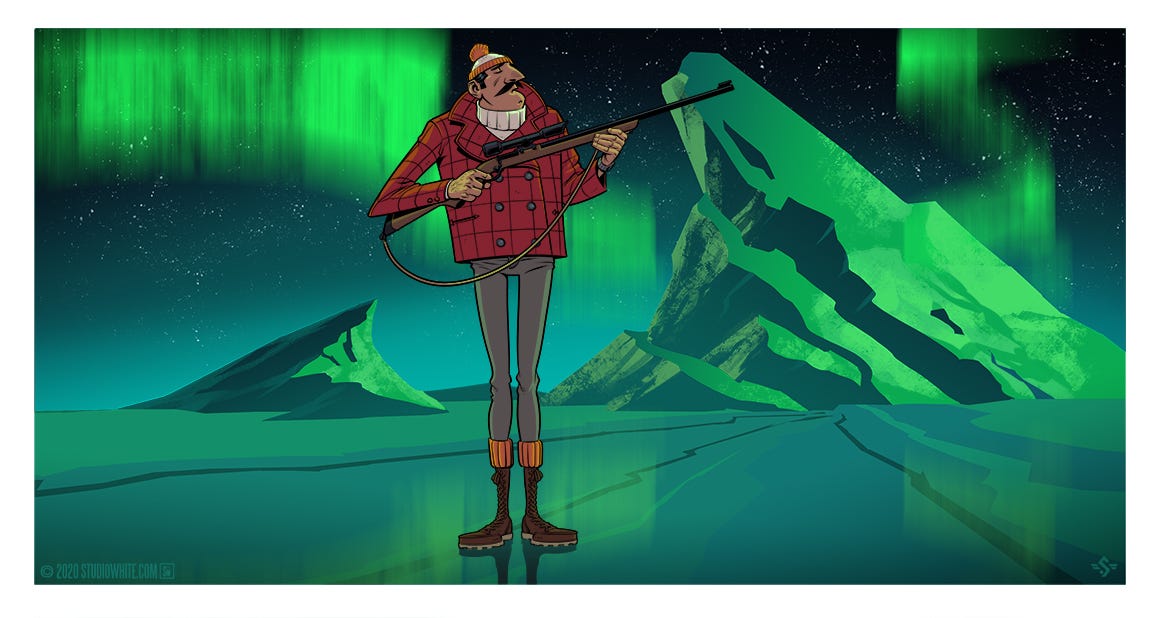
YOUR HERO DOESN'T HAVE TO BE LIKEABLE
This has been a trend I believe in television shows going as far back as Archie Bunker on All in the Family, and even further. But like the bigoted and racist Archie, he does come to his senses time and again, to be reminded of his humanity...which in turn brings him humility. Would that character or show do well today? Maybe if you had an actor as good as Carroll O'Connor. A reboot recently starts Woody Harrelson, a fine actor but I've yet to see the show.
All this is to say, PUSH YOUR CHARACTERS. Middle-of-the-road traits set you up for middling characters. A character is a reflection of the world around them. Costume aside, their character really comes out through their actions.
When I was doing community theater here in Seattle, I was in a production of Sherry Kramer's Wall of Water. I played a male nurse/doctor. I grew my hair out, I had muttonchops and basically modeled my costume after Magnum P.I. what was amazing was, once I put on the patent leather loafers, everything changed. I really got a sense of who this guy was: sincere, needy, narcissistic, tacky, scared of life, former military. Walking in someone else's shoes really does change your perspective.
There was a scene where I was supposed to enter an apartment and administer anesthesia to a patient who was quite delirious and possibly dangerous. Now I could have just walked into this eerily quiet shared apartment like nothing. But instead, I opted to be stealthy like I was clearing a room for my fellow marines. I literally rolled into the scene with an injection at the ready. Of course, I mistakenly give the wrong person the anesthesia and all hell breaks loose.
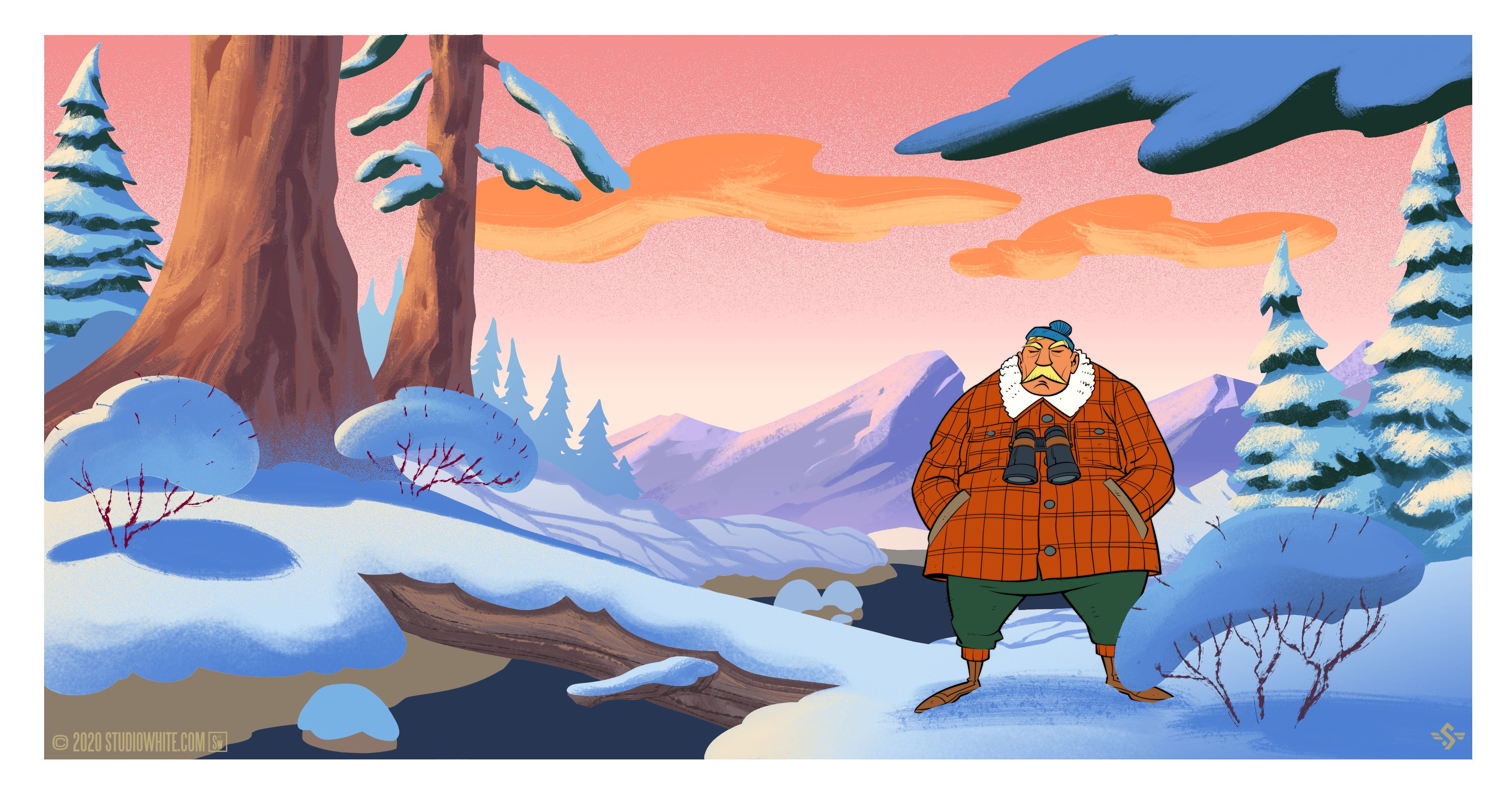
So... I wasn't the hero of the story, or the lead. It was an ensemble cast, like Seinfeld or Friends. But it's worth keeping in mind what kind of story you're telling and where you want the focus.
For now, I'm not sure yet. I feel like if I start doing some exploratory writing or sketching, I might find my hero(es) and maybe a love interest or two. I have a enough to get me started and there are many paths to choose. I'll let you know where I land.
=s=