

KEEP THAT ENERGY FROM START TO FINISH
Or...How to STAY ENGAGED!


I believe that everyone has a natural speed for doing things. Myself, I like to work a bit faster because it feels good. My brain likes solving problems quicker and my hands like to keep up with that. It’s like mountain biking. You’re moving a long a new trail at a pretty good clip and you’re problem solving several paces ahead to figure out how you’ll handle curves, your energy and speed. But in art, there lies a problem.
Finishing can seem rushed at times.
In some cases, my natural style accommodates this by being a bit looser and impressionistic. But when I need to tighten things up, I have to sacrifice speed for quality. But what I noticed early on...is boredom can set in and ruin the energy.
So how do you overcome that even if your design is exciting?
Prefer a downloadable PDF? Get it here.
One way of keeping up interest is changing your focus from finishing (releasing the result) and concentrate on stronger compositions, stronger negative shapes, relationships between those shapes and clarity of where you want your audience to look.
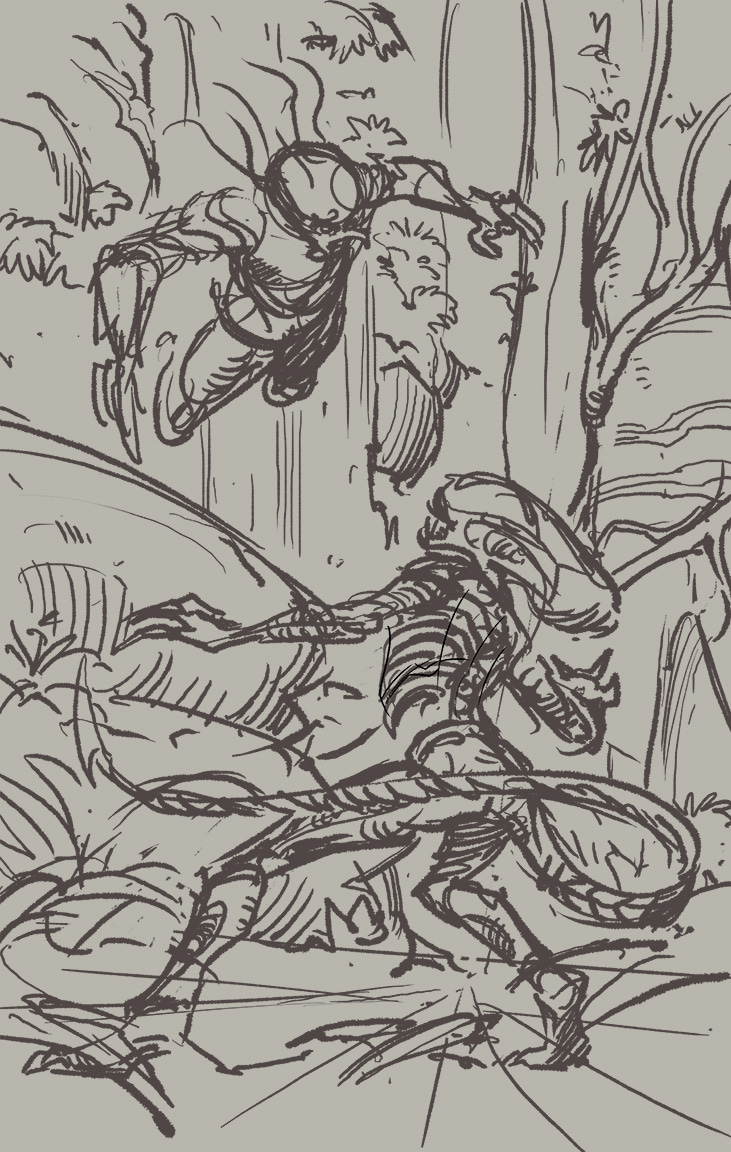
In my ROUGHS it’s all about ENERGY and INTENT. I want to make sure that the action is big and bold before my analytical brain starts questioning my creative brain and “corrects” anatomy, lighting, etc.
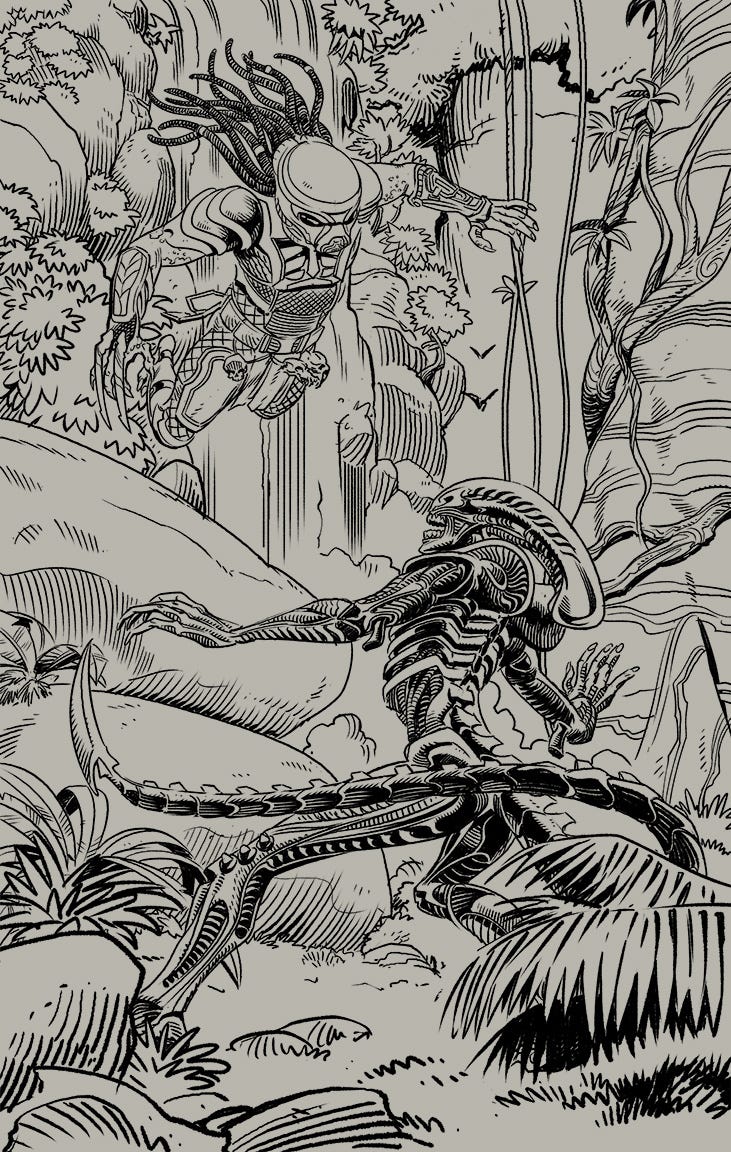
Tightening up the PENCILS can easily stiffen up the poses. Pushing the anatomy and stretching it a little can keep things interesting as long as one is consistent about it through out. Never lose the intent and refer back to the roughs often which will remind you of why you were excited about it in the first place.
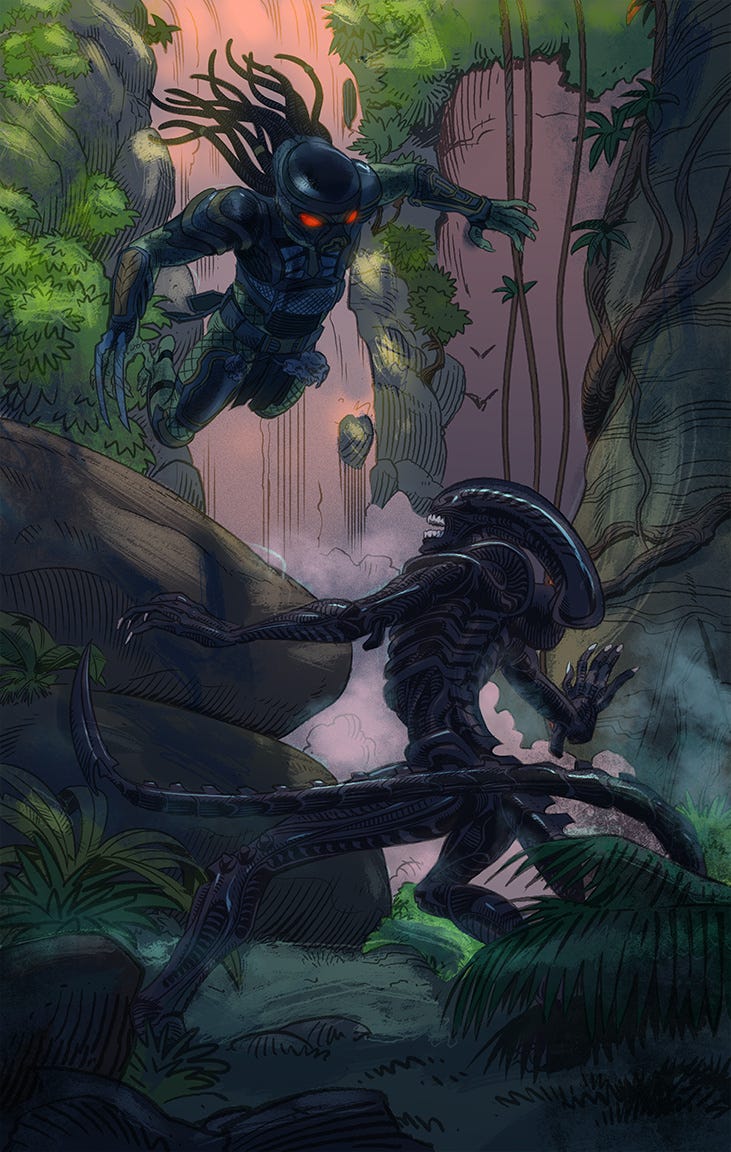
In this instance, I had planned on painting this piece from the start. So I FLATTED it, did a LIGHTING PASS and then FINISHED THE PAINTING using all of 3 brushes in Photoshop.
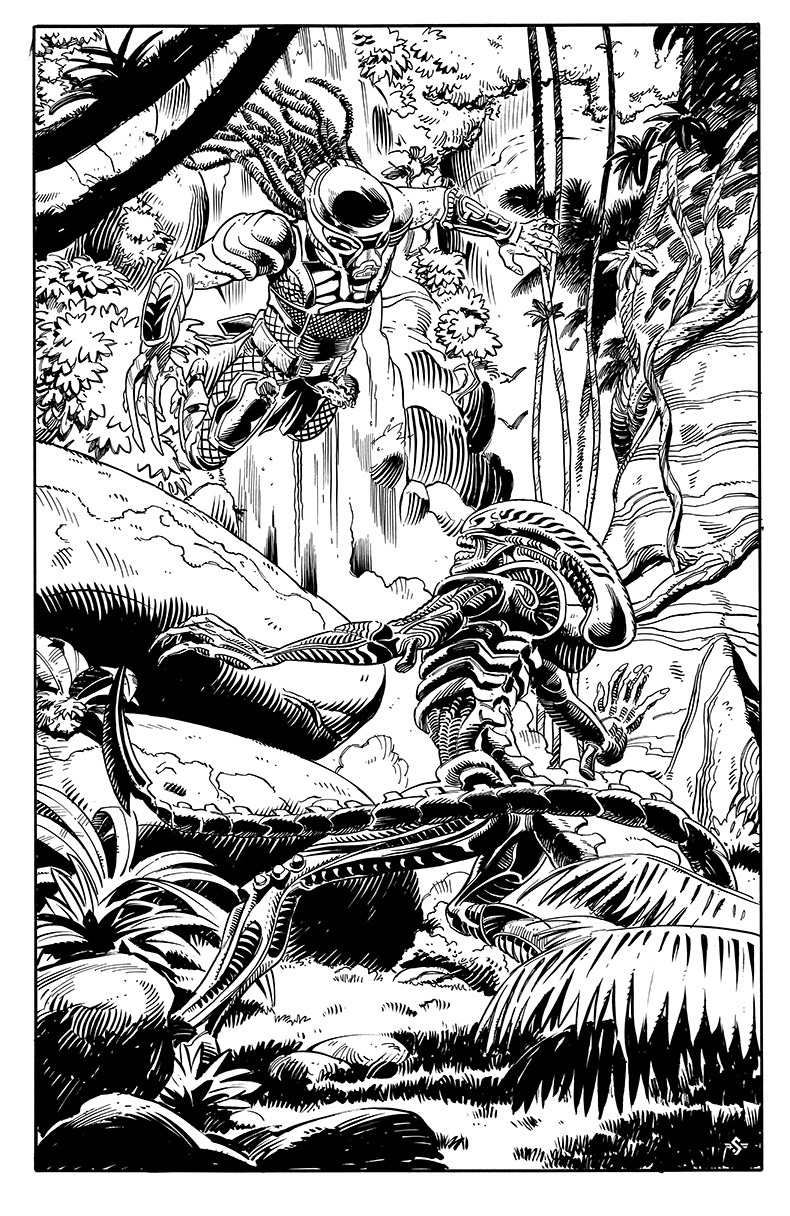
But because I really enjoyed the pencils, I thought why not go back and INK it with a crowquill and brush to see where I can further take it. In this phase the painting informed some of the choices I would make in ink, and I had some other challenges to overcome as well. Solidifying the detail and grouping my shadows was important. Finding the right size and amount of rhythm of line was equally important, too.
In the end, I realized that if I’m continually problem-solving and trying to make the piece better and more interesting the the previous phase then, I’d have a higher degree of success.
To see more check out the Making-Of video here.
=s=