

Long Story Short ★ BILL REINHOLD
How strong Influences can shape a Creative to become Undeniable

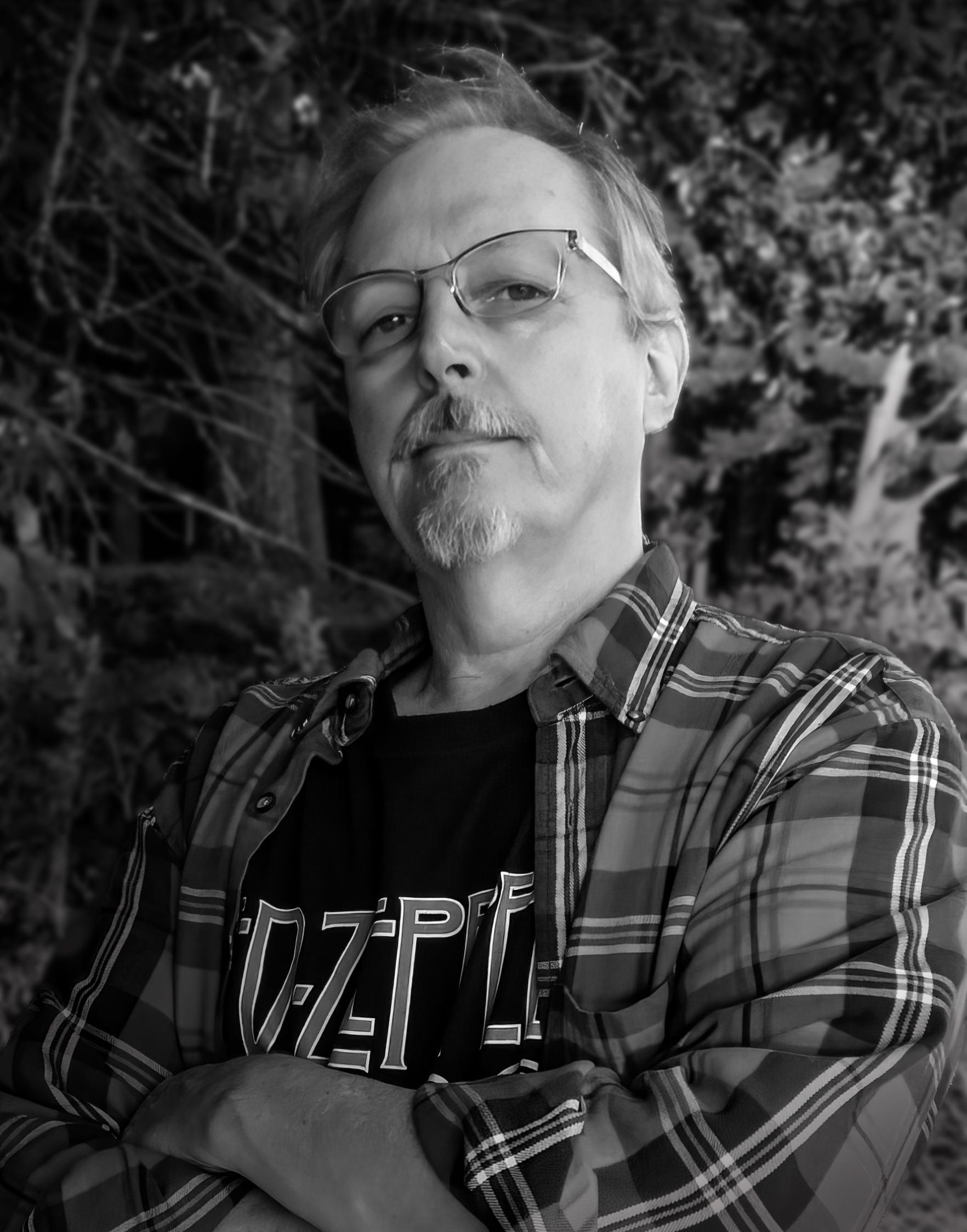
Chicago native BILL REINHOLD has made a solid 40+ year comics career that has weathered the storm of the industry. Much of it can be attributed to hard work and strong foundation skills. But there may be even more to the story.
BTP: I just read that the American Academy of Art College after 101 years just closed its doors in July of this year. You were a student there at one point. Do you feel that experience shaped much of who you were as a professional artist or were their other inputs from mentors elsewhere? How’d you feel about the closure?
REINHOLD: Well of course it's sad to see one of the oldest art schools in the U.S., who's main emphasis is illustration, close. Many famous illustrators are alumni of the school. For me personally, The American Academy of Art changed my life. It wasn't a college when I graduated from AAA in 1982. At that time most graduated with two-year associate's degree. The magic of the school was its attention to Life Drawing. Your first year as a student at the AAA, you attended a Life Drawing class for three hours a day. I attended the school for three years. Continuing that teaching along with Watercolor class and Illustration class.
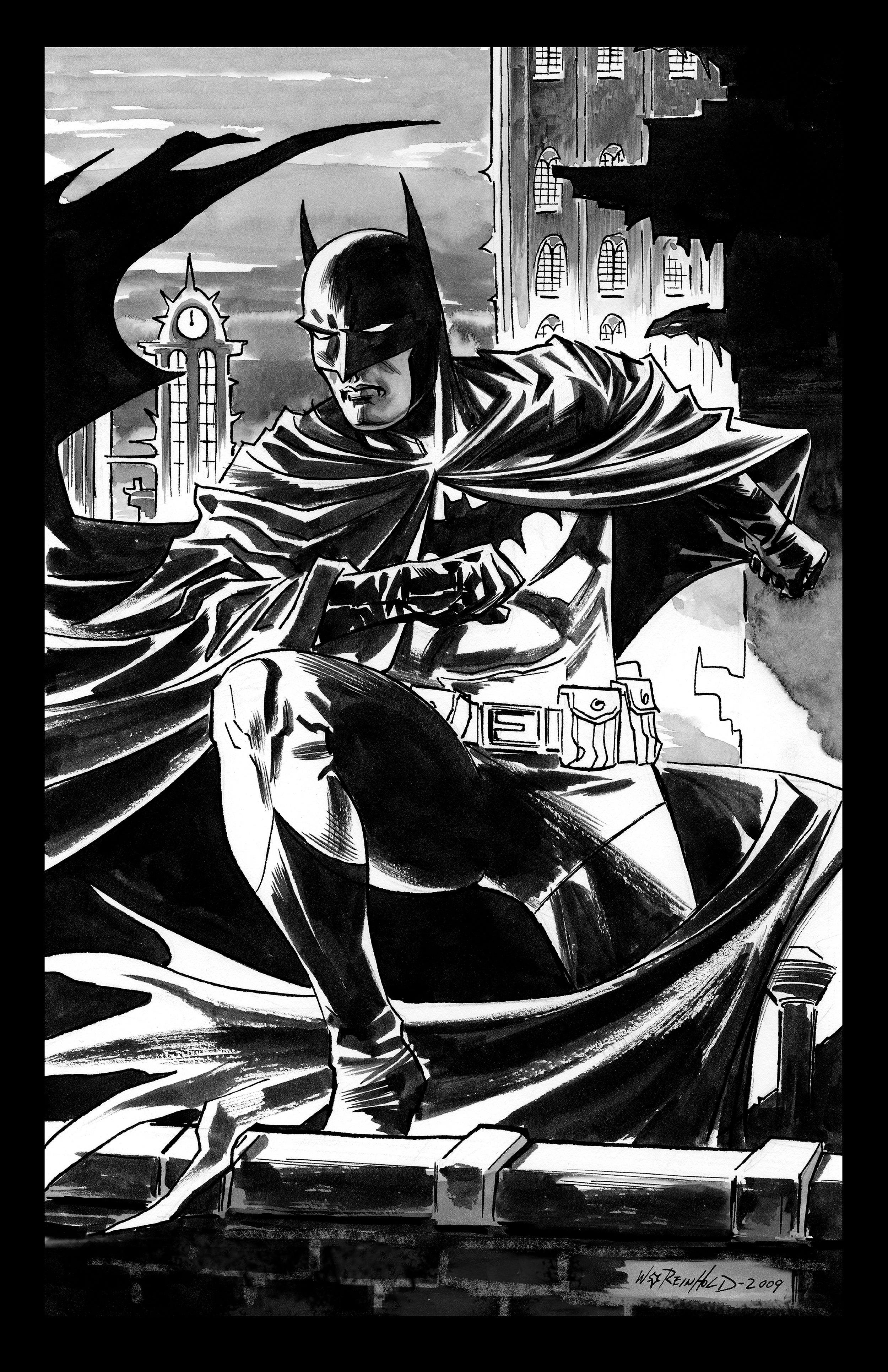
BTP: When did it become apparent that you would take that tradecraft to pursue comics and not illustration per se? I seem to remember illustration was still a much-respected career with luminaries like Mark English, Bob Peak, Bernie Fuchs, etc. Did you get any direction or support in pursuing comics?
Prefer a downloadable PDF? Get it here.
REINHOLD: Those illustrators you mentioned were huge at that time, and influenced a lot of my schoolmates, but my interest was more with older illustrators, early 20th century, or even before. I'm a huge fan of artists like Arthur Rackham, Howard Pyle, NC Wyeth, Gustave Doré, Maxfield Parrish, Coles Phillips, and as I said before Joseph Leyendecker. Comics were mostly on my mind, but children's book illustration was appealing to me also, but within a year I started seriously working in the direction of being a comic artist.
While in school i did my first 'to be' published comic story that i wrote, drew, and inked for Charlton's Scary Tales in 1981, published I think late 1982 when I was already working on Justice Machine.
BTP: The one thing that sticks out about your work is how strong your draftsmanship is, even if the work is loosely rendered. In some ways it reminds me more of illustrators like Dean Cornwell at times. What was the journey to get you that place? Were you influenced by similarly skilled people?
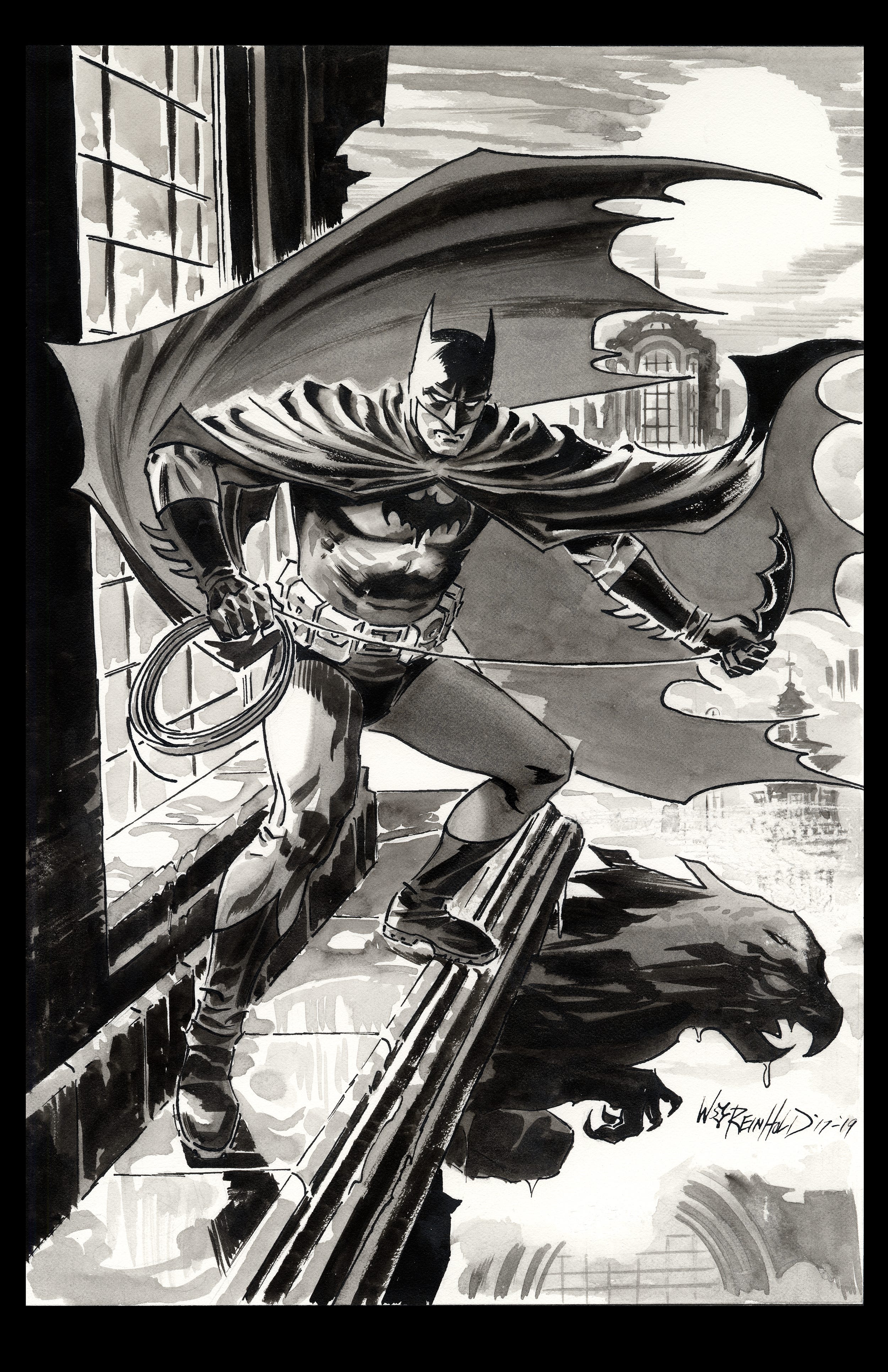
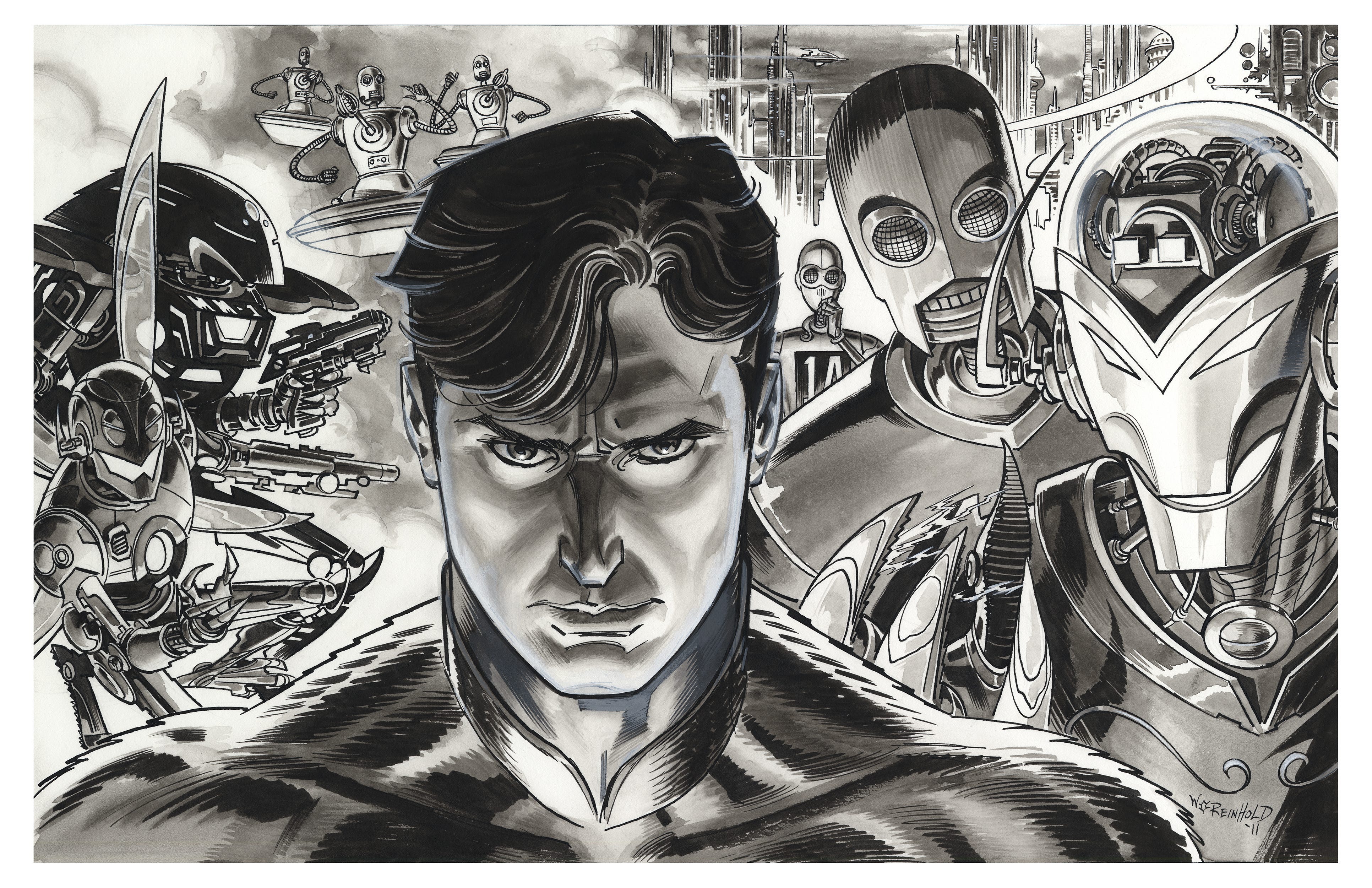
REINHOLD: What abilities I may have in draftsmanship started from life drawing, but then also extends from my general interests in anatomy, composition, architecture, etc. You bring up Cornwell. In my early career my work was tighter, and very angular. That comes from the studying of artist and teacher Andrew Loomis, and schooling, where I got an understanding of the planes of the figure, or anything in nature. It was compounded for me when I became very influenced by Joseph Leyendecker. Since then, my work has softened and become more organic. I kind of believe in learning how to draw well, and then tear it down with impressionism, and expressionism. I was very influenced by tighter artists like Gil Kane for drawing action figures, etc. Later, more organic artists started to appeal to me like American artists Al Williamson, Klaus Janson, plus Joe Kubert. Then European and South American artists, including, Jordi Bernet, Victor de la Fuente, Hugo Pratt, and later, Jorge Zaffino. The game changer to all of them was when I immersed myself in the work of Frank Robbins. Most notably when he inked himself on his Johnny Hazard newspaper strip, and his DC Comics work. I feel I should mention the other aspect of comic art besides drawing—storytelling. Many artists influence me more so for their layout and storytelling. At the top, Alex Toth, then Jack Kirby, Gil Kane, Joe Kubert, and Jose Luis Garcia-Lopez, among others.
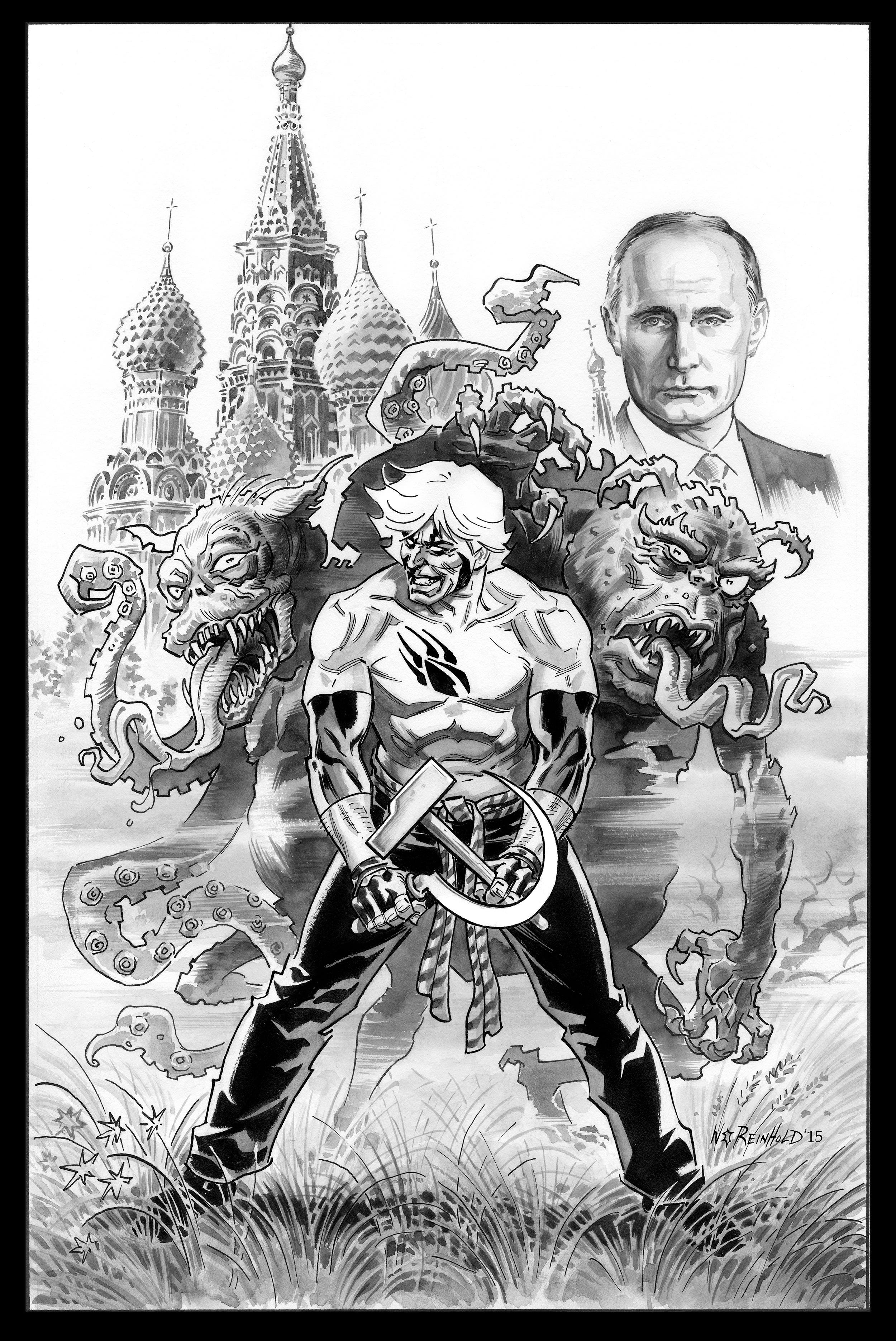
BTP: That’s an incredible pedigree of talent and aligns perfectly with what was influencing me as well over the years. Regarding carving one’s own path in terms of style and storytelling, how have you managed to stay current and relevant as the taste and appeal of comics has widened immensely? Is it a conscious thing that has pushed you to adapt?
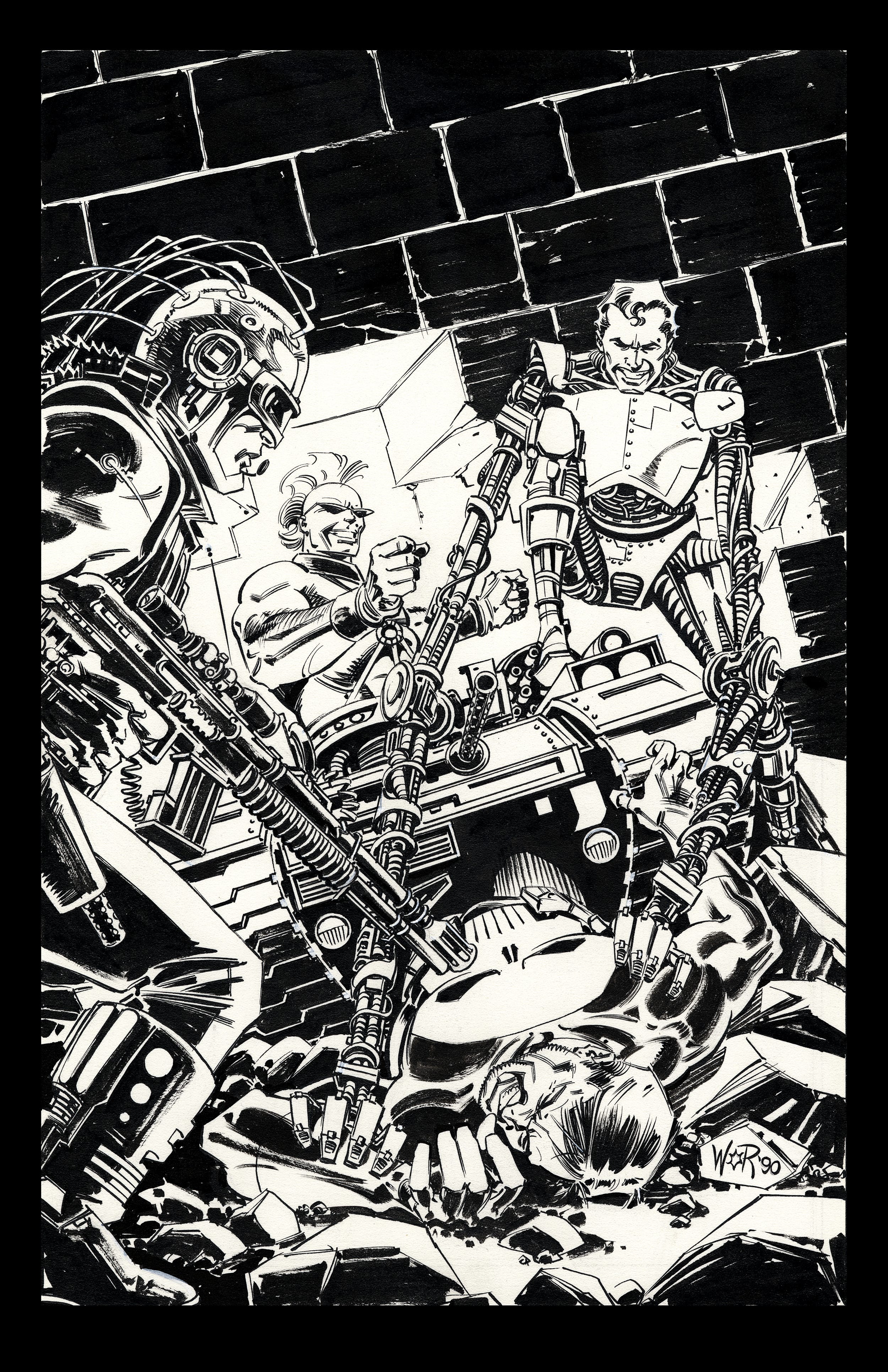
REINHOLD: I've never really chased styles. I just did what I liked. Though in the 90's when I drew The Prowler mini-series it did reflect some of the inking styles of that time, but in my own grungy way. When inking others, I will try and respect the pencilers style to some extent, so I go between my style and their interests. Like penciler Ron Wagner really liked Bill Sienkiewicz when I inked Ron on The Book of Fate.
My own work seems to get older school as I go along. For what it’s worth, no one has ever asked me to change or work in any particular style.
BTP: Meeting one’s heroes can sometimes be a good or bad thing, depending on the conditions in which we meet them. Is there a single moment meeting a comic creator that really changed your life? Who are some of your favorite people you’ve worked with in comics and why?
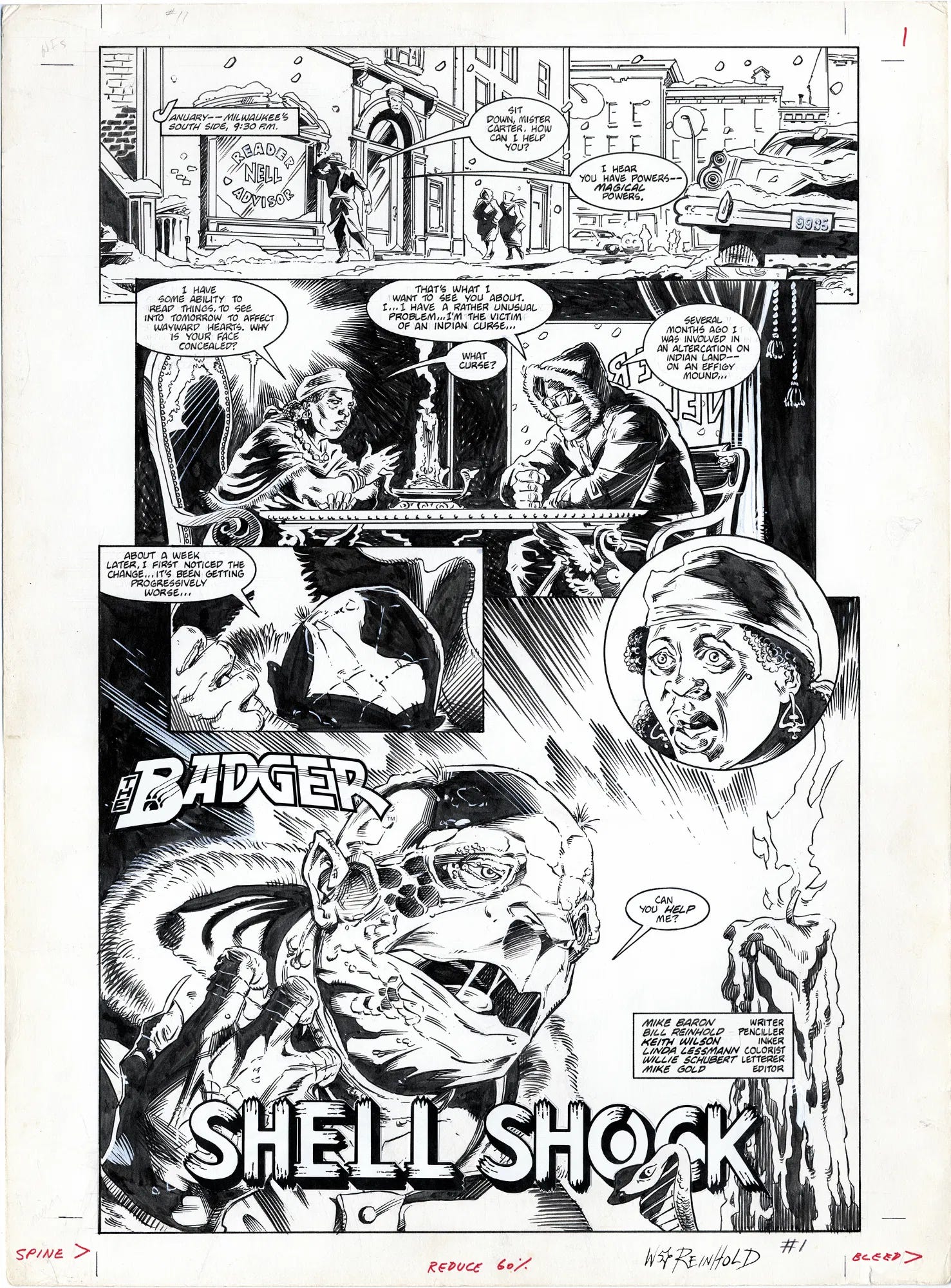
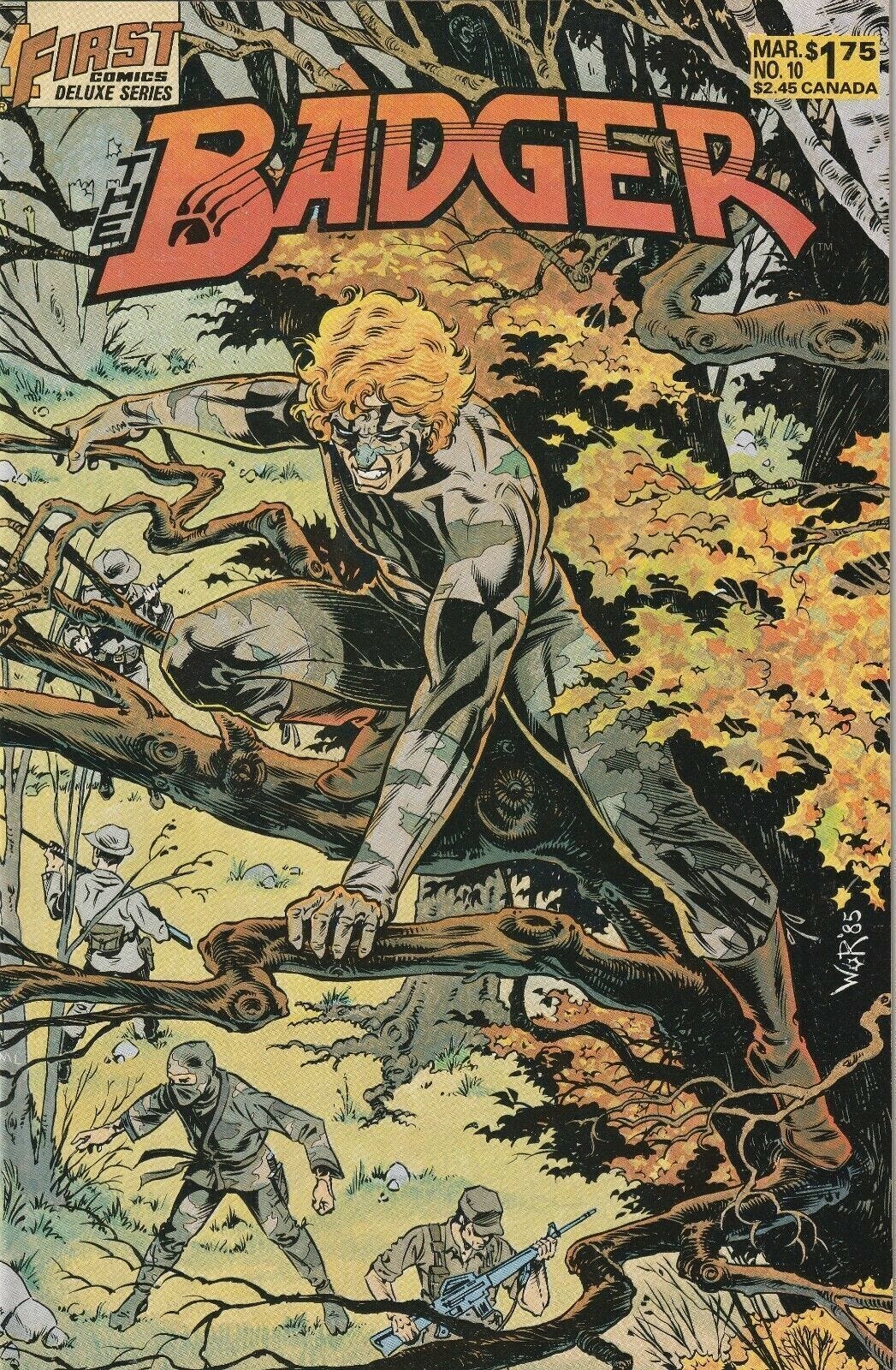
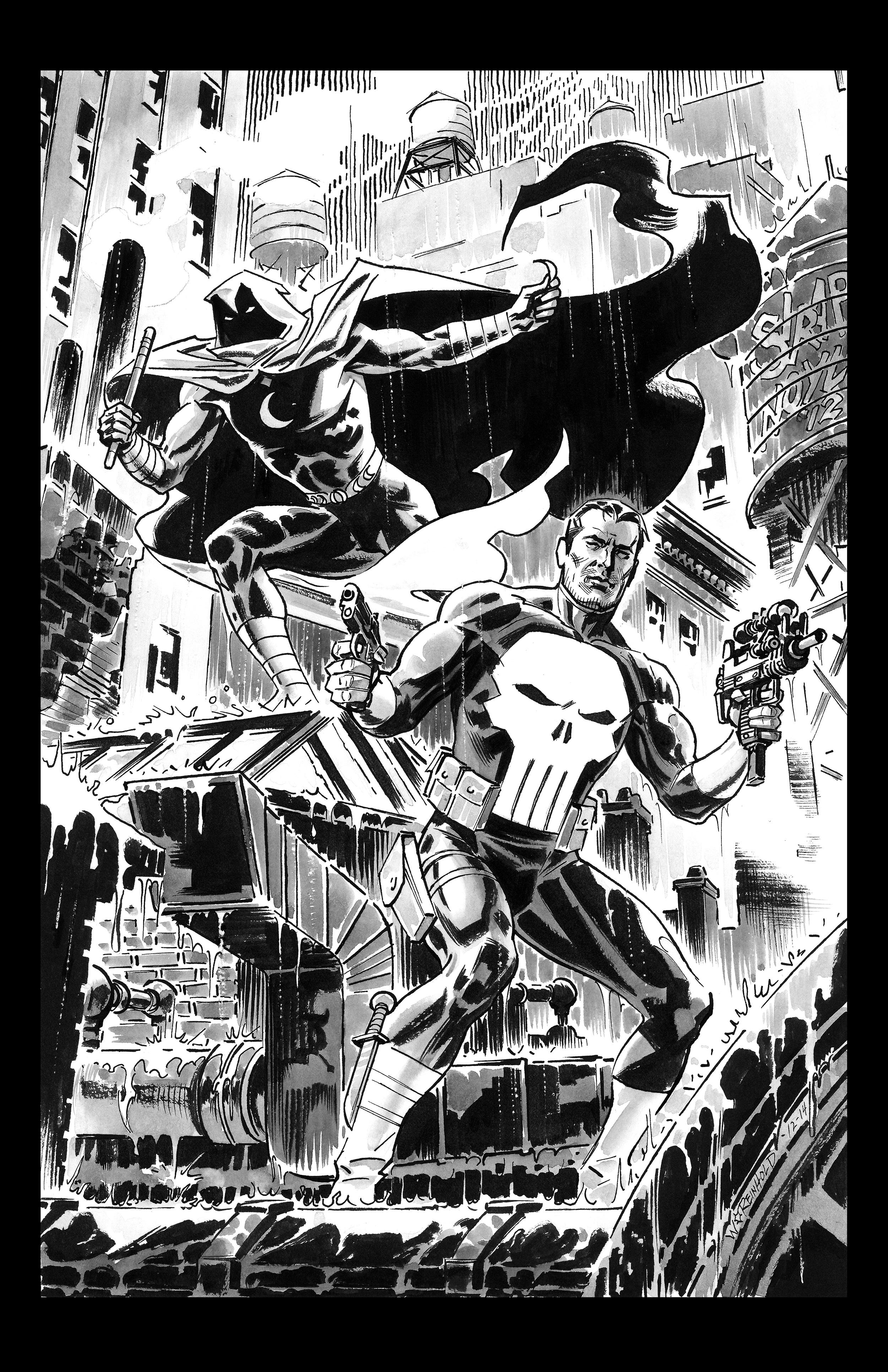
REINHOLD: Meetings haven't changed my life, but the work of the artists I've been fortunate to meet, have. Many times, it's been short encounters, but I still got a thrill from it. Like, Jack Kirby a few times, Gil Kane, Gene Colan....then getting to spend time with...P. Craig Russell, Bernie Wrightson, Michael Kaluta, Al Williamson, and Mike Royer, as well as writer, Archie Goodwin. Then long conversations by phone with Steve Ditko, Tom Palmer, and Keith Giffen. Favorite people I've worked with, is usually someone I had a long run with. From the earliest days with writers and artists Mike Gustovich and Mike Baron, drawing Justice Machine, and The Badger, respectively. Justice Machine was my first break, so I've always been thankful for meeting Gustovich at the Chicago Comic Con in 1980, maybe '81. Next was my longest run on a monthly book, The Badger, for 25 issues, plus a graphic novel. That led to years more of work with Baron on The Punisher at Marvel Comics and started my relationship with artist, writer, editor, Carl Potts, who today I am working with on a WWII graphic novel, The Flying Column. After drawing and inking my own work for many years, I put it out there that I thought it would be fun to ink another artist. Adam Kubert remembered that and asked me to ink his pencils on the book, Ghost Rider/Blaze: Spirits of Vengeance. After that it was off to the races that led to more than ten years of inking other artists. Making good friends all along the way. For example, Ron Wagner (Daredevil, Book of Fate, Batman), John Paul Leon (Challengers of the Unknown, Earth-X), Dougie Braithwaite (Earth-X trilogy, Wolverine Origins, Brave and the Bold, Punisher), and Ron Garney (Green Arrow, Amazing Spider-man)
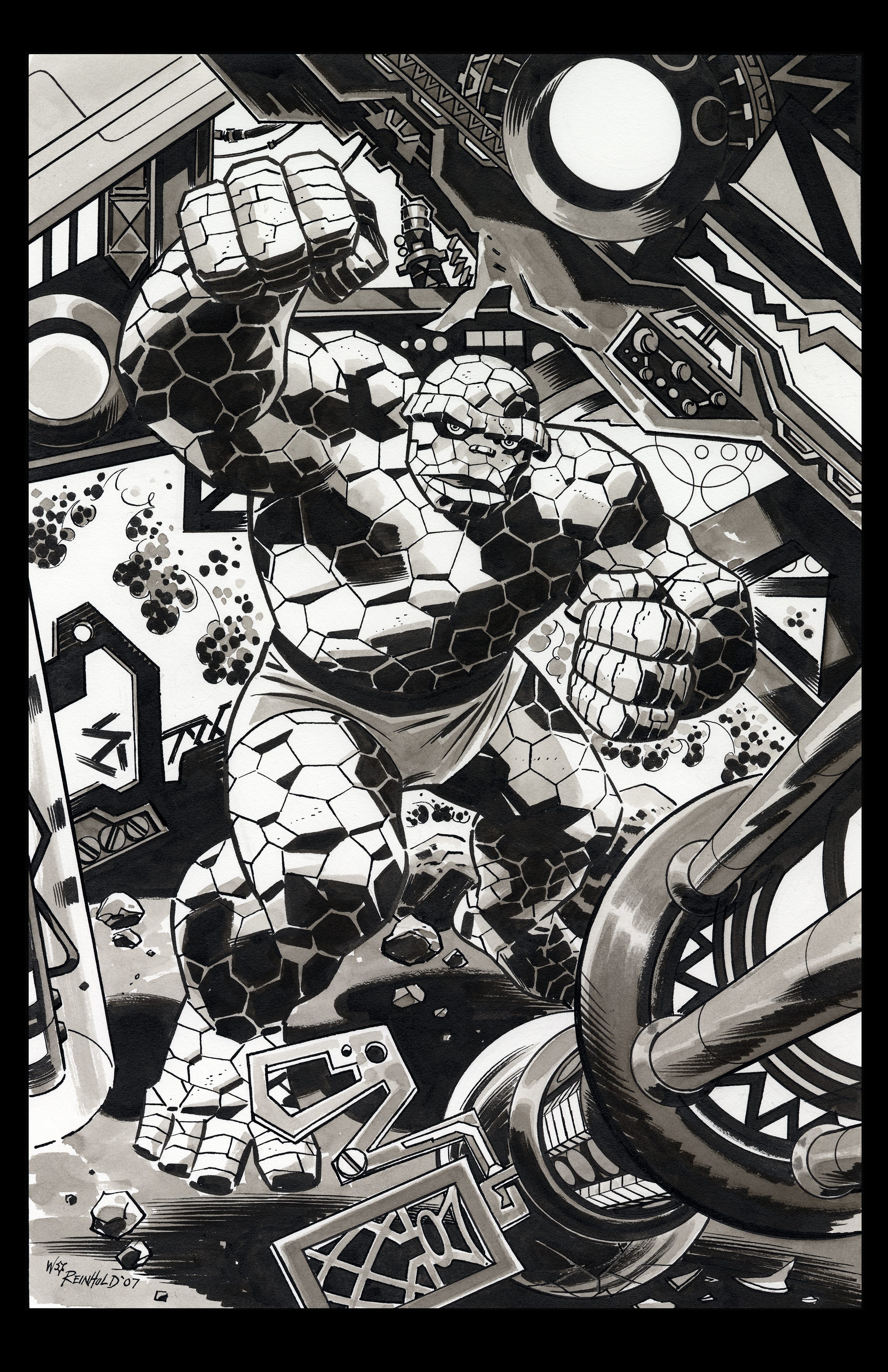
BTP: There’s so much meat here, Bill, you’re forcing me to pick a lane! I’ve met several of the people you’ve mentioned and some really memorable exchanges. Still, I’d be remiss if I didn’t ask you about Steve Ditko. For someone so elusive and different than most other creatives, how the heck did you even connect with him and what common ground did you find that made for an interesting conversation?
REINHOLD: I got the job inking Steve Ditko through then, Marvel Comics editor, Carl Potts. He knew I was a huge Ditko fan like him and asked me to do inking finishes on his pencil breakdowns. Meaning the pencils were not complete and more open line and linear. So, all of the rendering, and lighting were left up to me. Usually when I ink someone it ends up being a blend of our styles. But with Steve Ditko I tried to work completely in his style. Normally if I do finishes it looks a lot like me, but I felt that would destroy his work.
As to conversation, I took advantage of the situation and talked to him a couple of times on the phone. I'd heard that he could be a bit gruff, but he was very nice. By then he had seen some of my ink finishes on him and was complimentary. I talked to him about his more personal works, but made a point to never bring up Spider-man.
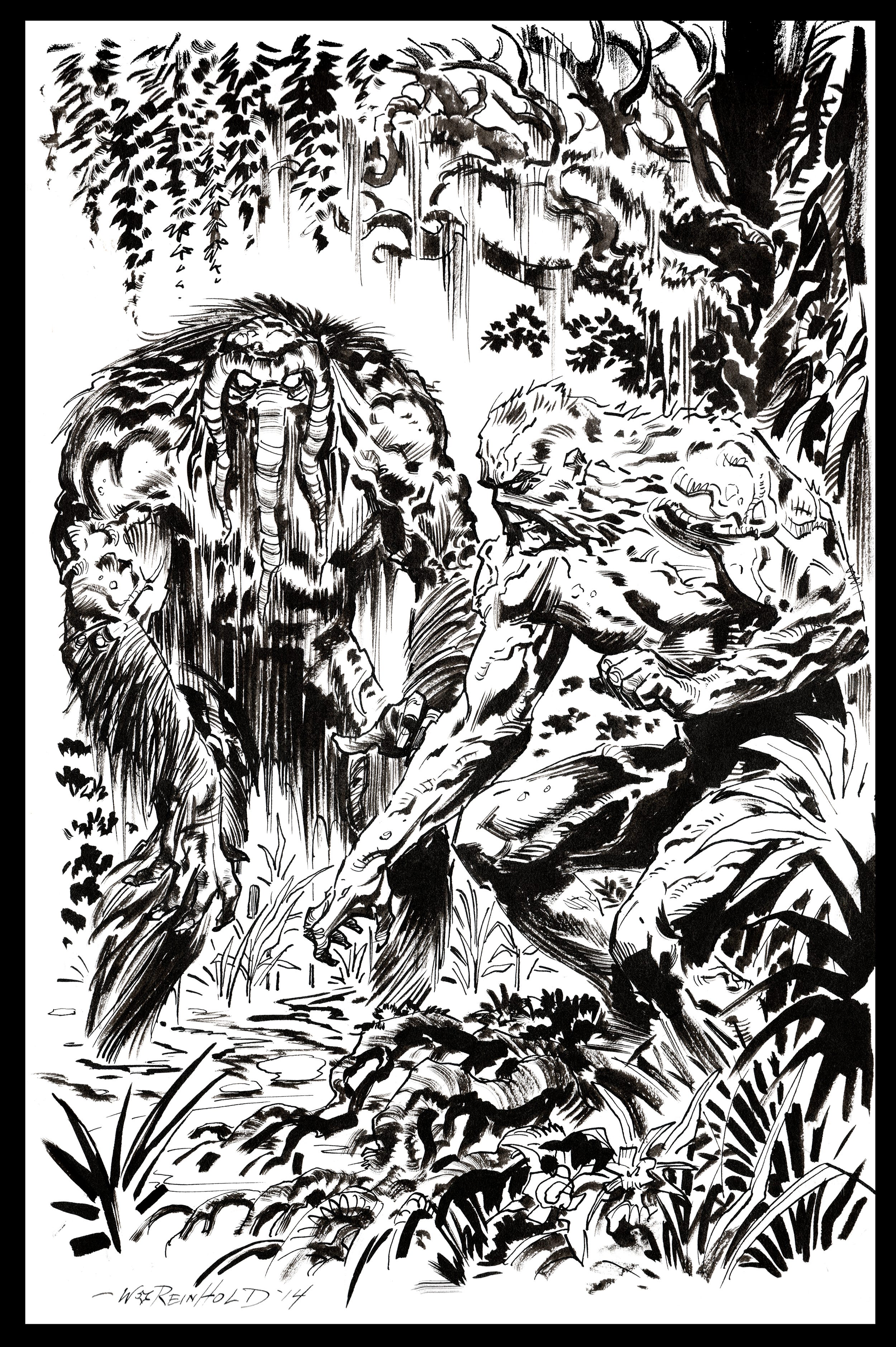
BTP: For being such a solid artist how is it that much of your career you inked other people? Was it easier to keep a steady paycheck coming in or was it harder to find penciling work?
REINHOLD: As I mentioned before, my start at inking was the interest in jamming with other artists. It was not from lack of penciling work. I sort of had to force myself to stop taking inking jobs to pencil and ink my own work again. But, yes, inking is breezier, and potentially a way of turning out more work, hence a higher paycheck. Though that may or may not be true back in the days of higher sales and royalties.
BTP: It took me a solid eight years to learn how to ink decently with a brush. And that’s after my friend Marc Lamport (Rust, The Flame, etc.) showed me the basics. I’ve admired your work over a lot of people as well, but never thought I could hack it as an inker and stay sane doing it. Did you learn on the job, or did someone show you the specifics? How much problem-solving do you do with a brush when inking others rather than going in and tightening up the pencils, then inking them?
REINHOLD: No one particularly showed me how to ink my own work, but in 1980, when still in art school I showed Joe Rubinstein my portfolio at the Chicago Con, and he suggested I bring in a drawing that he could ink as a demonstration. That night I did a drawing of Conan. He inked it as I watched, and I learned a lot.
I was always inking my own work to some extent, even if only the covers. Even before I drew professionally, I inked my own work in art school, sketchbooks or fanzines. Inking my own work, I do a lot in the inks, as the penciling is not complete. Especially by the time I drew the Badger. It was a crazy schedule, and I would often ink my rough layouts finishing them in ink. Really not that different than doing tight pencils. I just happened to be holding a pen or brush.
When inking others, the only time I added some pencil first was when inking someone's breakdowns. I'd gesture in lighting and shadows before going in. When inking someone's tighter pencils, I'm always embellishing some anatomy, architecture, or adding different textures. I prefer inking what I call "traditional pencils". Not super tight and drawn line for line. In fact, most pencilers I had a long run with would start to trust me. Their pencil rendering would loosen up and become more gestured and the line rendering left to me.
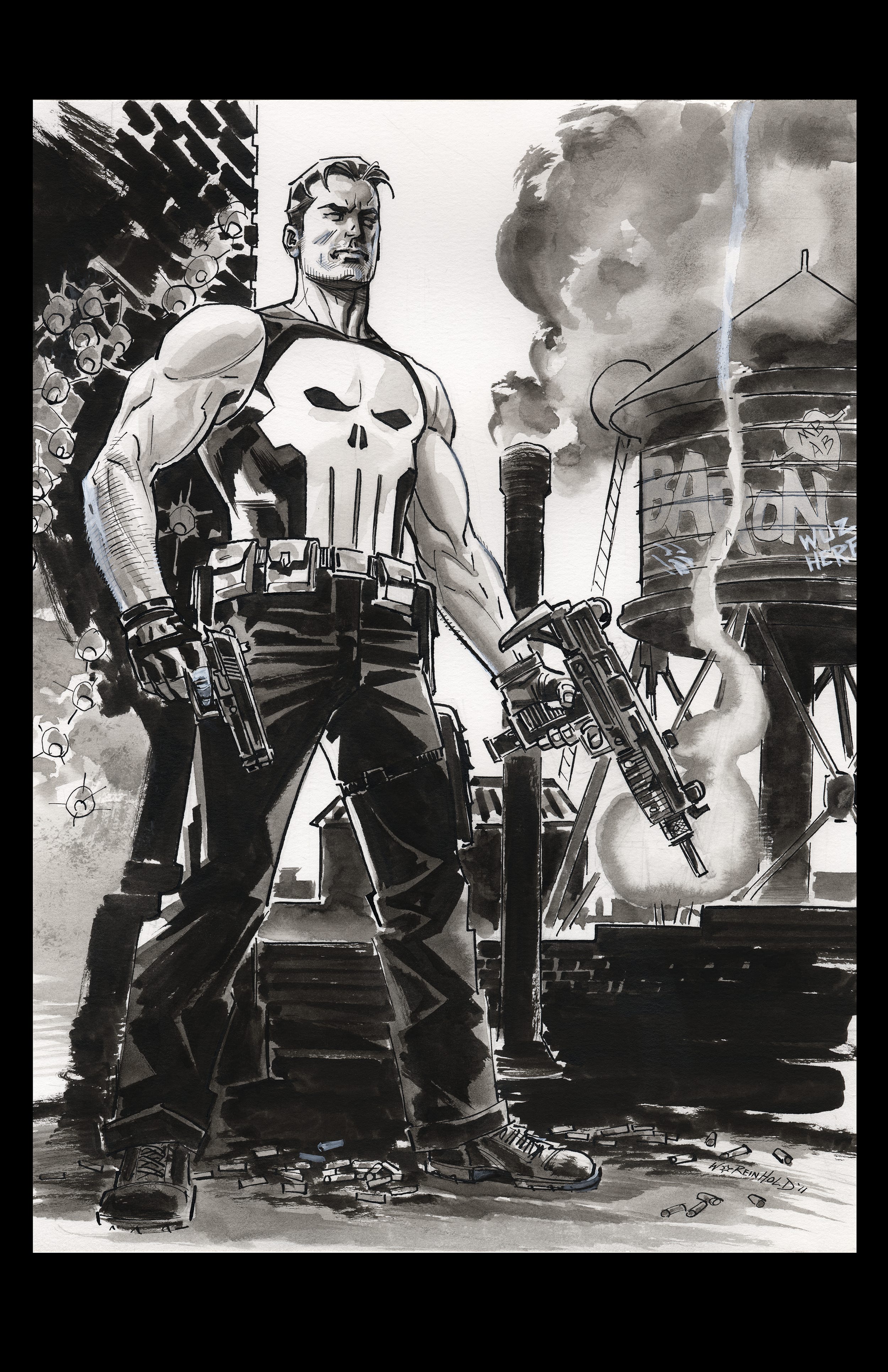
BTP: I remember meeting you a few times over the years. One was at a Chicago Comicon when you were working with Mike Baron on The Badger. And the other time might have been San Diego Comicon. The latter I remember you were concerned about your slate of work as you were only booked a couple months out. What steps have you had to take over the years to keep the work coming in and in what ways has that changed as editors have come and gone?
REINHOLD: Often comics work is only a couple, three months of work slated, so you're always chasing the next gig. The thrill of freelancing! Most of my work I've gotten has been from the request of a writer or artist to work with me. But yes, always disappointing when a long relationship with an editor ends and they move on.
BTP: It’s amazing how this process works. You’ll be working on a project and then suddenly you’ll get contacted out-of-the-blue to take on more work. Has it ever backfired on you where you had an embarrassment of work in front of you because of the freelancer curse of saying, “yes”? How did you handle that situation, and have you ever worked with assistants, in a pinch?
REINHOLD: I often didn't say yes, especially to last minute jobs. As an inker I wasn't super fast so would decline the, "We need ten pages inked this weekend." So I was usually inking a series on an artist I admired. I actually enjoyed an occasional job with a less experienced penciler so I could add more of my own embellishments.
When I was inking a lot of other artists, my wife Linda would do panel borders, and basic straight lines on architecture, etc. Then I would do freehand embellishments to those lines to make them more organic. If I get pretty tight pencils with ruled lines, I often freehand those instead of using a ruler to ink them.
Also used assistants, usually other pros, a few times inking other pencilers. Never my own work. Pencils are too loose for them to ink my work. I would send pages to an assistant and maybe ask them to ink all the figures, but not the heads or faces, or even skip whole panels.
Then I would touch up or embellish everything after they sent it back. Never usually more than a third or more of a book.
BTP: The support of a significant other can be very crucial to one’s success as a creative. It’s amazing that you and your wife Linda have both been working in comics for such a long time. How important is the comics community in Chicago for you two and has that been a helpful network to keep alive? Do you have separate studios, or do you both share a space?
REINHOLD: The comics community in Chicago was growing when I started out, and with not living in New York, I really valued my friends in illustration and comics there, plus working for First Comics in Chicago where I got to witness so much great work being done.
Like Steve Rude pencils, or finished Howard Chaykin, and Jim Starlin comics. Before meeting my wife, Linda Lessmann at First Comics, working in the crazy schedule of freelancing was sometimes a strain on a relationship. I met Linda when she started coloring my Badger work. After waiting through a couple boyfriends, we started dating and then married in 1987. Living first in her apartment with separate workspaces, then when we got our house where we built a studio in the basement. Our two drawing tables were side by side. Both of us having been artists most of our lives understood the trials and tribulations of being a freelance artist.
BTP: It’s fantastic that you two were able to connect and actually be able to work together as well. There’s nothing more satisfying than having someone who understands exactly the struggle of the work and deadline pressure one is under. Because there’s essentially zero commute for you both, how do you unwind and transition back to domestic life with family and friends? Do you have activities that let you both put the work in the rear-view mirror so-to-speak?
REINHOLD: Just spending time with our kids and the usual. We are best friends also, so we like a lot of the same TV shows, movies, etc. Though when the kids were young, and Linda was coloring full time, we would sometimes hire a sitter, to sort of nanny them to keep them from constantly asking for our attention while we worked. Linda assisting me inking was at best part time.
I was the one who kept going with a crazy schedule.
BTP: When you think back on your career was there a moment in time that you had serious doubts? That the industry might collapse, or you might have to find other work? How did you handle those times? Have you ever had to take other freelance outside of comics?
REINHOLD: I have to say, that whatever ups and downs the comics biz has had in the over 40 years I've been doing it, it never particularly affected me. I've been fortunate to always find work. Any real strain I've put on myself was more because of personal choices in projects or my work output. At my start in the early 80's in art school and soon after, I first took on other freelance illustration in business or advertising, plus some gaming work, while doing comics. But when comics became full time, and more, by 1985, comics were pretty much all I did, except for occasional commissions.
BTP: That’s great to hear. A real testament to solid training, discipline, and skill. With the films pushing much of the comics medium in unexpected ways how do you imagine the art form growing, outside of the variety of comics alone? Are there comics today that have made you take a second look because they were really pushing the art form?
REINHOLD: Actually, outside of film and television using so many comic creations, I just wish more people were reading the actual comics. I'd rather see the comic biz grow more than anything else. I wish graphic novels were as popular here as in Europe. There are fewer readers here and the pay is lower than ever. If I went back to Marvel, I bet I'd be lucky to get a page rate as high as I did in the 90's to the 2000's.
Artists pushing the art form further than the past? I'm not sure. Without naming names, and leaving someone out, I think there is fantastic work being done in comics today! I'm inspired by so many newer artists.
BTP: What do you think your legacy would be in your contribution to the comic book medium? Are there any stand-out moments that you look back on fondly? What are they?
REINHOLD: Kinda hard to describe your own legacy. I think that's more for others to do. I'll just say that I'm most known for my earliest works, like The Badger and the Punisher, even if I feel personally that I've surpassed those works. But that is pretty normal for people to remember best where you first made your mark.
BTP: I guess I look at legacy like everything was clicking together for you. That you were able to say exactly what you wanted the way you wanted, to the best of your ability. That may differ than what the public believes, it may be an unsung project that you look back on fondly on because of dramatic personal growth. I’m rereading Frank Miller and David Mazzuchelli’s DAREDEVIL work for the first time since I was 15. I’m not sure anything tonally was even touching that stuff, no slight to Walt Simonson’s THOR either. But Miller obviously was on a rising trajectory. Is there a story you’ve yet to tell that for whatever reason hasn’t made it onto your schedule yet?
REINHOLD: I just want to finish my WWII graphic novel, then it's hard to say. Part of me would just enjoy doing full time commissions and cons. We'll see.
BTP: Outside of comics what keeps your batteries charged?
REINHOLD: MUSIC! Before I worked as an artist, I was a drummer in rock bands in the mid 70's. Even though I thought I was doing well as a drummer, it just hit me one day, almost like an epiphany, that music wasn't to be my career. Shortly after I put my attention back on art. Now I jam once in a while and live through my son Michael, who is a better drummer than I ever imagined I'd be, in his Chicago area band 'Lever'.
BTP: I kind of had a feeling you were going to say music. You have that vibe. My first foray was into drumming as well, but unlike you, I wasn’t very good. It’s great that you’ve been able to pass that onto your son. Did anyone else in your family have the music or artist “gene” that spurred them to live a creative life?
REINHOLD: My dad played drums, and my brother Jim, eight years younger than I, has been playing drums in bands most of his life, and to this day. He's in a Chicago blues band. Plus, my first relative who moved from Germany to the U.S. was a drummer in the Revolutionary War in the 1700's.
BTP: One thing I wanted to ask before I let you go. A lot of your training with the human figure was excellent. The naturalness in much of your work is clear. But when it came to The Badger, my having learned martial arts at a young age and being a huge consumer of Shaw Brothers Kung Fu films, what level of research did you go into to make his fighting seem authentic?
REINHOLD: First, Mike Baron has been studying martial arts his whole life. He would do physical demonstrations with me, like how to throw a punch, or hold your leg for a side kick, which a lot of the time is drawn incorrectly in comics. But course I had a lot of martial arts magazines and books and watched a lot of films. Back in those days, Mike would do crude thumbnails, as panels, for his scripts with dialogue in balloons above characters. Not to be followed as layouts, but just instead of writing out the descriptions. He also used this method to choreograph fight scenes. Which I would change with all different angles and even the number of panels.
BTP: Thank you so much for sharing with us today, Bill. We really appreciate it. Where can people find out more about you and your upcoming projects like “The Flying Column” with Carl Potts?
WEBSITE: http://billreinhold.com/
INSTAGRAM: https://www.instagram.com/billreinhold/
TWITTER: https://x.com/billreinhold