

Long Story Short ★ MARK SCHULTZ
POWERFUL as a T-REX and Just as CREATIVELY UNCOMPROMISING!

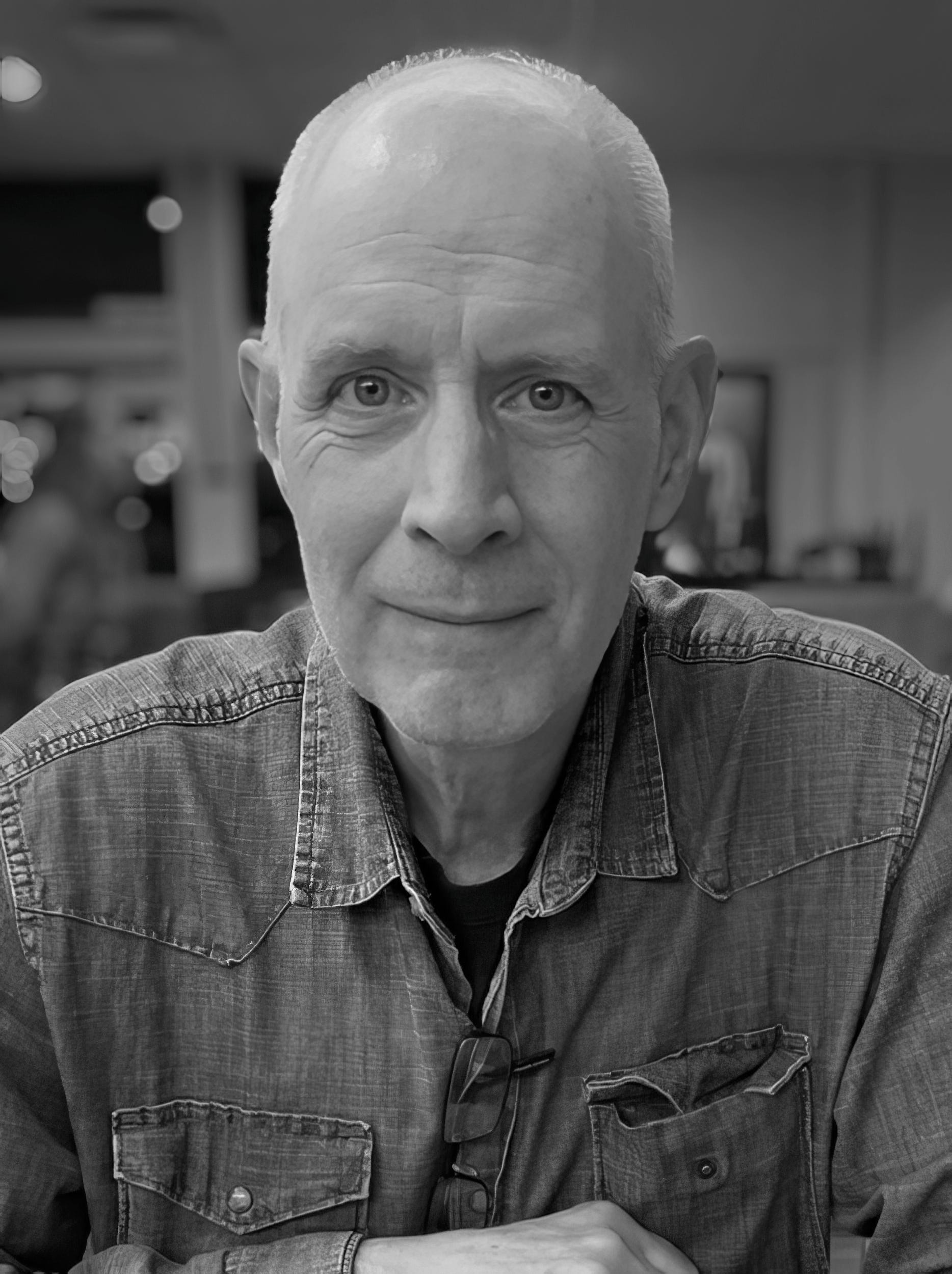
It’s been a great pleasure in having interviewed fellow Pennsylvanian writer, comic creator, and illustrator, MARK SCHULTZ on our BEYOND THE PROCESS podcast. As a follow-up to the highly anticipated video interview, I took some time to add to the conversation about his work on Xenozoic Tales, working in comics, and as a writer of such things as Prince Valiant and Storms at Sea.
BTP: In our interview with you, Mark, you mentioned “students”, but I never got around to asking you if you were teaching or not? In what capacity and where have you been instructing?
SCHULTZ: I have led seminars and programs at a number of schools, mostly here in Pennsylvania, but my longest relationship has been with the Savannah College of Art and Design’s Sequential Art Department. I’ve been appearing there as a visiting artist since 1994 and have taught on faculty a couple of times. I haven’t done much teaching in recent years, but I enjoy my opportunities to work with up-and-comers.
BTP: What changes did you notice in the students from when you started teaching in the 90s to when you finished at SCAD? What specifically did you teach about comics?
Prefer a downloadable PDF? Get it here.
SCHULTZ: Lots of changes. When I first visited SCAD, I’d estimate that the students in the program—which was relatively small at that time--were 95% male. Now, having grown to a much larger program, I’d estimate it’s somewhere in the neighborhood of 80% female. In the ‘90s the comics that inspired the majority of the students were what I’d consider contemporary superhero fare. But that’s evolved over the decades—now what brings young creatives into the field is manga. Overwhelmingly, and not surprisingly.
The other big, obvious change from the ‘90s until now is the students use of digital programs to create their comics. For most, digital has become the preferred medium. And that gets to my particular value as a teacher, I think—although I have taught comics storytelling and illustration courses, I am most often asked to demonstrate traditional, physical rendering techniques, and to promote the idea that there is a great deal of value in keeping those skills as part of your repertoire. Even if digital will remain your main tool for production. I have done a ton of demos showing the versatility of inking with a brush. I emphasize that the ease with which you can do corrections in digital can be a trap—learning to work with the accidents and “mistakes” that come with physical media can lead to new ideas that can be integrated into your skill set.
BTP: It’s good to see that you’re keeping the eternal flame of traditional craftsmanship alive. In regards to your career after college you said you had been doing technical illustrations for product manuals for some time before you picked up a brush to start inking, is that right? How long did it take you to get comfortable with a brush before you started getting work and were capable of realizing your look and feel for Xenozoic Tales?
SCHULTZ: Well, they weren’t quite technical illustrations—they were more in the “how to” mode—but they were largely executed with the dead-weight line of rapidographs. I had dabbled in inking with a brush for years, going back at least to my college years, but would repeatedly give up in frustration. Then, shortly before I began my comics career in 1986, I picked up some freelance advertising work that required me to mimic Walt Kelly’s style, so I started getting serious about handling a brush for inking at that point. But it wasn’t until I decided to try my hand at comics that I sat down and made myself get to a certain degree of consistency, inking with a brush. So, you could say it took me at least ten years to even get started being comfortable with an ink brush. For those early Xenozoic stories, before I met Al Williamson and had a chance to study his collection of originals by the greats of adventure cartooning, I was just trying to emulate Wally Wood. Seeing Al’s originals really opened my eyes. Honestly, I’m still figuring out what’s possible with the brush.
BTP: For me it took about eight years where my work was publishable, but it took even longer to figure out my own personal style. Having original art to look at certainly helps as well as inking other artists. Were there any artists that you learned from by inking over their work?
SCHULTZ: The only artists I ever tried inking over were Wally Wood, back when I was starting my serious attempts at comics, and, more recently, Roy Crane, in an attempt to figure ways to simplify my comics drawing. Mostly, I’ve benefited by being able to spend time studying originals, trying to figure what sort of tool the artist was using, and how they might be manipulating the tool. It’s a lot of guesswork because most of the artists I’m looking at practiced decades and decades ago, and the brushes, inks and boards they were using no longer exist, at least not at the same quality. So, for instance, I can look at the spectacular drybrush work of a Dan Smith, or a Herbert Morton Stoops, and try to understand and incorporate some of what they were doing, but I know I’ll never be able to duplicate their technique. All I can do is try to do a take on their techniques and see if it fits with my intentions—if it naturally integrates with what I am trying to do.
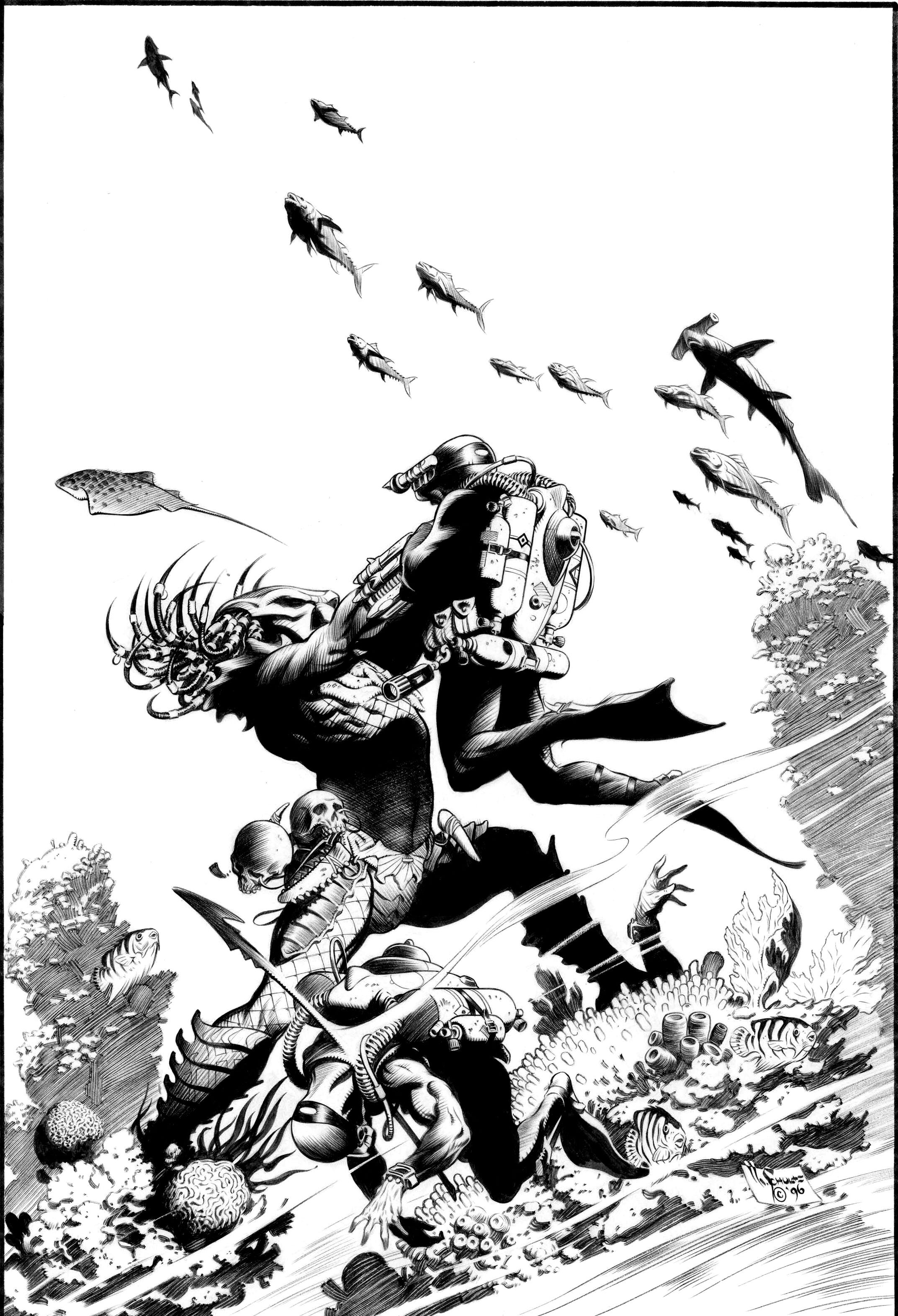
BTP: That’s the beauty about artists who can study and synthesize what it is they like about other people’s work, to create something new for themselves. When you first started the XENOZOIC TALES series in the 80s was fellow artist Steve Stiles part of your plan? How did you two meet and begin working together?
SCHULTZ: I did the first issue of Xenozoic Tales by myself—I think it was twenty-eight story pages —and that just about killed me. I was completely blowing the schedule that I had hoped to keep. I was miserable. So, Denis Kitchen suggested that I get some help going forward. He knew that Steve, a cartoonist with whom he had a long-standing relationship, was looking to pick up some work. Steve and I talked and hit it off. He inked two of my stories in the second issue—he did a great job, but I’m too much of a control freak to feel comfortable with anyone’s inks but my own over my pencils, so after that he did his own complete art on the Xenozoic back-up stories. He was a great visual storyteller—he always elevated my scripts and our collaborations made it possible for me to continue Xenozoic Tales. But we didn’t physically meet until well after he had come aboard.
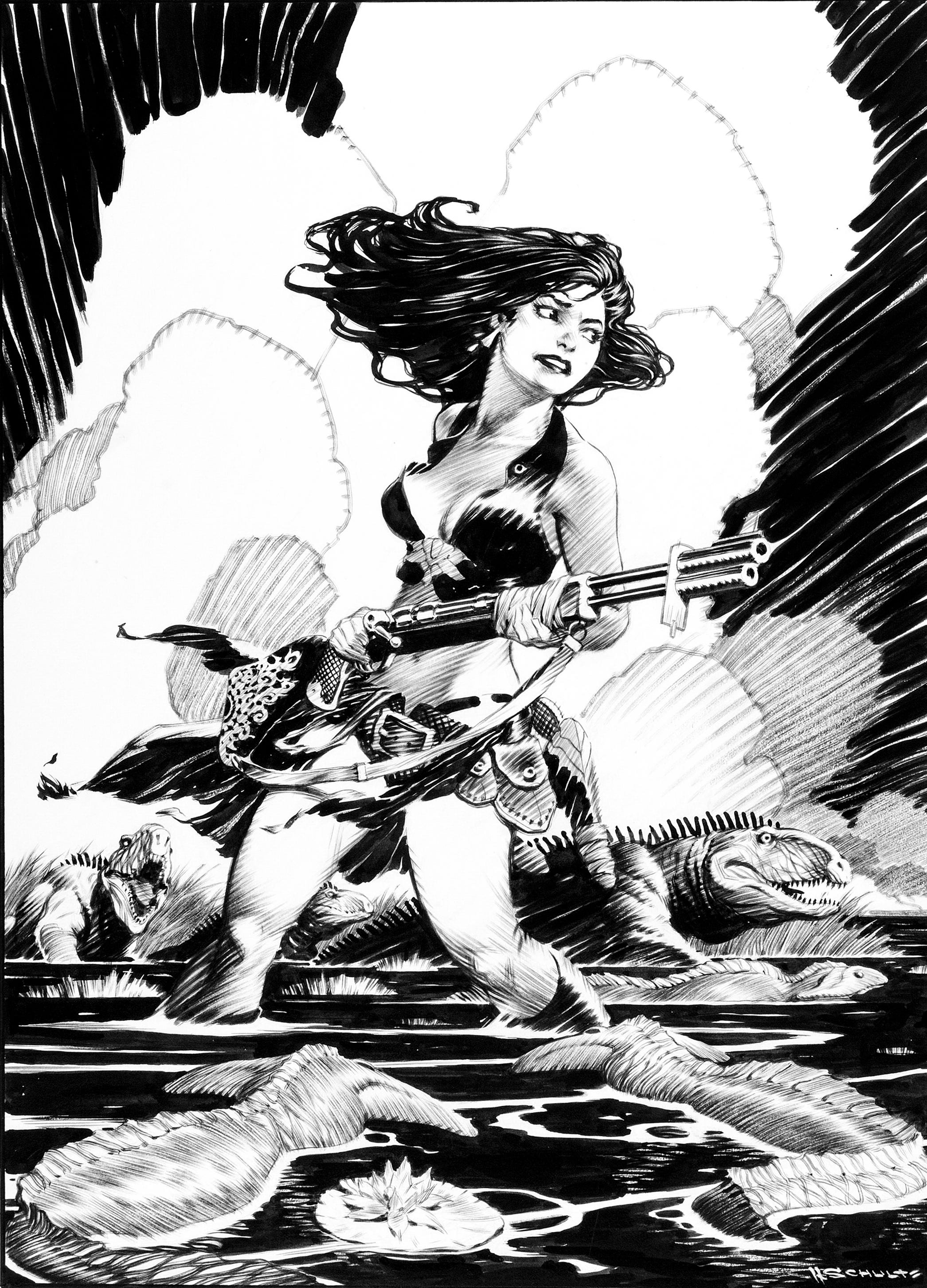
BTP: Oh boy...now I’m nervous to even tell you, I actually did an episode of BEYOND THE PROCESS where I inked a piece of your work to see if I could figure out how to ink you. I’d wanted to buy a piece for a long time, but could never get on the list. It was always too full or something. Anyway, it’s the closest I’ve gotten to owning a Mark Schultz original. And boy howdy, did I learn a lot! If there was an opportunity to work with an inker from the past or present who are the top three that you would have loved to work with and why?
SCHULTZ: I have seen that episode and your inking looks great! We will have to discuss getting an inked Schultz to you, if you remain interested. [OF COURSE! Who wouldn’t be? =s=]
Yikes—only three? I have had the great opportunity of working with, and learning from, Al Williamson, and there are few if any better at using elegant linework and well-spotted blacks to propel action forward. But since I did actually work with Al, I will not include him on my wish list.
I guess, to narrow this down, I will keep with artists who were known for their drybrush prowess. Dan Smith is an obvious choice as is Herbert Morton Stoops—I mentioned both of those illustrators before. Maybe number three should be Frank Hoban—both he and Stoops did beautiful, loose drybrush illustrations for the interiors of the Blue Book pulp. I could really use some lessons in loosening up and keeping more of a sense of spontaneity in my inks. Of, course, the more I think about it, I would have also benefited from lessons with upper echelon pen men like Franklin Booth or Joseph Pennell. And I guess it would be crazy to pass up time with old masters like Francisco Goya or Giovanni Tiepolo. This is a cruel mental exercise.
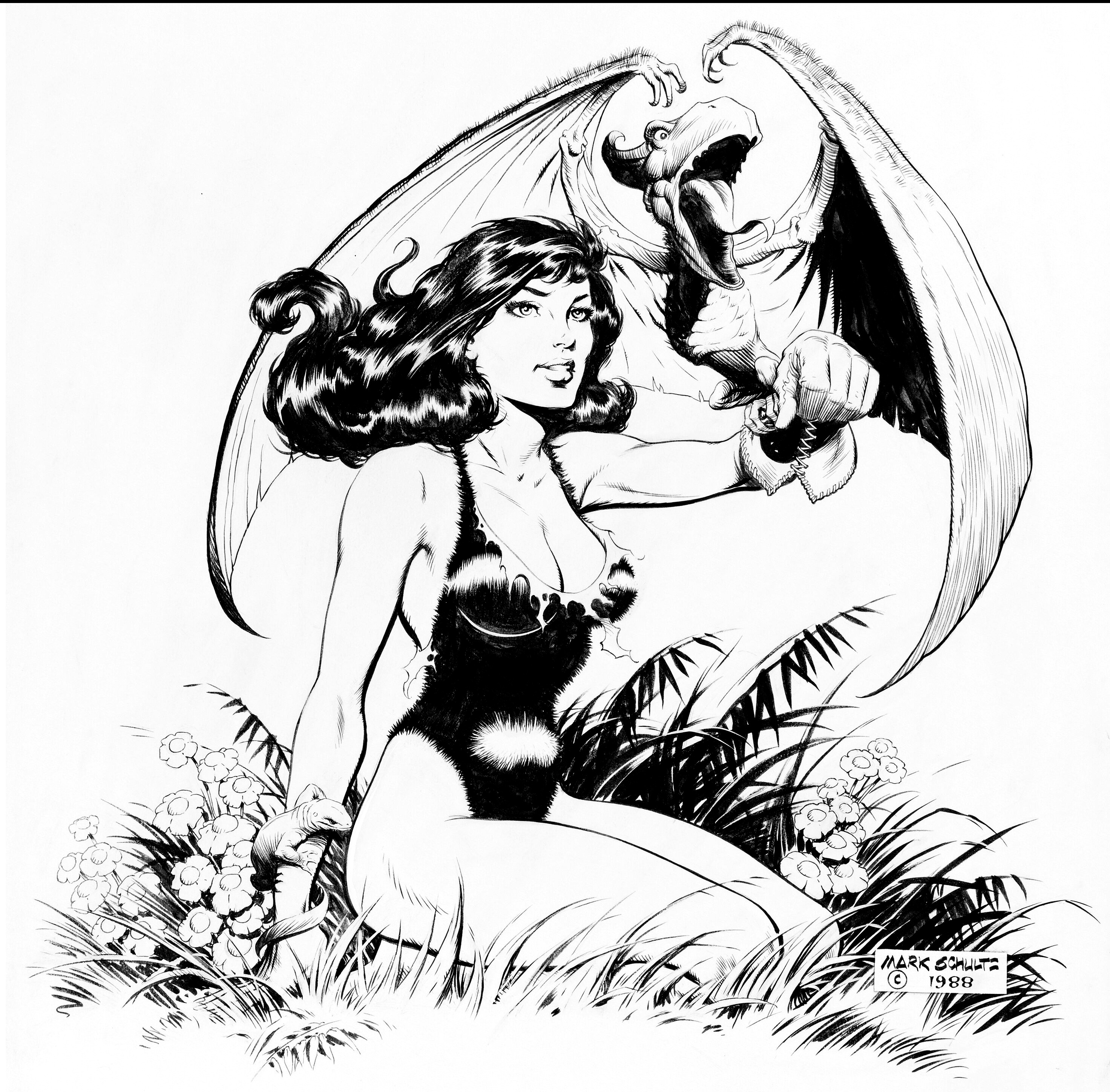
BTP: You’re way too kind, Mark. The truth of the matter is, I actually inked it twice and only filmed the first one. The second one turned out better. But yes, It’s like picking a favorite child, I would assume. All those you mentioned were just stellar. Personally, I think I’d add Frank Godwin, and William Meade Prince to that list as well.
Have you ever considered collaborating on an anthology of Xenozoic Tales where you write all the stories and invite some of your favorite artists to contribute? It’s such a wonderful sandbox to play in, I’m sure there are a ton of people who’d love to join (me included of course!)
SCHULTZ: That’s an idea that gets tossed around every so often. Decades ago, Kitchen Sink and I talked about an anthology, and more recently, John Fleskes has brought up the possibility. I would love to see it happen, and there are a few artists who have expressed interest. But it’s a project that would entail a lot of work and scheduling and up-front money. I would want to have a successful new Xenozoic story by me out there on the market first, to help drum up interest for a project that would be expensive to produce.
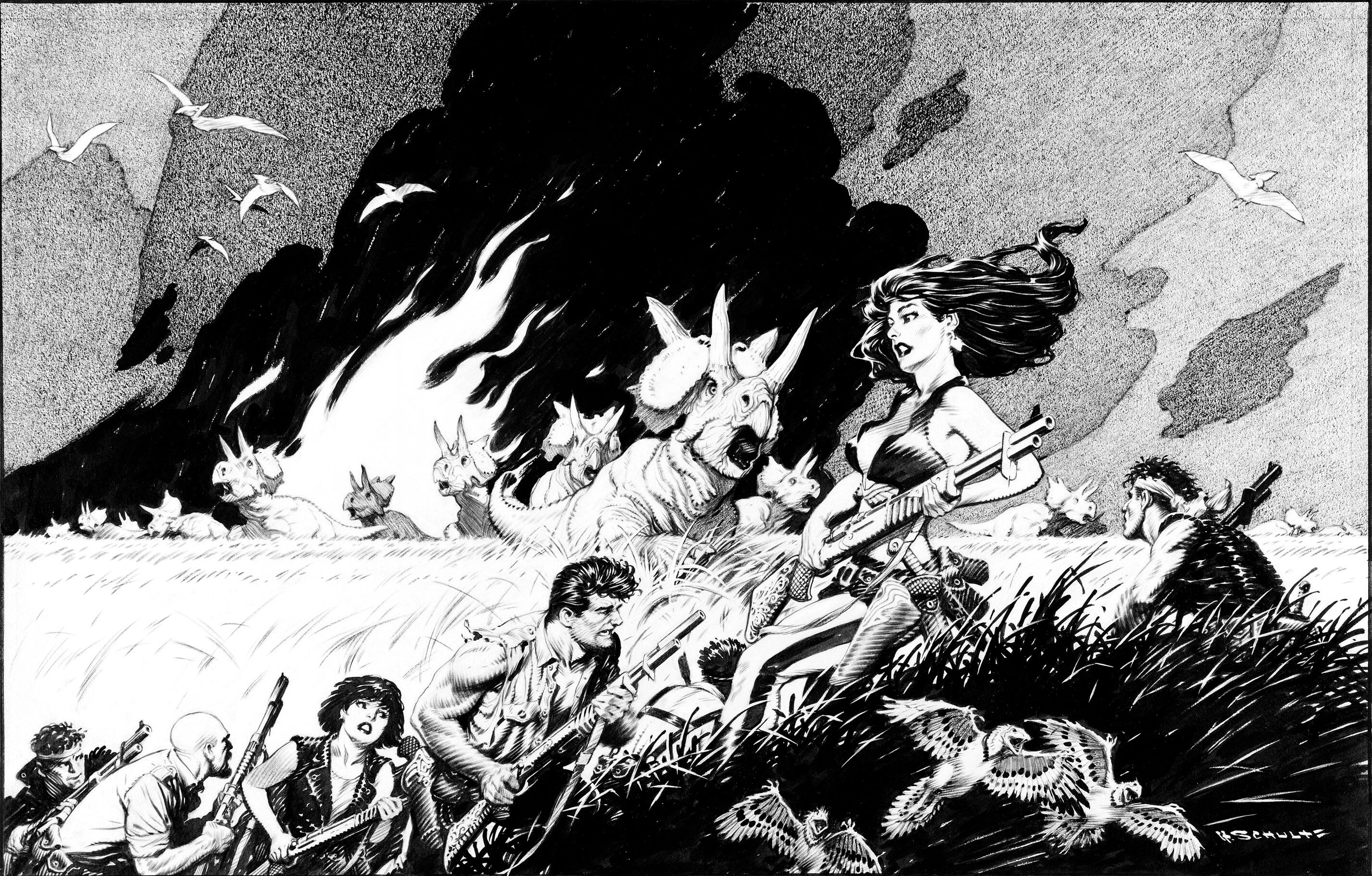
BTP: That’s fair. Producing books in today’s market while cheaper than ever before is still tough because of the shrinking audience. Marketing plays as big a part of it as anything. Many creatives loathe having to market their work. Has working with Denis Kitchen and John Fleskes over the years helped you understand the industry better? How has the relationship between creative and publisher changed if at all?
SCHULTZ: I’ve learned a great deal from both Denis and John, and of course the business has changed enormously since the 1980s, when I started. What has been consistent for me is that I work best with publishers who keep smaller, hands-on operations. Kitchen Sink was, and Flesk is, about involving the artist in the publishing process. I have worked with larger, more mainstream publishers too, but their more compartmentalized systems aren’t such a good fit for me. I like being involved with decisions throughout the process, from idea generation, through production and into marketing. My experience has been that that is not how the mainstream publishers operate. I’ve been lucky to have had the opportunities to have built long-term partnership with a publisher like Flesk, with whom I feel comfortable and most productive.
A brief aside, relative to this topic: it really is a good idea for young creators considering publishing opportunities to develop a skeptical eye. Learn to read the room, and make decisions based on careful consideration, rather than the excitement of receiving an offer. Be politely cautious until you are sure you know who and what you are dealing with.
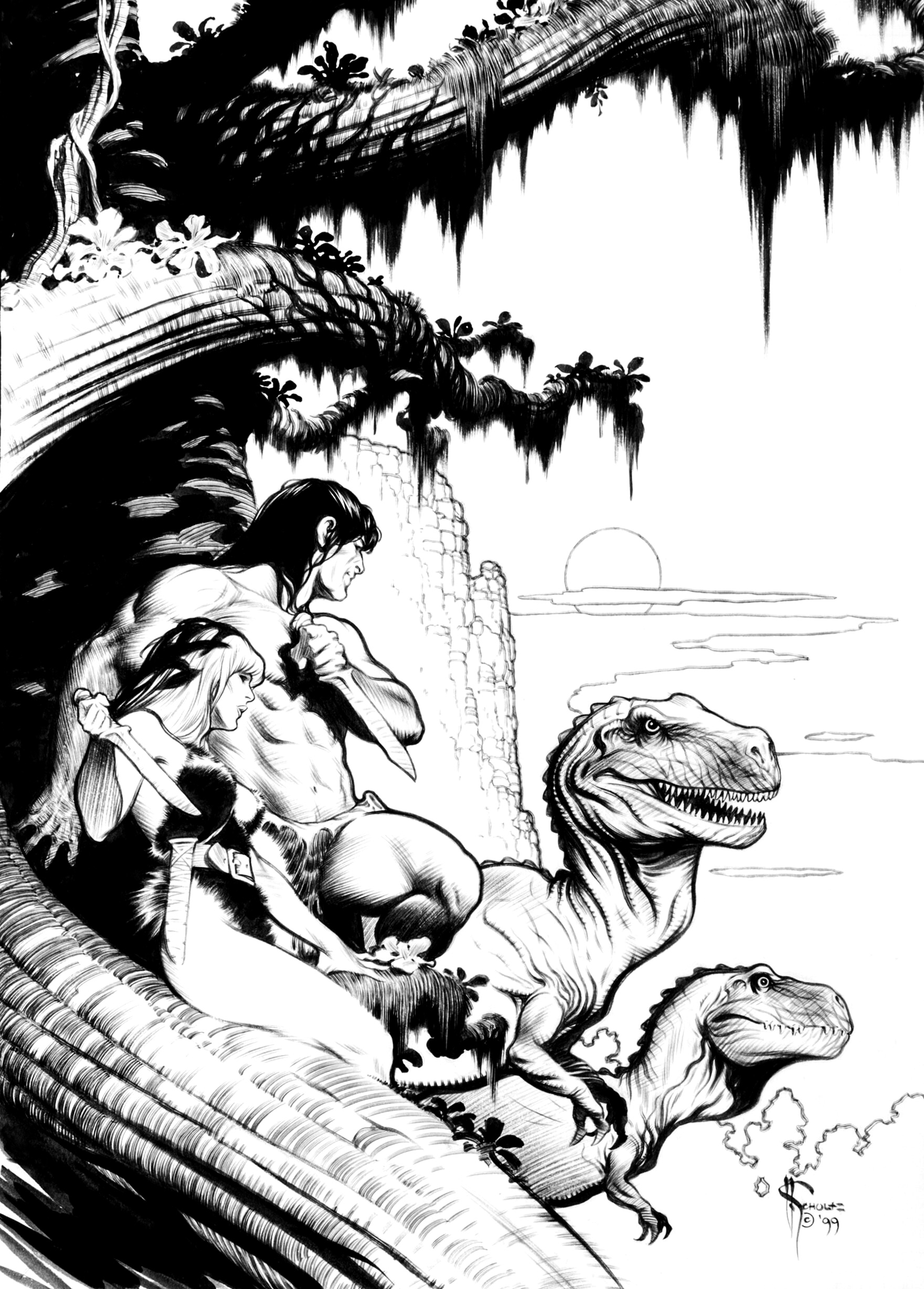
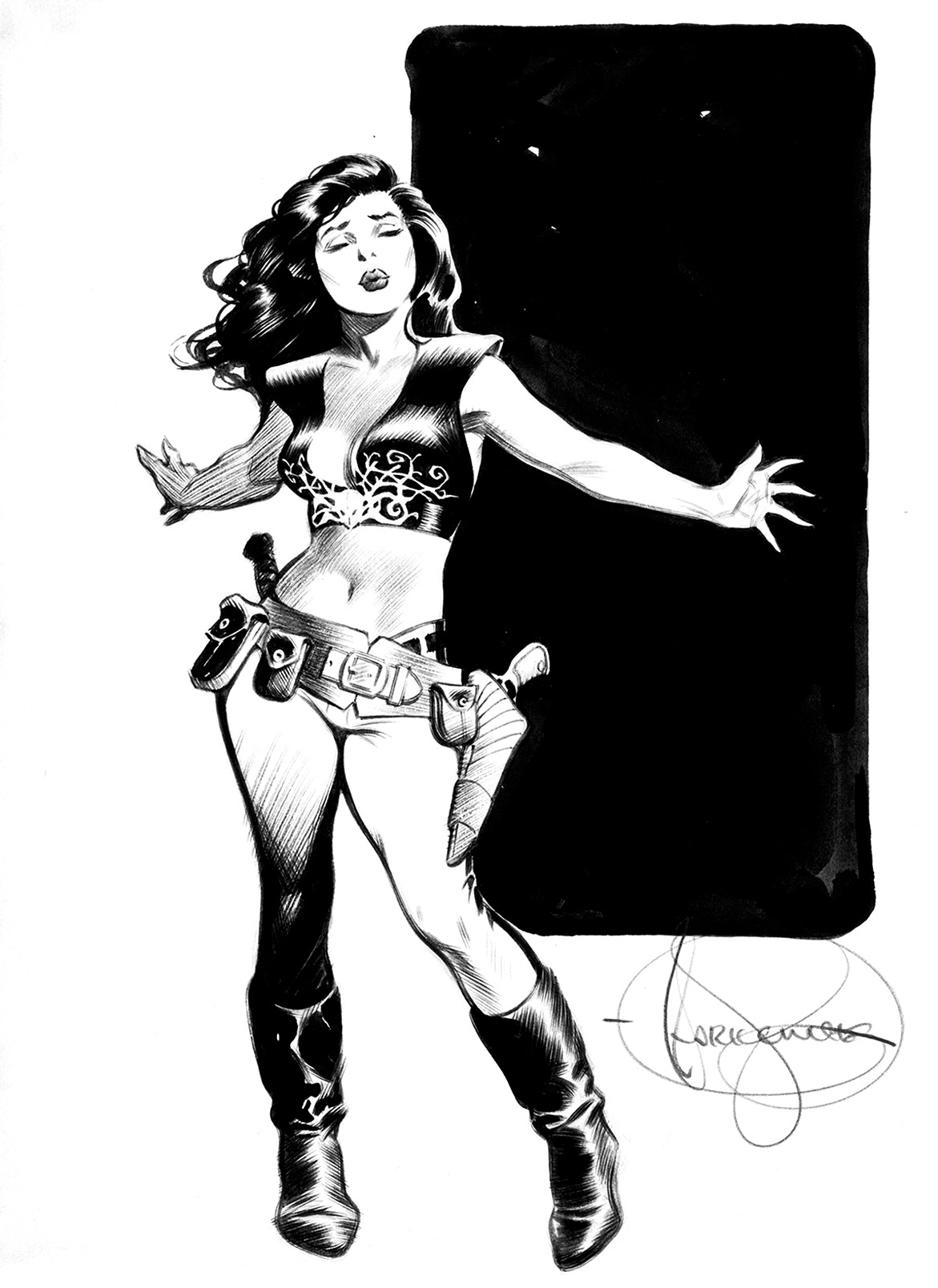
BTP: Recently, I found one of your preliminary drawings of FLASH GORDON and MING the MERCILESS at Heritage Auctions online, and was curious if you’d even had a chance or desire to write and illustrate that character? Personally, out of all the pulp characters, I would have loved to tackle him...along with Conan, of course.
SCHULTZ: Actually, I did write a Flash Gordon story—and it was illustrated by Al Williamson. Back in the ‘90s, when Al was working primarily as an inker, Marvel’s editor-in-chief Tom DeFalco did a publishing deal with King Features and convinced Al to draw Flash, his favorite character. It was a two issue mini-series, and, yeah, it was an awful lot of fun working with Al.
BTP: I have that two issue series. It was beautifully printed! I totally missed that you had written it for some reason. I saw a piece of yours that Al had inked. What was your relationship with Al Williamson like over the years and what was the biggest take-away in terms of wisdom he may have offered to you?
SCHULTZ: Al wasn’t someone who you could go up to and ask to solve a problem you were working on. But if he was looking at your work and saw something that wasn’t working or looked awkward, he’d ask if he could make a suggestion. Of course you’d say yes please, and only then would he show you. And it would always make for an improvement in the drawing, or the storytelling. Beyond that, Al was always happy to discuss what he had learned from his decades in the business, and to share his love of comic art and illustration. He never got tired of looking at the art he admired and of discussing what made it work. I think the single thing that Al said that most sticks with me was—and I’m paraphrasing: You can tell when an artist loves what he is producing. If that love and excitement isn’t there, even in the case of a technically superior artist, there will be something missing from the work. It’ll feel cold.
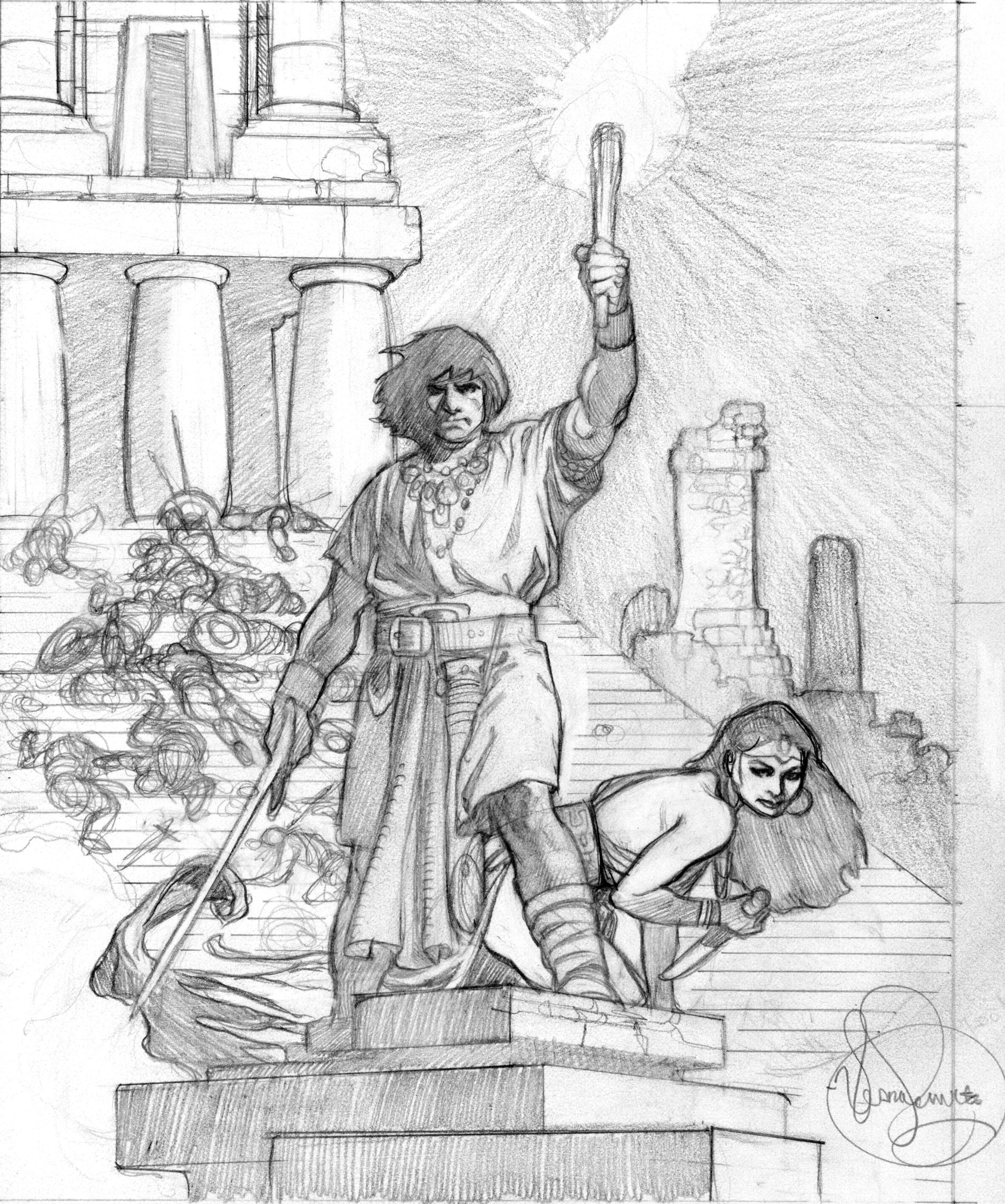
BTP: We talked some about your illustrating Conan, but I was curious if you’ve ever written for that character? Is there a story in you that you’d love to tell or something that Robert E. Howard wrote that you’d like to see adapted into comic form?
SCHULTZ: When Dark Horse had the Conan publishing rights, I was contacted by an editor there and asked to submit a story proposal. My idea was to showcase a young Conan evolving from a loner to a charismatic leader. I never heard back from the editor, so that was that. If I had all the time and options in the world, I’d love to adapt Robert E. Howard’s “The Queen of the Black Coast,” my favorite Conan story.
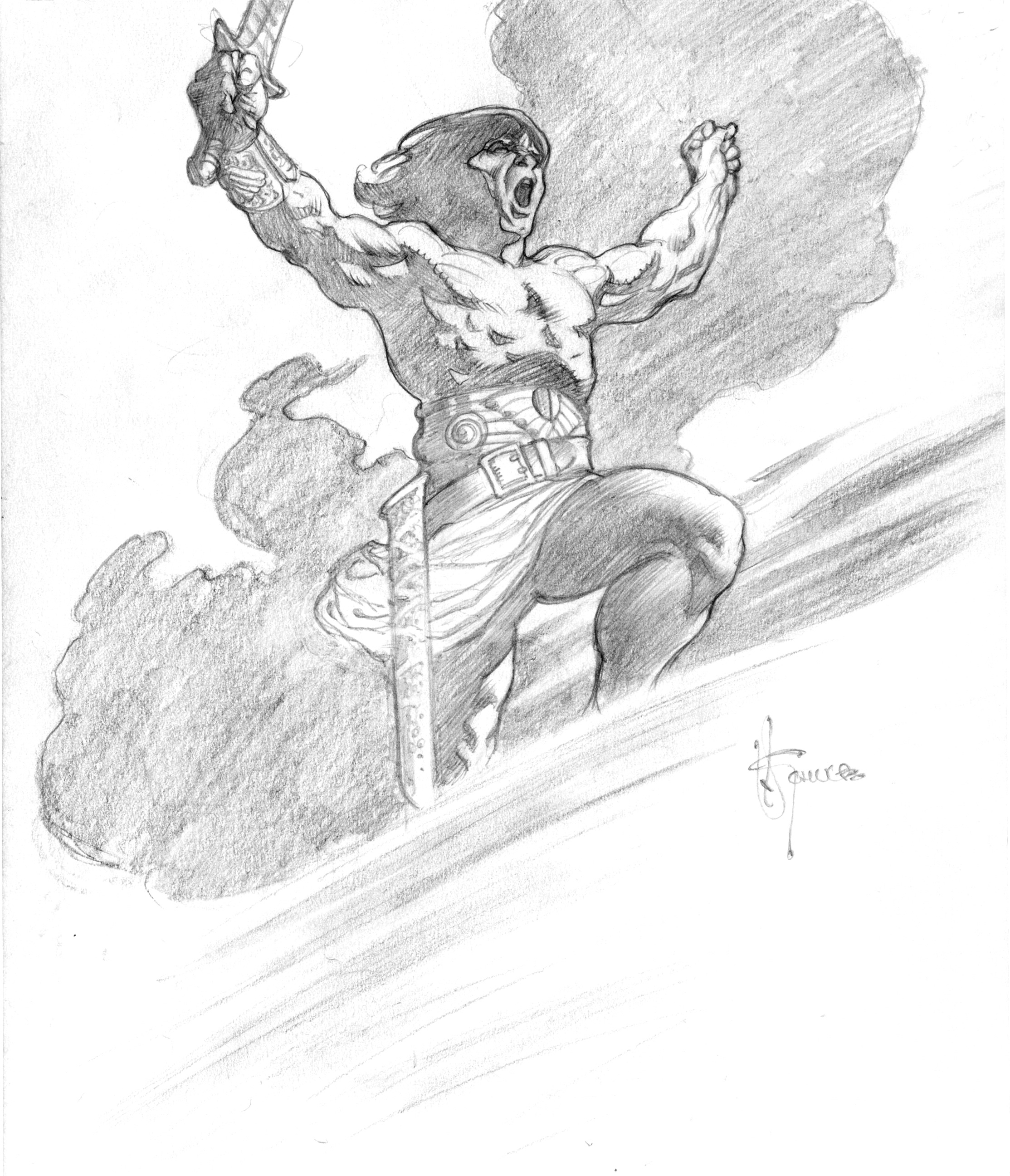
BTP: That is a stellar story. Red Nails gets brought up a lot, but there are so many gems worthy of exploring. With all the facets of Conan depicted over the decades by writers and artists you seem to gravitate toward him as a leader. In what capacity do you think Conan would lead? Thieves, warriors, large army? And to what end?
SCHULTZ: I think Robert E. Howard (and I only consider REH’s canon when I am thinking Conan) was very clever, keeping the character development consistent, even though he wrote the stories out of chronological order. He develops Conan from a pretty sullen loner, to the leader of outlaw bands, to a military leader, to a king. As I remember, my proposal involved Conan as a horse soldier in a troop that gets ambushed in hostile territory and loses their leader. Conan has to take over that leadership role and figure how to get them out alive. Of course there would be some supernatural threat added. But I think this was all to take place somewhere before the start of “Black Colossus,” in which Conan is described as a captain of mercenaries before Yasmela elevates him to her commander-in-chief. I figure there’s a story there, how he became captain of mercenaries.
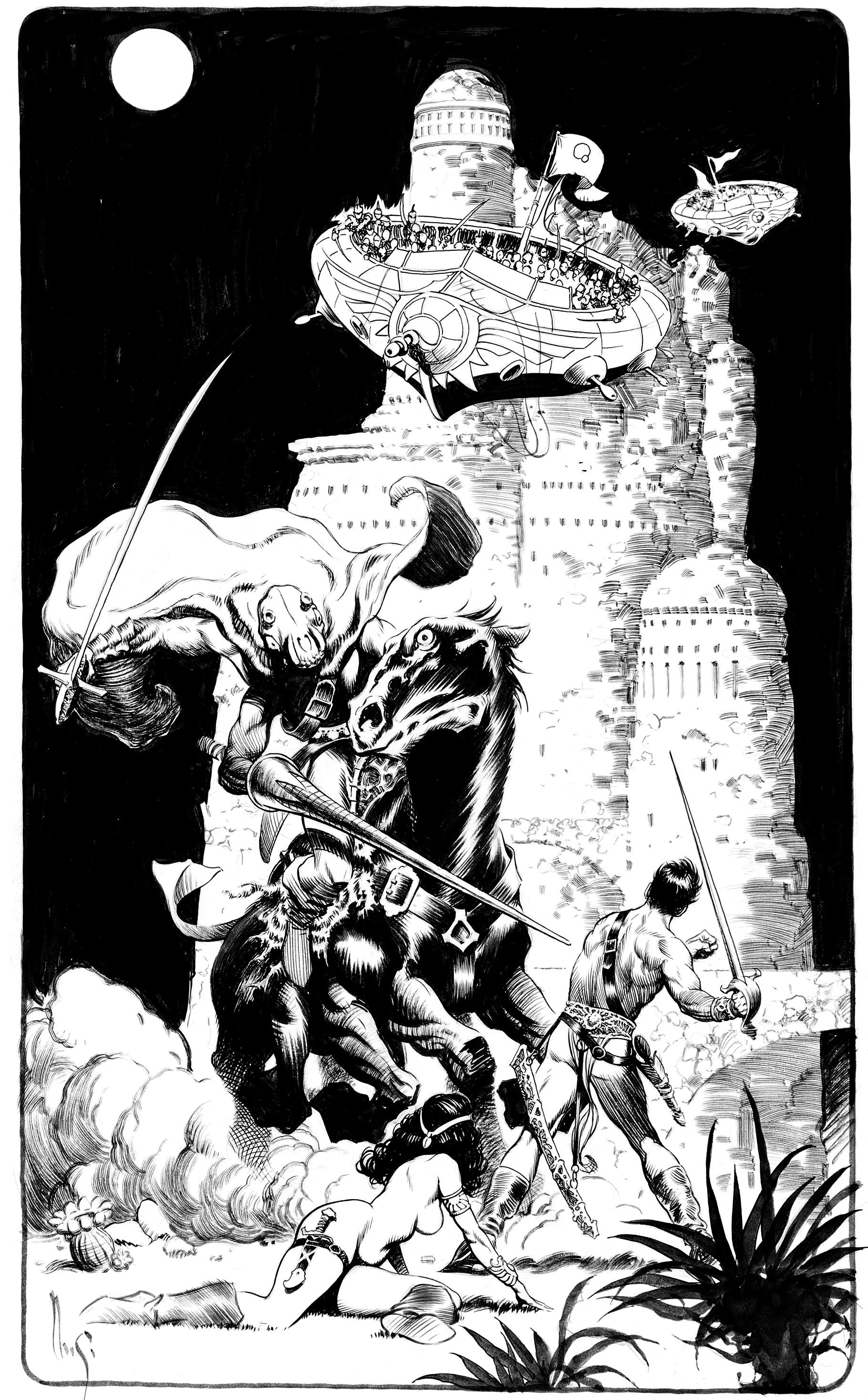
BTP: Nice. I like that you keep it in line with REH’s other tales. Here’s an oddball question that I also asked William Stout in a previous interview. If it was possible to survive in any time period in the age of dinosaurs what epoch would you choose and why?
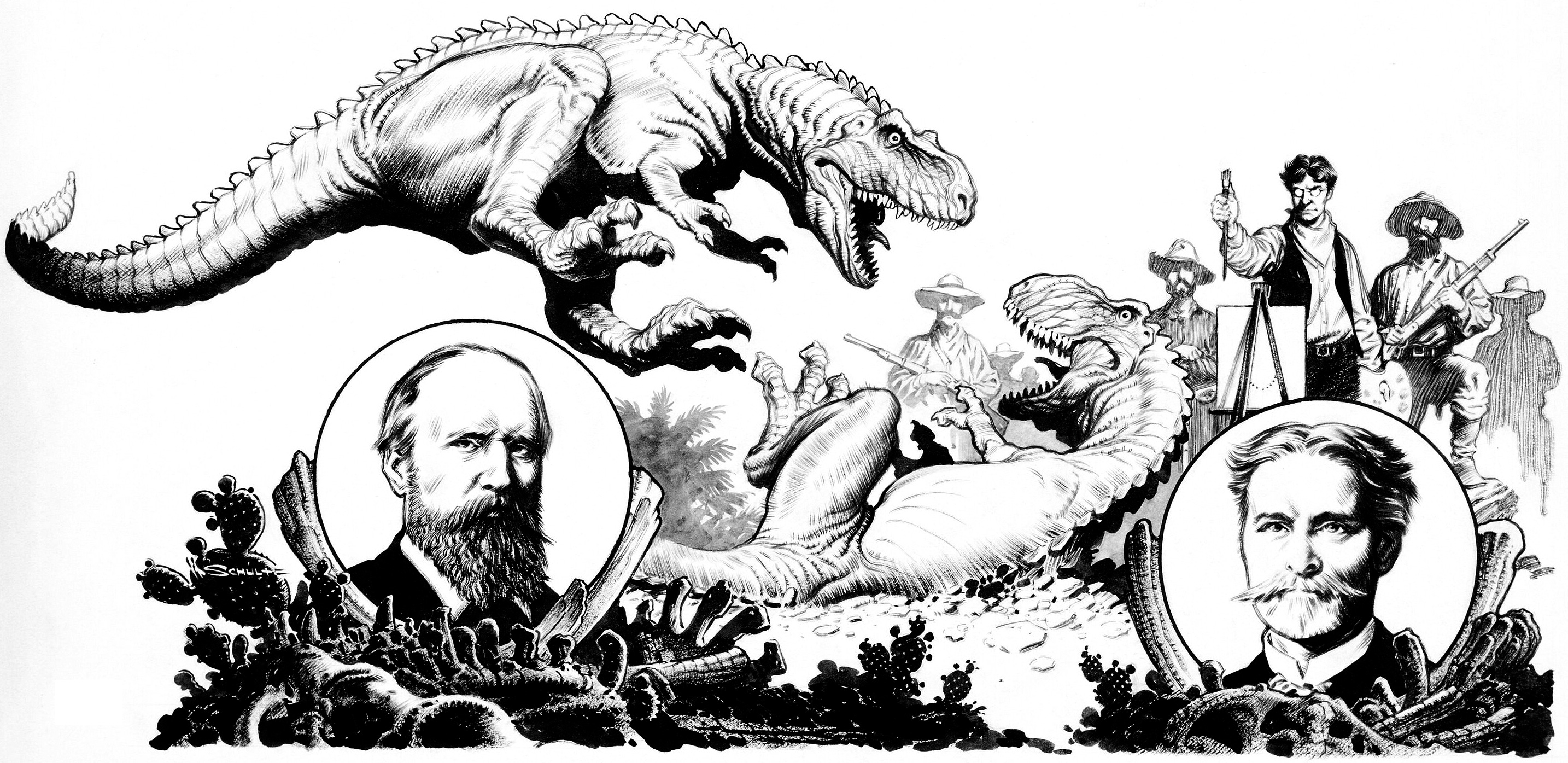
SCHULTZ: If it was possible to survive the pathogens against which we humans would have no defense, I am sure I would be happy to be transported to any period with any dinosaur. Even a single dinosaur. I asked my paleontologist friend Dr. Michael Ryan which Mesozoic period might give the most bang for the buck and he suggested that the middle to late Jurassic, which featured the largest, most diverse expansion of all the major dinosaur families, might be the ticket. I hope I am relaying his thoughts correctly. Regardless, that’s my answer.
BTP: That sounds about right. I’ll book my tickets!
I recently was inspired to pick up the giant PORTFOLIO tome that Flesk publications put out collecting all 5 of your PORTFOLIO books. There isn’t a weak drawing in the whole damn thing. Even if it’s a sketch or an idea, it’s handcrafted and beautifully executed. For someone who complains about their slowness, I’d say you’re a very thorough person. You leave nothing to chance and you won’t stop until you get an image just right. How does this approach to your art affect other areas of your life?
SCHULTZ: Ha! That seems like a question for my wife. I do spend a lot of time at the drawing board—freelancing certainly isn’t a forty hours a week and free on weekends sort of job, as I am sure will be no surprise to anyone reading this—but I get to make a living doing something I love doing, so no complaints. I’m very lucky. My wife is also a visual artist, so she gets it too. Both our natures tend to the obsessive and we both dive deep into any given project, for better or worse. How I produce work is just an extension of my temperament. I’m sure I’d behave the same even if I made my living doing something else, and drew and painted only for my own satisfaction. But, as I’ve mentioned elsewhere, I am always trying to find a way to loosen up, of not over-controlling the result. I want to keep evolving.
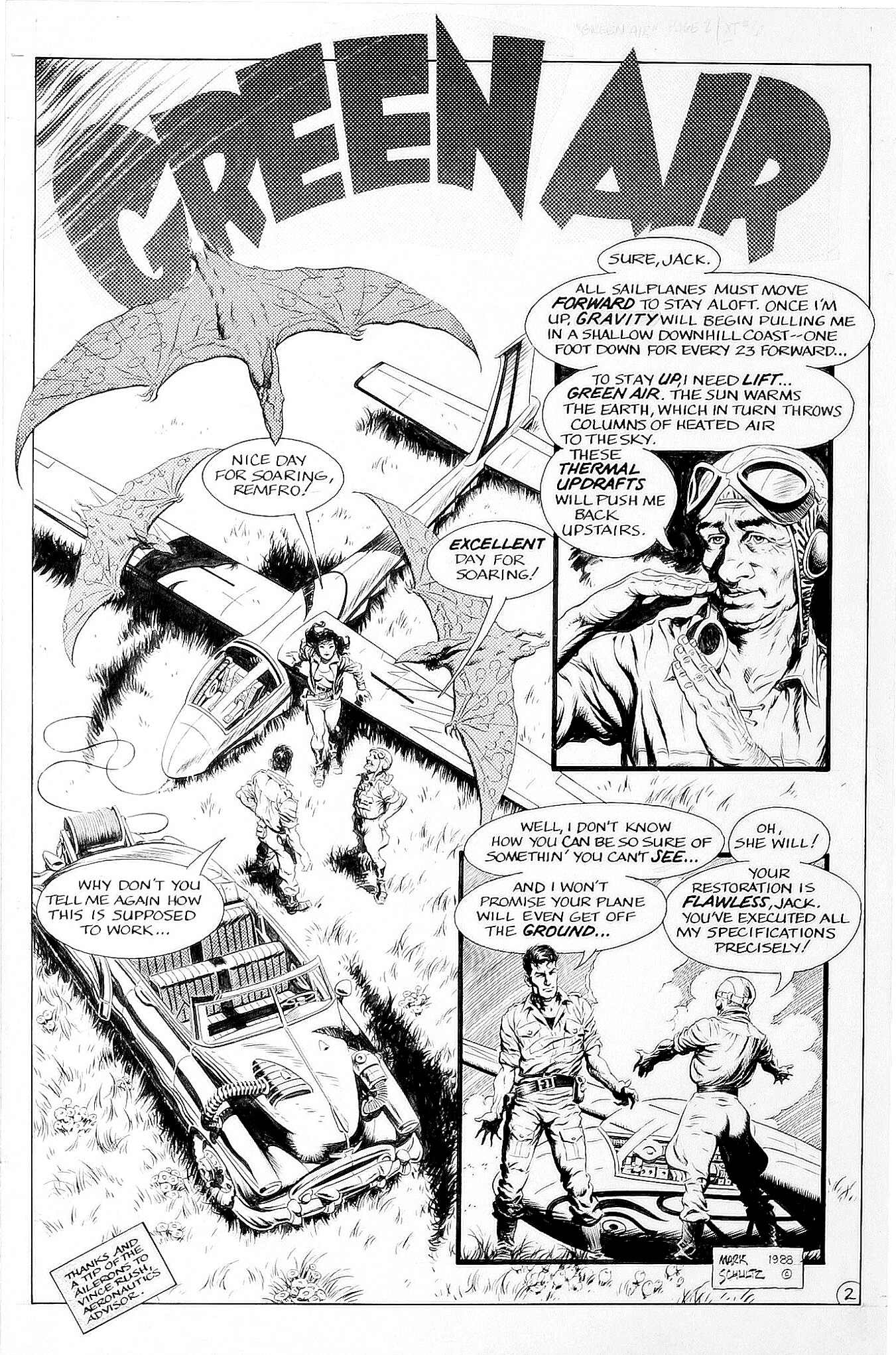
BTP: Even though you studied fine art painting in college how much did that approach inform how you paint today? How have you kept your painting skills sharp these days when you do get to paint?
SCHULTZ: I learned a lot from my college experience, but how to paint for illustration and narrative was something I had to figure out on my own. I did get the basics of design, color use, how to manipulate paint, from school, but not the underlining draftsmanship that is part of how I work now. College exposed me to a lot of things about which I previously knew nothing, and that opened up a lot of possibilities for me. Maybe most importantly, college taught me how to teach myself. But, I’m afraid that I wouldn’t consider my painting skills to be “sharp.” I’m trying to devote more time to painting. I need to put in a lot more reps before I’m where I know what I’m doing.
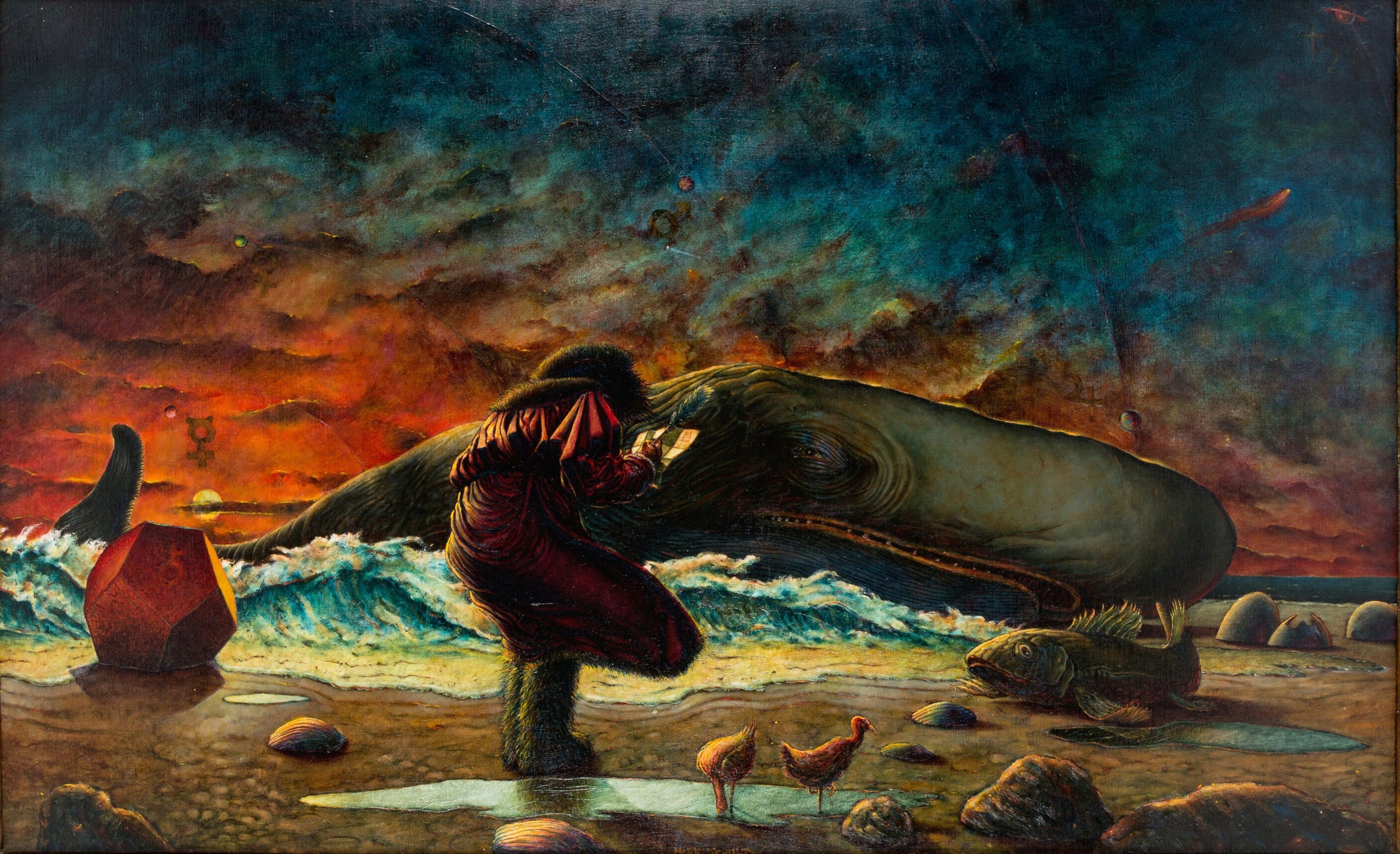
BTP: The one thing I admire about your work that I want to bring to the forefront is your dynamic figure drawing. You have such a skill at pushing the figure’s physicality and expression, whether it be human or animal that still feels very naturalistic. How did you get such an absolutely undeniable handle on this? Was it constant study over time, live figure drawing, models, or some other means?
SCHULTZ: Thank you. Depicting dynamic human movement—maximizing the impact for narrative purposes—is something I’m always wrestling to improve. It is a lot of study—films and other artists as well as real life. In the comics and illustration realm, the fluid elegance of Al Williamson, and the explosiveness of Will Eisner and Frank Frazetta are inspirations I look to again and again. I do use all sorts of reference and, when necessary, model shoots, but most of the action posing is something I can conjure up on my own now, having put in so many reps over the years. Pushing the figure to create an illusion of movement and impact involves exaggeration and cartooning, and that, I think also gives you some leeway with fudging the anatomy. What I find harder to get right is a figure sitting, standing, walking down a stair—a pose that requires balance and stability. If you don’t get that balance just right, it looks all wonky.
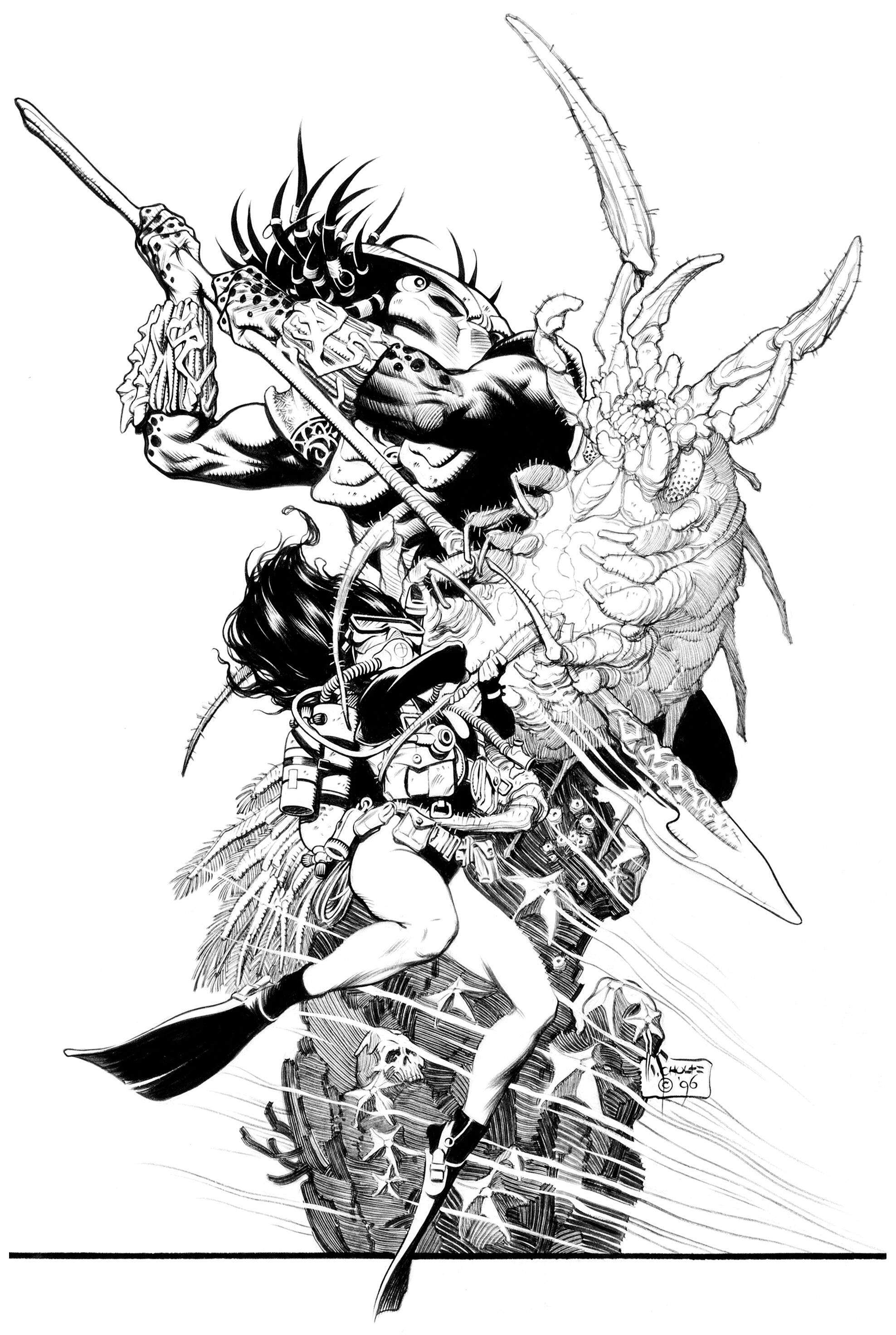
BTP: That is so true. I never got the importance of being able to draw everything well—from the real world—in order to draw comics. If you could work in any other genre of comics that you haven’t worked in already, what would it be and why?
SCHULTZ: I’m not sure, as this point, there is any other genre I’d want to explore. Producing comics pages gets harder and harder as I get older! I consider my genre to be “adventure,” and that cuts a pretty broad swath of different story possibilities.
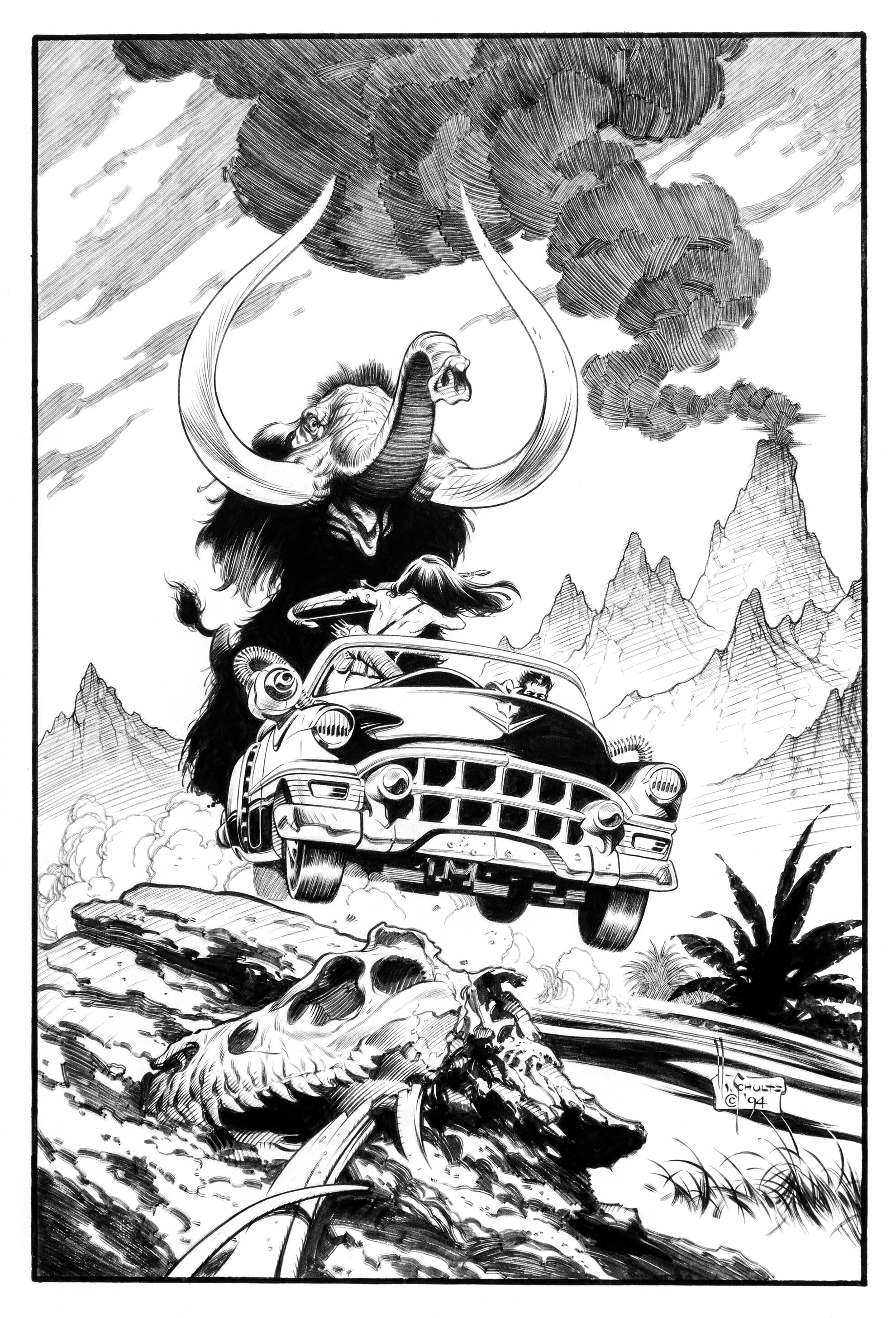
BTP: When you finish the much-anticipated latest Xenozoic Tales graphic novel will you just roll into the next book? How much is prepped in advance for where you want to take your characters?
SCHULTZ: We’ll have to see how that book does, and how much stamina I have left. This GN is a stand-alone story, but I have a pretty thorough outline of the story that will finish out what I left hanging at the end of Xenozoic Tales 14. If all goes well, I’ll eventually get to that.
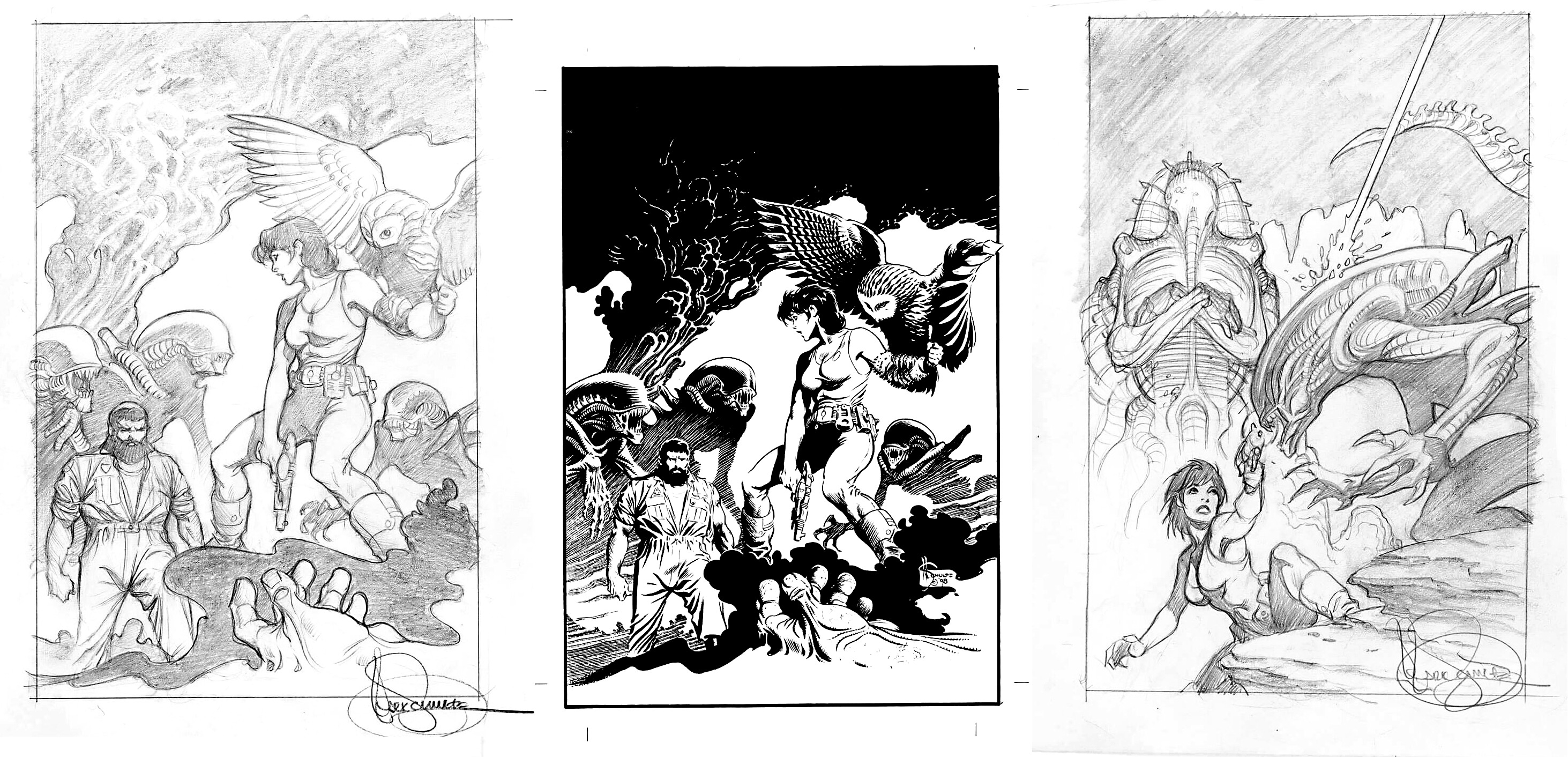
BTP: At this stage in your life and career what outside of comics inspires you the most? What do you take great pleasure in doing that people might be surprised to hear about?
SCHULTZ: Geez. I’m not sure I have anything that people would consider surprising. I’m a science nerd. Mostly the biological sciences, genetics and paleontology I guess, but I have a great deal of respect for the practice of the scientific method in general—the use of critical thinking, repeated testing and peer review in determining what is true and what is not. I know that reads boring, but I get a lot of inspiration—and practical use in my stories—from following scientific advancement. Beyond that, I follow professional baseball and football, partly because, as someone who largely works solo, I’m fascinated by team sports—not just the athletes, but the whole organizational ecosystem and how it functions. And how about this: I love watching curling. I guess that might be considered surprising.
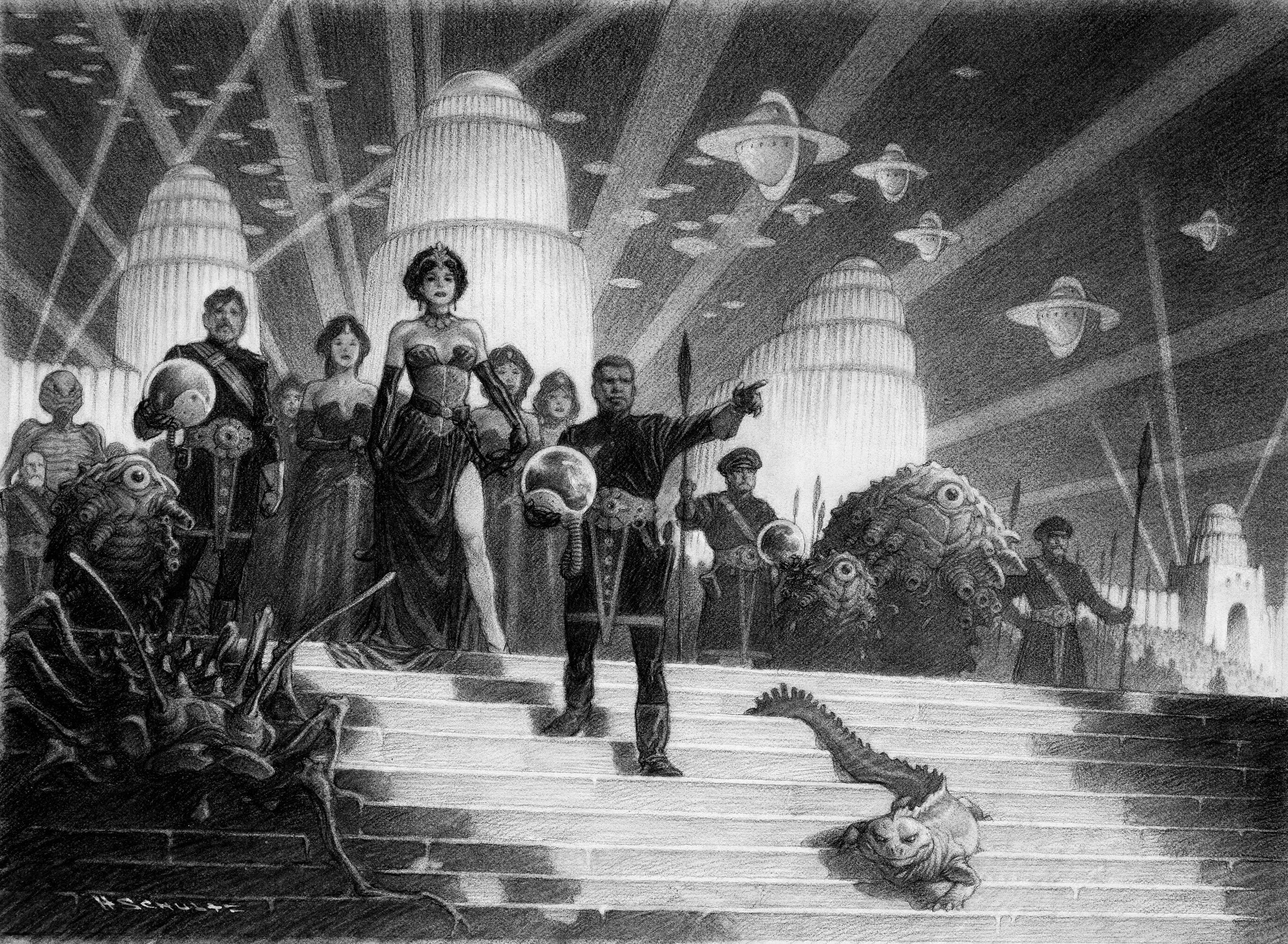
BTP: I grew up on the Canadian border, and I know all about the mesmerizing effects of curling! For someone who builds worlds, grounding it in the sciences is apropos. I grew up reading a lot National Geographic and tried to bring in a lot of that information into most of my creative endeavors.
I am jealous of your lifelong contact with curling, which is a pretty esoteric sport in my part of the world. I have only watched on television, but I am hoping to get up to see some live action in Canada.
I grew up on National Geographic too—I still subscribe to the physical magazine.
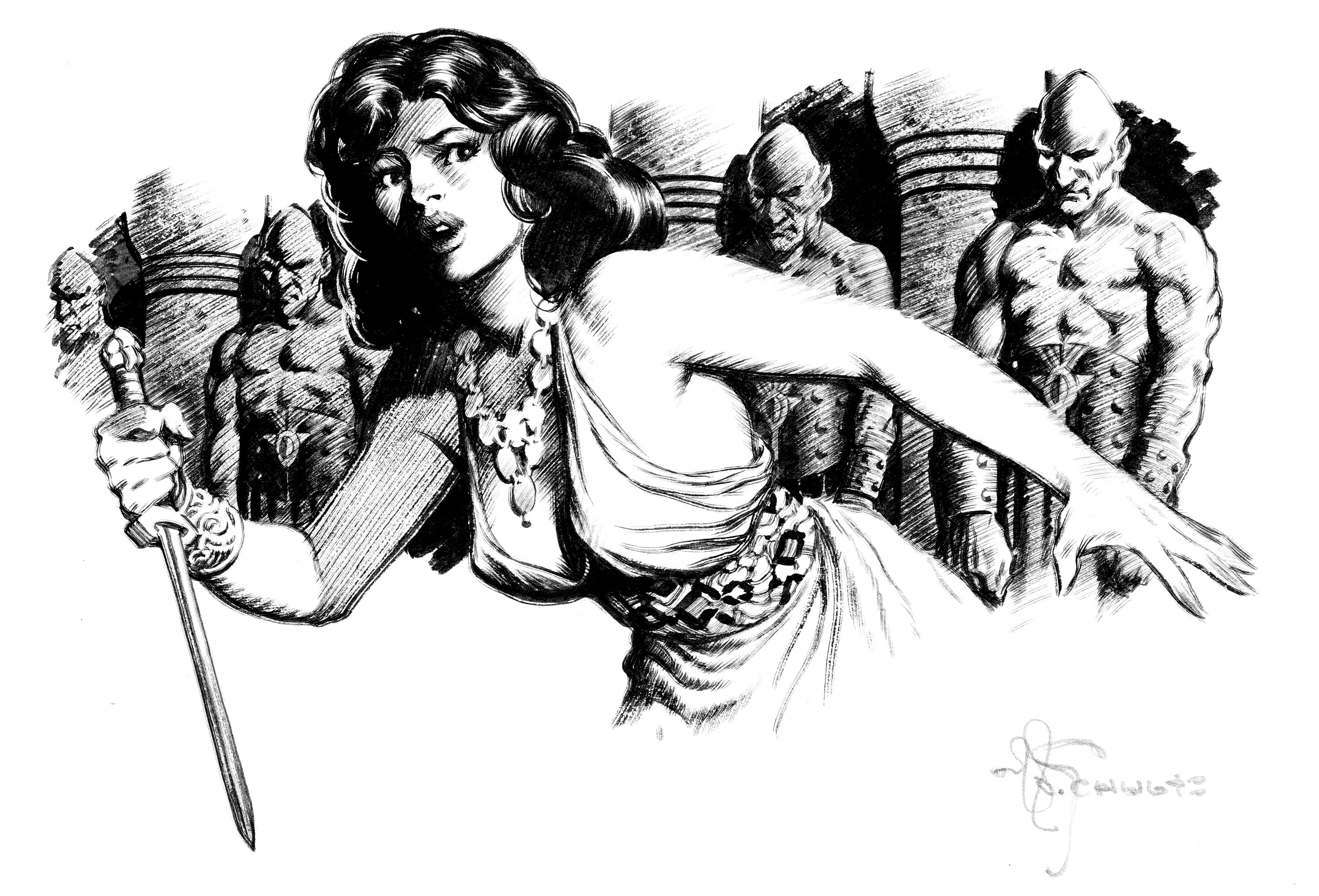
BTP: I want to thank you for taking the time with us once again, Mark for sharing your life and art. We really appreciate you taking the time. Where can people find out more about your work and any upcoming projects you may have?
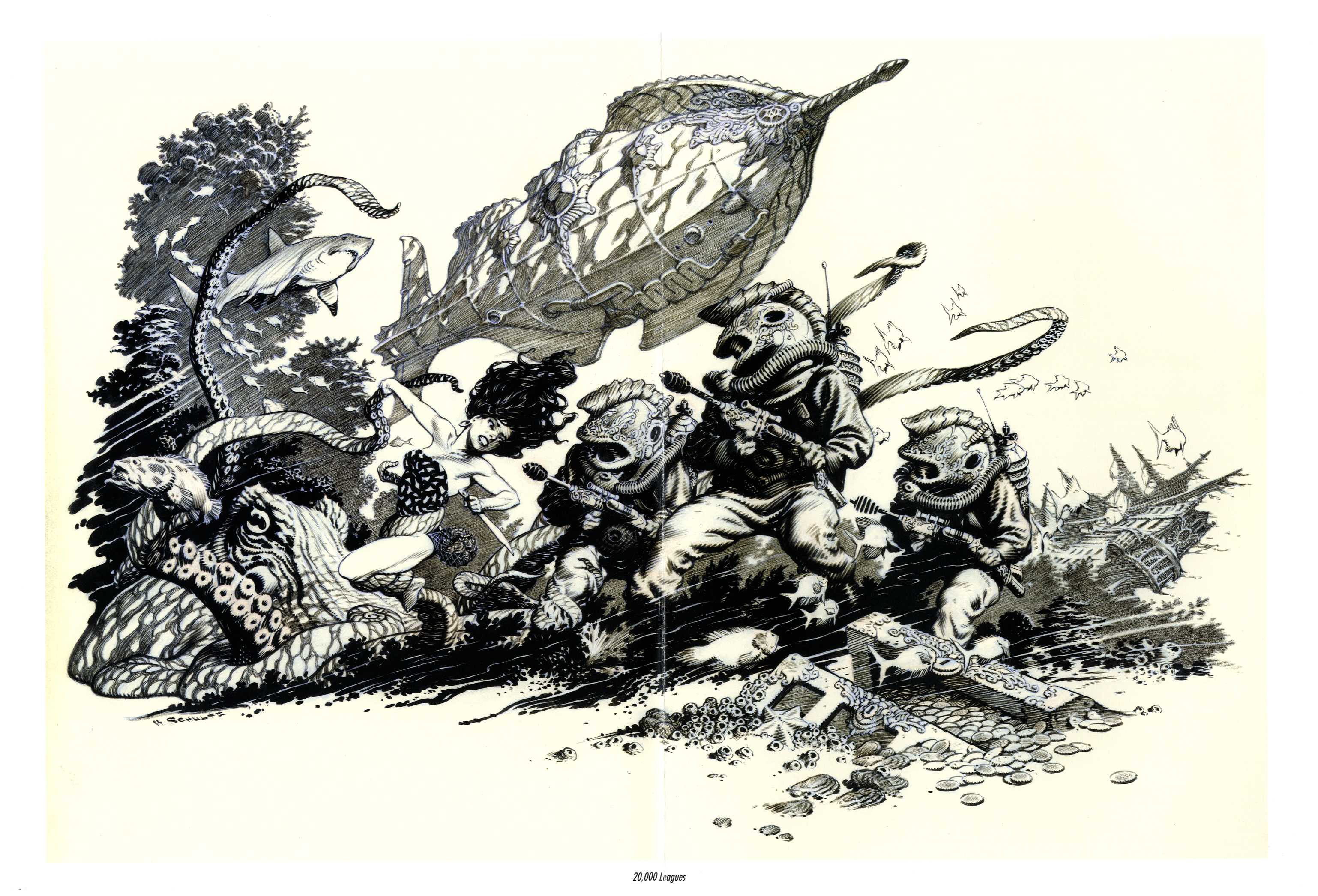
SCHULTZ: As you know, I am slowly chipping away at a new Xenozoic graphic novel. I’m also hammering out a sequel to Storms at Sea, which will be more in the format of a traditional novel, although heavily illustrated. And I continue to write the Prince Valiant newspaper strip, illustrated by Thomas Yeates.
At this time, my only social media presence is on Facebook: Mark Schultz’s Xenozoic Tales and Other Stories
I post news and new artwork there.
You can also go to www.fleskpublications.com to find my books for sale. Flesk also carries a page featuring my original art for sale: www.fleskpublications.com/mark-schultz-original-art