

MUST-HAVE Books for EVERY ARTIST!
PLEASE READ these Before You Even Think about ART SCHOOL


What does the snapshot of your library say about you as a creative?
Do you desire to learn? Are you a huge fan of Opera, Anime or Travel? Is your book collection weighted primarily toward Stephen King novels?
If you’re lucky enough to have the space for books and you like to read, then I believe books and their content can be a fundamental part of any creative’s DNA.
And even within the multitude of novels, graphic novels, art books and travel books there are, for me at least, a core set of books that I revisit time and again. These are as valuable as REFERENCE BOOKS that you’d find at any library. They are a constant source of learning and not easily digestible in one sitting...nor multiple sittings. They’re the types of books that reveal themselves over time as you mature and learn about yourself and the world at large. Their contents are timeless and will serve you for years to come.
Does that sound familiar to you?
The following are a list of the core books that have never let me down. Even though I’ve read many books on the same subject, these are some of the ones I personally have learned the most from and I’ll explain why.
Prefer a downloadable PDF? Get it here.
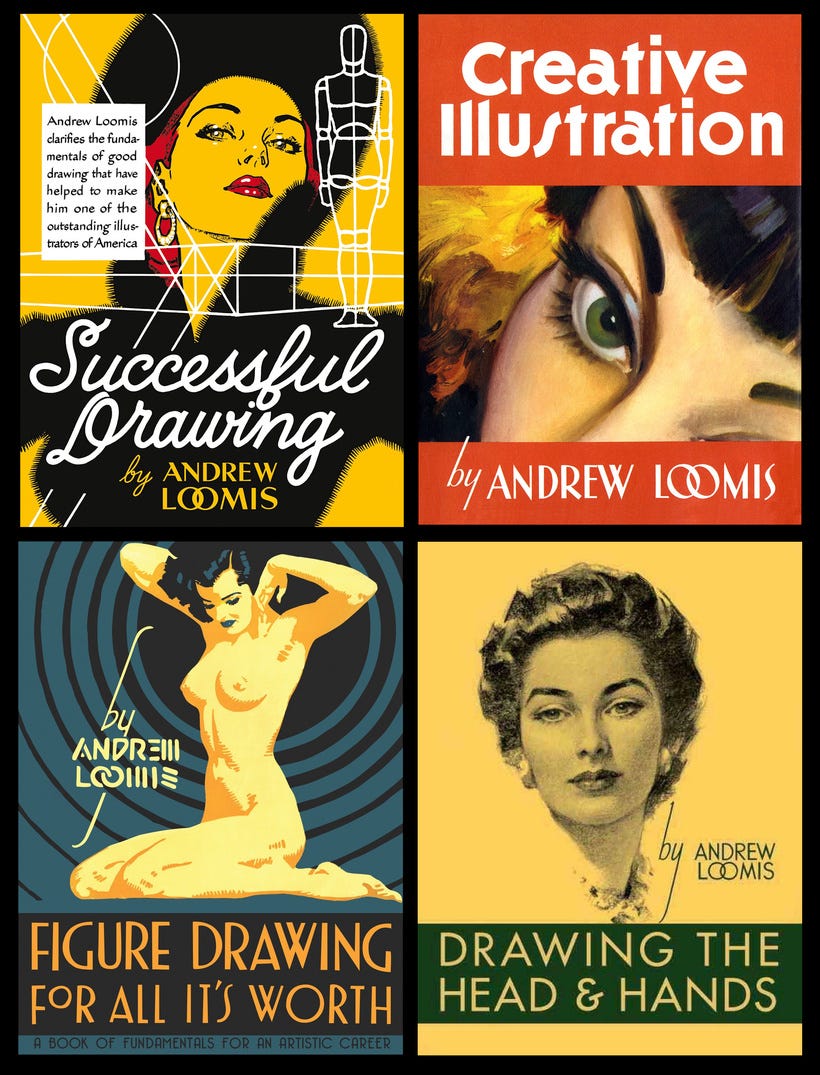
ANDREW LOOMIS books have been reprinted probably more than any other art book on learning. There’s a reason. They are very good and nobody else has come close to usurping their content at such a high level. It’s a little odd that we’re still seeing these esoteric images that are illustrated throughout, but the techniques are still practical and wise. There are several other books in his series too, but these should cover what you need.
My runner’s up would be the Bridgman Anatomy book. Many illustration students learned from him in the early 20th century and they still have solid information. And who knows...maybe it’ll speak to you more than Loomis but you’ll be hard-pressed to find more information and more illustration in any other book.
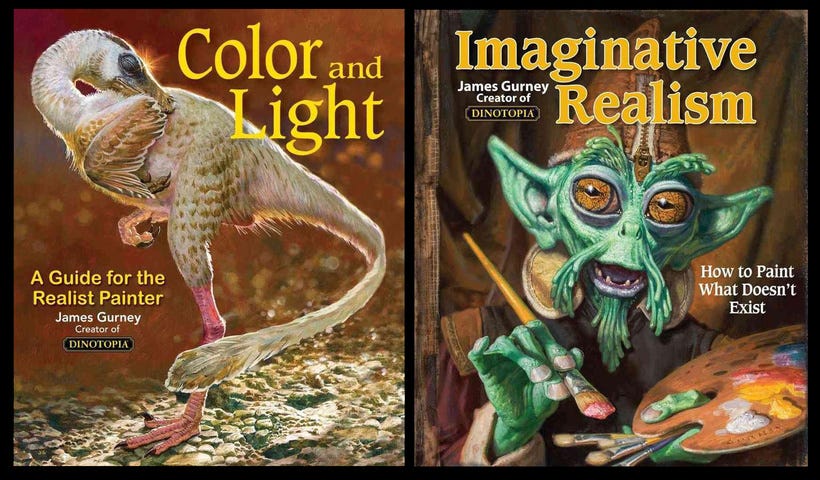
JAMES GURNEY is an amazing artist and teacher. Having grown up with National Geographic magazines, I had seen his illustrations for decades. Little did I realize, how scientific and thoughtful his illustration approach was to the real and unreal. These two books alone are better than what one would get in most art schools...I SWEAR IT! They are easy to understand, beautiful designed and illustrated, and will have you wanting to put them down to go make art for yourself.
In all honesty, if I could reread these from cover to cover every year...I really should. I think I might just start doing that.
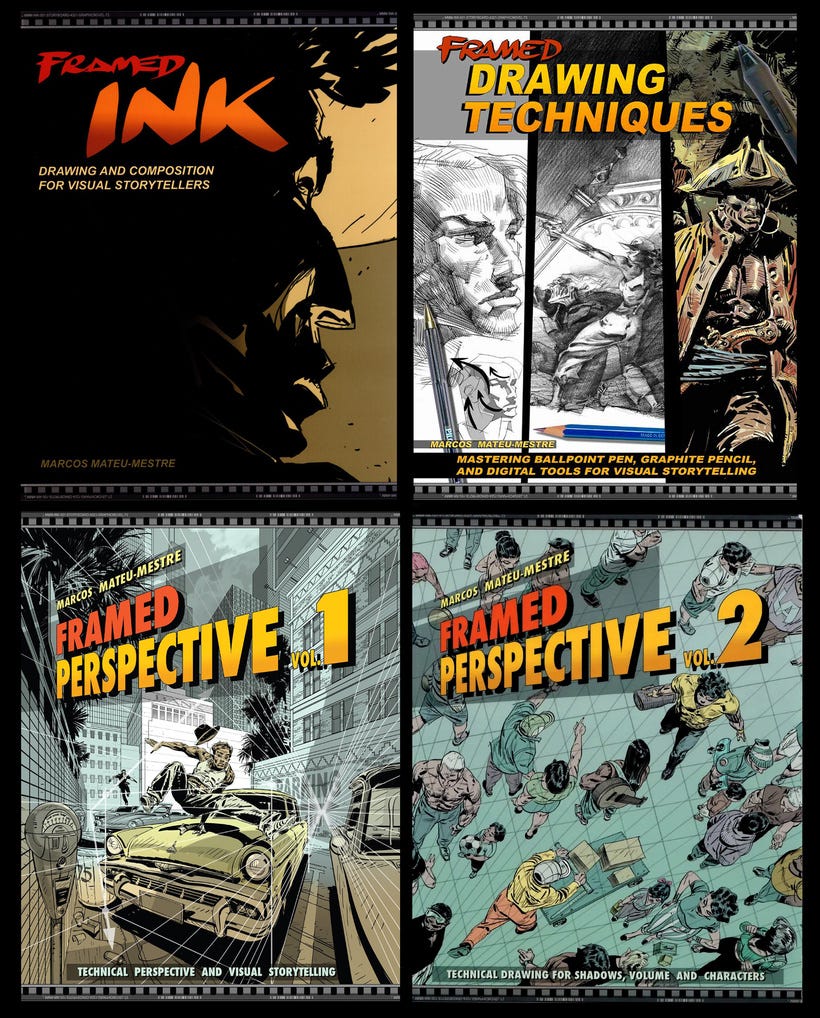
MARCOS MATEAU has a dearth of industry experience in film and television. Not so much in comics (though he attempts to show his comics prowess, it doesn’t feel “of the cloth”). Marcos is EXCELLENT at explaining complex ideas and breaking things down for the novice and pro alike. Even though I’ve been doing much of these techniques for years, I’m a sucker for a good book on perspective, storyboard or anything else worth gleaning from this guy. Once you read what he puts across you can’t help but put it into practice.
His approach to perspective is great and has helped me rethink my own approach on the subject. He’s the kind of artist you want to be friends with and hang around, because he’d be dropping art gems wherever he goes.
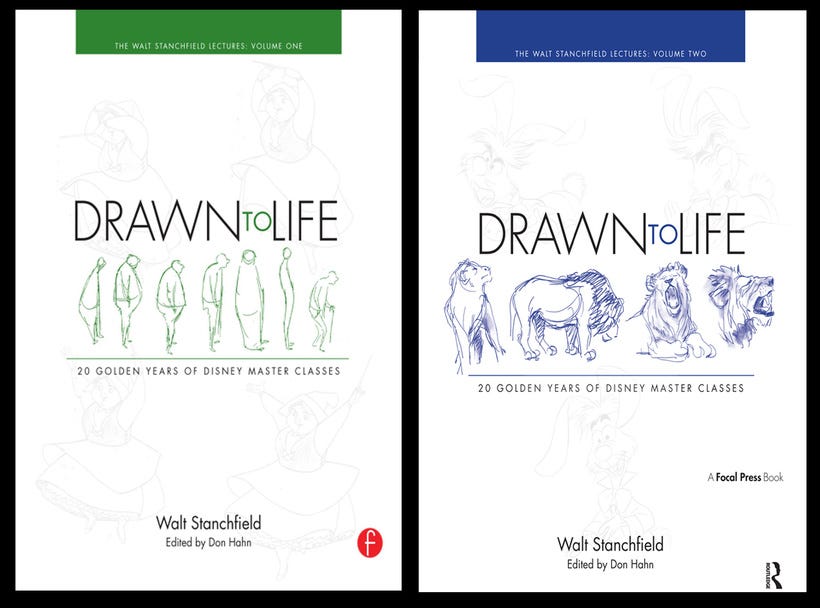
WALT STANCHFIELD is a class act. He ran the figure drawing sessions at Disney Animation for years, would pass handouts to everyone and these two volumes are those handouts, THICK WITH KNOWLEDGE. They are so dense that reading them at breakfast is about all you should consider. It’ll give your brain something to chew on for the rest of the day. It goes beyond sketching, drawing and animation. The books talk about life, acting, composition, and the evolution of being an artist. These should be a must-have introductory in most art schools.
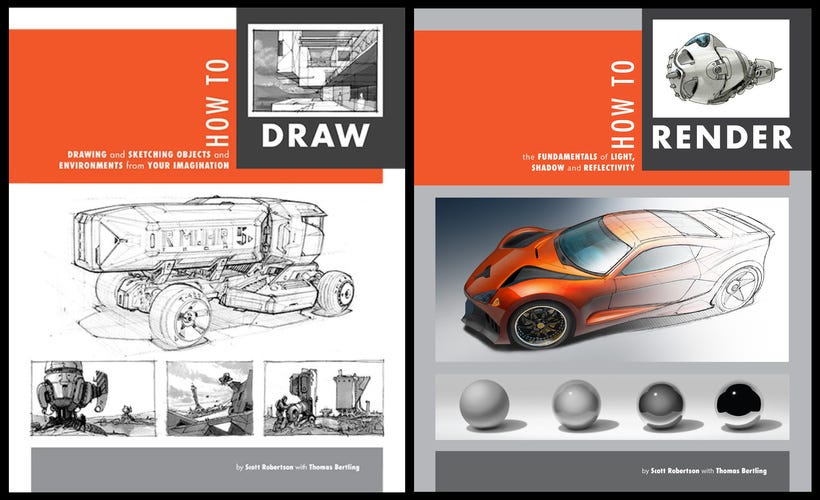
SCOTT ROBERTSON is a former student and teacher at the ART CENTER COLLEGE of DESIGN. His is a technical mind grounded in CORRECT DRAWING FUNDAMENTALS. If you want to learn how to REALLY DRAW...short of going to the Art Center, these are fantastic books. They’re a little advanced BUT if you work at it and study hard you’ll grasp the concepts he lays down. Where as Marcos Mateau can help with your perspective, think of Robertson as the next level of that. Learn how to draw ANYTHING in perspective, well enough to even build from!
Surprisingly these books aren’t dry about it either. They’re a pretty good read and I really wanted to follow along at my drawing table as he laid out each of the chapters. So...clear your schedule and take 1-2hrs. a day for a month or so to get through these books. You will definitely get better at drawing.
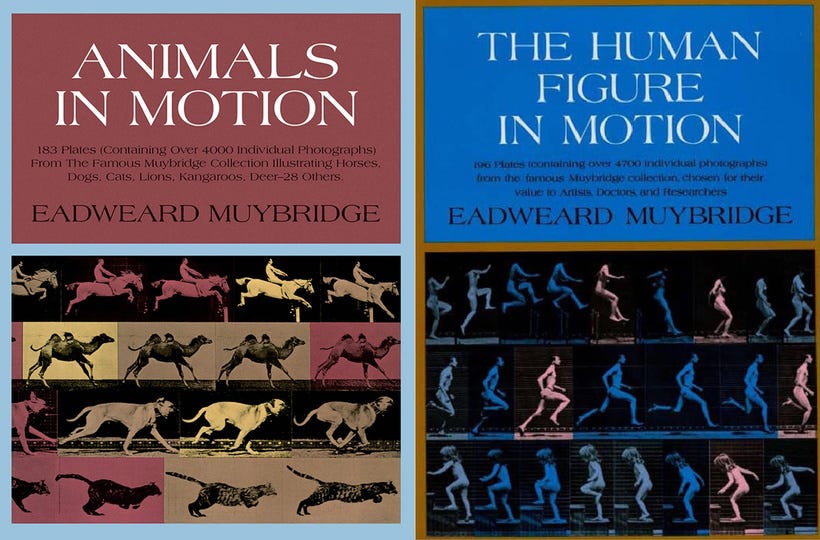
EADWEARD MUYBRIDGE is one of those people who was way ahead of his time. With both of his books on the bionmechanics of animals, I really wish these books were redone with modern photographs. Still, the value of these two volumes can not be underestimated. Very thorough observations that have helped me in a jam many many times. No illustrator or animator, for that matter, should be without them.
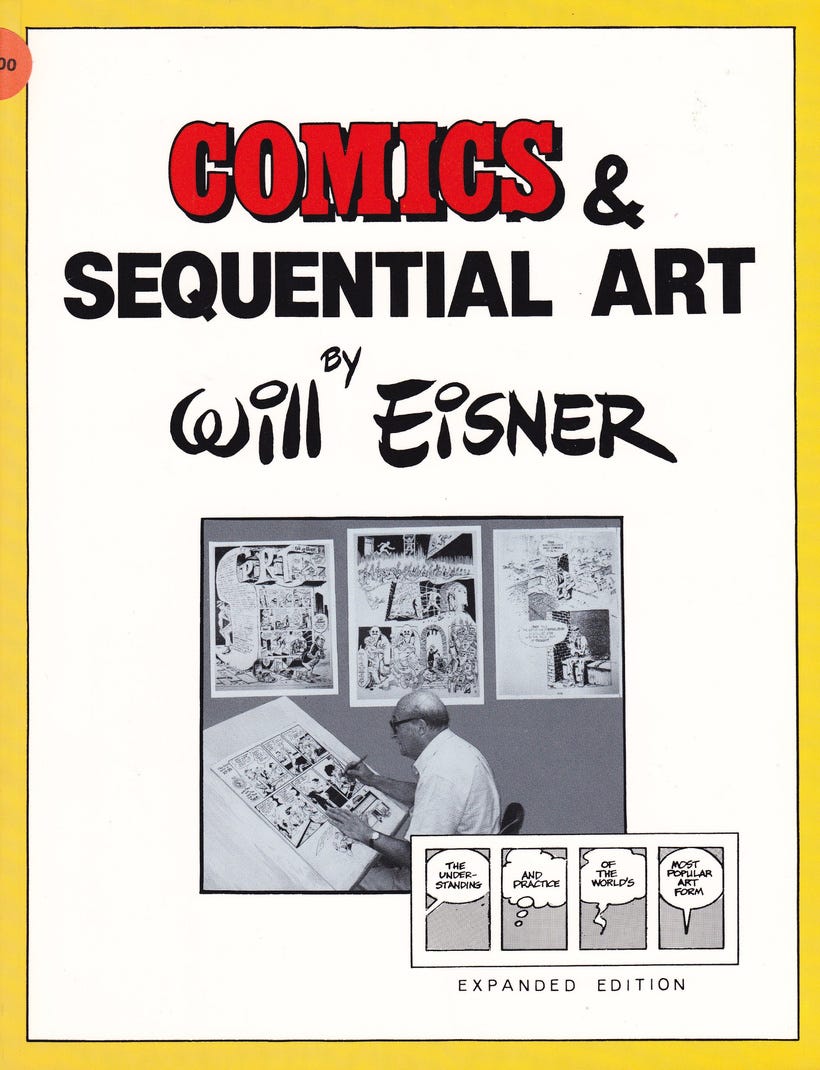
WILL EISNER is the godfather of sequential art. This version of the book (which for some reason was broken up in more recent times into two and three other books to sell more, I guess) has all you need to know about storytelling in comics and why it’s such a unique form. Unfortunately, people like myself are still flying the banner for this purity of form to not succumb to the “storyboard” approach to modern comics. Not only was Eisner a great storyteller he was also an incredible teacher. This book proves that.
When you’re done reading this, go out and read all his graphic novels. You’ll learn even more.
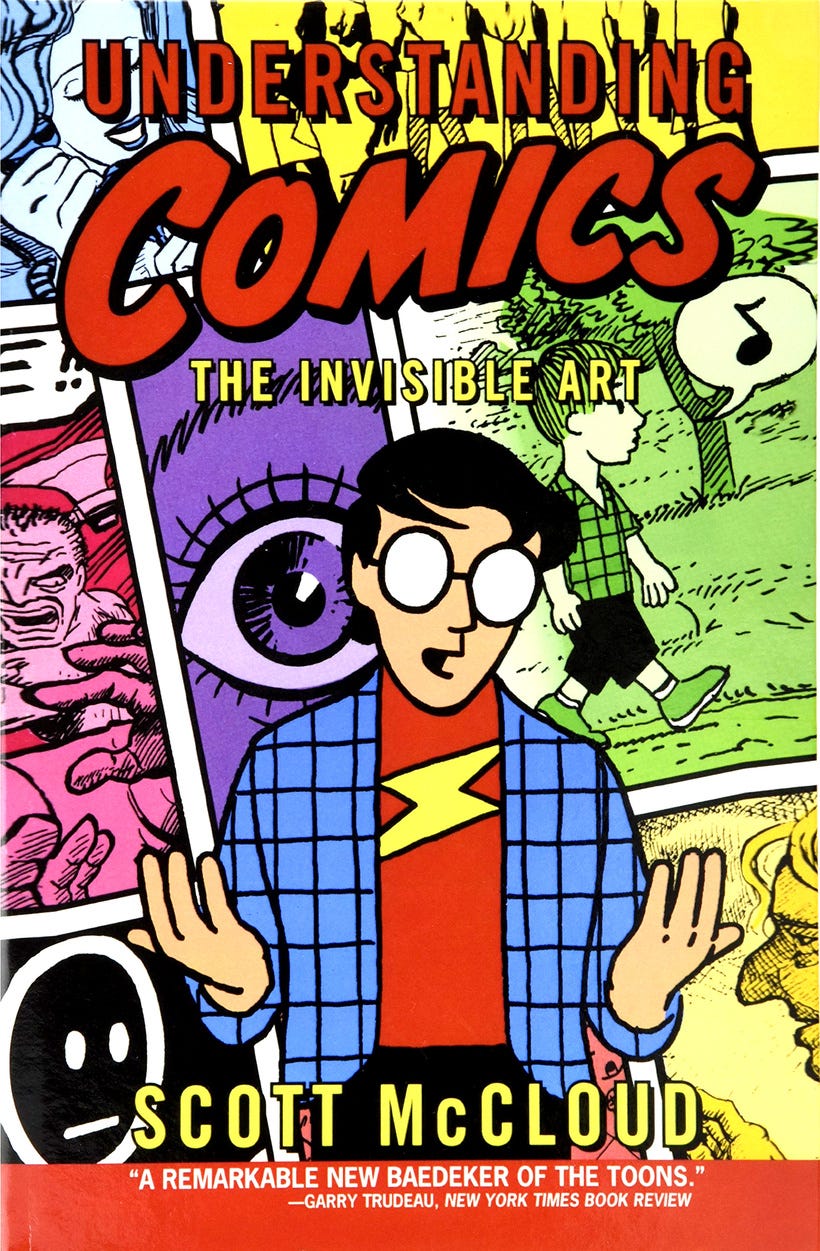
SCOTT McCLOUD is the young pup whose father was a blind rocket scientist (true story, bro!). Taking that same critical thinking approach to comics, Scott breaks it down so EVERYONE can understand the mechanisms of comics. It not only fills in some gaps that Eisner moved past but it also expands in other areas to give one a full spectrum of what comics are and what they could be.
His other books on comics are good, too, but this is the best.
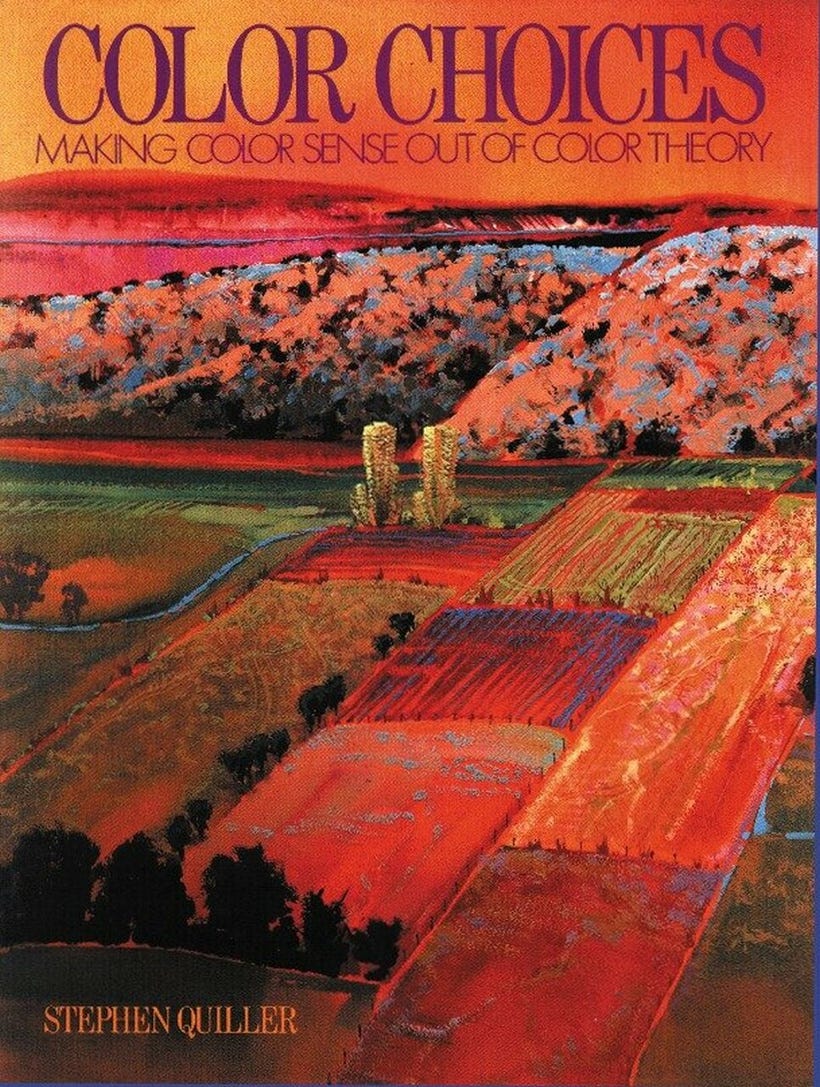
STEPHEN QUILLER is the first artist who helped me understand color...from a logical perspective. This is a very unique book in that it will, for lack of other good books on color theory in painting will tell you the brands/types of colors that can be mixed to create perfect neutrals.
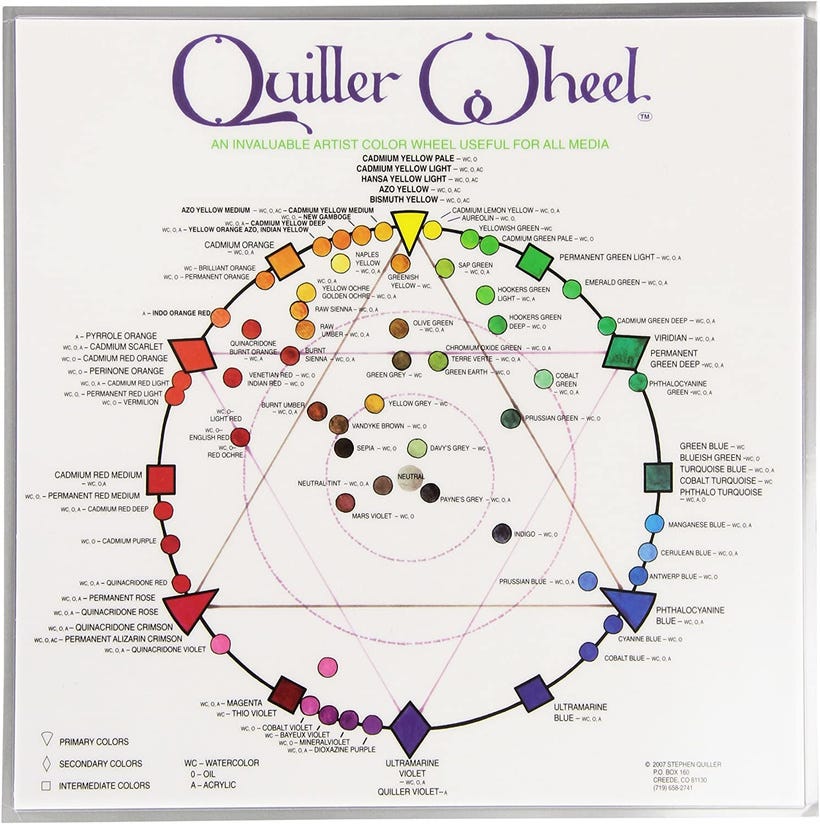
Personally, my color theory has evolved from this point and I look at painting differently. However, if you want to know that a Holbein Manganese Blue is the perfect neutral to a Winsor & Newtown Vermillion, this is the book to put you on the right path to help you make informed purchases. It even has a QUILLER WHEEL (see below) to show you what he’s talking about. The book is illustrated with how he uses colors and how he develops harmonies and the like. If you’re afraid of color...this will help dispel the fear.
Well, hopefully that helps some.
The thing to remember is, book recommendations are like people. The DNA is a unique mixture of what we know to be true to us. It’s a personal choice. Perhaps some of these books will speak to you while others do not. I’m more process oriented, I like to know how to do things CORRECTLY so I can question it and break from form. Some people are more intuitive, they may never read a book cover-to-cover. Still, if we are motivated by self-improvement, we’ll continue to seek the truth in new ways. And who knows...rereading old books will sometimes be just as illuminating the second time around.
I’m not much for quotes because I can’t remember the abstraction of language quite as well as color and shape. But here goes:
“When the student is ready the teacher will appear. When the student is truly ready The teacher will Disappear.”- Lao Tzu quote in Tao Te Ching
While experience is the best teacher, teachers can guide your way more directly. Books, in lieu of everything else is a resource that you can revisit time and again.
As for the photo of the red stairway at the top of this entry...it’s the Seattle Public Library, where my wife and I had our wedding photos taken by a friend 15 years ago. Libraries are pretty freakin’ cool.
=s=
P.S. This may or may not be a complete list. But it is the one that comes to mind.