

SELLING: What to CHARGE for YOUR ART
From Services to Physical Work!

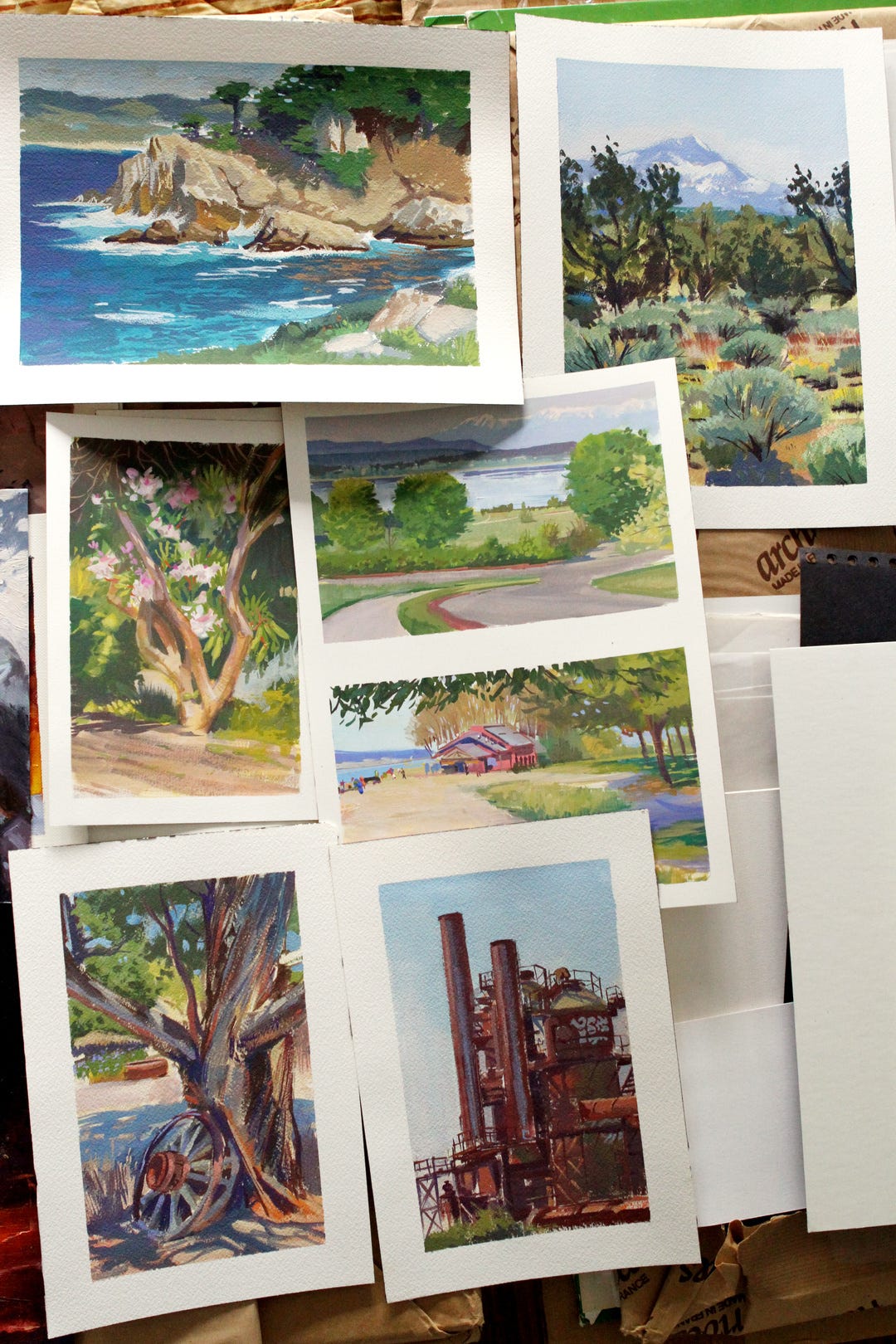
Years ago, before scanners and the ubiquity of digital art, clients assumed ownership of your final art. As if, you were working in their studio they expected to OWN YOUR FINAL ART. It was very strange. Even if you provided excellent scans, Chromoliths, or films you still had to mail in the artwork, at your expense.
They were in the business of owning assets; especially big film studios whose “vaults” are filled with an enormous collection of work from what I’ve heard. I had a friend who did a dozen or so collector plate illustrations and it turned out that since they were Star Trek that whoever owned the license was the final owner. The plate company just handed the artwork over to the studio. Bananas!
Prefer a downloadable PDF? Get it here.
As a freelancer, it’s important to note, in most cases, that you are providing a service. Unless the final art is a painting/sculpture/physical object in a movie, public space, etc., you’re pricing the time for the service provided and its reproduction rights.
That being said, if you do work traditionally, you can price the artwork however you like. Much of it depends on how attached you are to the final piece, your reputation or standing in the art world, the content of the final piece and its popularity in terms of the product or characters represented. These things can sometimes be hard to objectively understand. And in some cases, can come back to haunt you, especially if you negotiate poorly.
Take HARVEY ROSS BALL for instance. You might know his work. He seemed like a cheery sort.
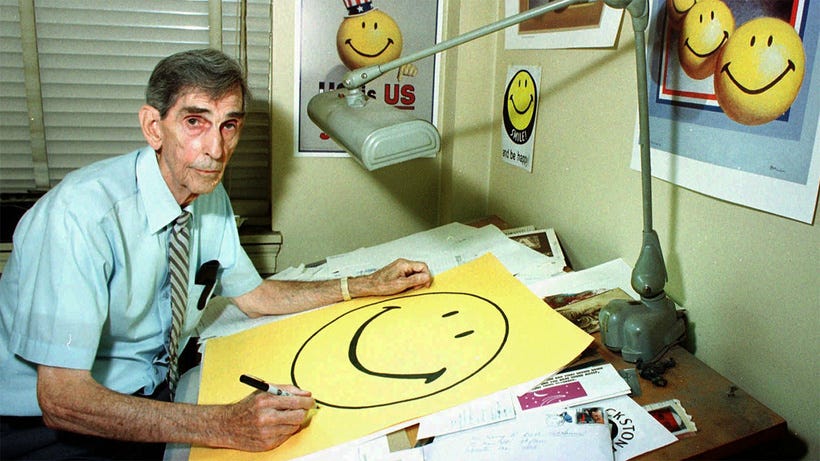
He let his creation go for $45, and a French company years later trademarked it to go and earn $100 million annually. Of course there are other extremes of this.
DAVID CHOE, a graffiti artist did some mural work for FACEBOOK in exchange for company stock whose net worth is in the stratosphere of $200 million+.

He didn’t have any crystal ball, but some could say he got lucky. Mark Zuckerberg could have screwed him over contractually, who knows. But it didn’t work out that way.
During the dot com boom of the early 00’s I traded services for shares and after 80 hours’ worth of work and several months later, the website went bust. So, these gambles and long game strategies more often than not rarely pay out.
But let’s get back to the heart of the matter. SELLING YOUR WORK directly.
Clients will sometimes really like a piece of work you did and have the capital to buy it from you. They may want it as a representation, a memento of a benchmark in their career, something they could look back on, years later.
One strategy I’ve used is taking what I just made for creating the work. So, if it was a $300 job, taking another $300 for the art isn’t out of the norm. Another strategy I’ve used is doubling what I was paid for the job to begin with, especially if you really like the piece and don’t want to just “give it away”. Charging $600, as an example, also works. BUT don’t forget to charge tax and shipping! Sure, services can be taxed but products are uniquely taxable, and you should take that into account.
But say you’re just doing a piece of art, a painting of landscape, a portrait or what have you, how do you price?
Keep track of your time. I know, it’s annoying. But it’s worth trying. Typically most of my paintings from life I can complete in 3-4 sessions of 3 hours each. Do I charge my freelance rate? I don’t know...maybe. Where does that number come from?
Sure, we’d love to make a lot of money from our work, but there are things to keep in mind. Here are a few:
Size of the work- Large paintings take more paint costing you more.
Subject- Portraits are more valuable to people if the subject is obscured
Colors- Paintings with more Cadmium paint cost you more to make
Theme- Popular themes can be very attractive to customers
Execution level- a study or sketch vs. a final executed piece
Granted, I’m mostly talking about paintings because they can be more involved. But I think the basics apply across the board.
Understand what’s going into a piece and how much you love the end result. Stuff you want to get rid of you may charge less. Stuff you love, you may require a king’s ransom.
What may be helpful, too, is doing a bit of research. Find galleries who have prices and similar art styles, sizes and the like and figure out what they’re selling those paintings at. Cut that price by half and that would be your income off of that painting. Does that work for you? Maybe it does, maybe it doesn’t. Gallery work is a long game. It requires patience and hope, that someday you will have built a groundswell of popularity through interviews, sales, products and exposure. Much of it is on you, getting a gallery behind you can help.
As I’m not as familiar with gallery work as of yet, I can only offer a few ideas from what friends have experienced. Galleries tend to take between 50-70% of what you would make on a piece. 70% is criminal, so be wary of that. A lot has to do with their overhead, location, recurring clientele and other factors that are beyond my purview.
In the cases of galleries, you are responsible for framing, sometimes packaging, shipping and insurance, to get the work to the gallery. When it’s in the gallery’s hands they are responsible for the work, and their insurance should cover damage, theft, etc. They then are responsible for shipping the work at their cost back to you. Sometimes galleries hold onto work well beyond the showing of it as part of their catalogue, especially if they represent you.
I had one friend who shipped paintings over to England, costing him well over $3k and never sold a one. And they never shipped the paintings back either because the work didn’t make them enough money to do it. They’d be at a terrible loss because of the size of the gallery. Yet another trap that can spring on you. The same artist showed work at a local gallery and found out the owner wasn’t paying him. They were in financial straits and kept the money from the sales. At some point they rectified everything and got back on track. That’s why having a gallery is more or less a partnership in business. Except the gallery has a lot of those and you have the one…if you’re lucky.
Selling art can be a complicated business. In college, Lee Capin’s book THE BUSINESS OF ART was helpful in navigating what I’d come in contact with as I entered my career. Another worthwhile book if you’re thinking of a career as a gallery artist is ART/WORK. I found it incredibly valuable for opening up my mind to that world.
Arming yourself with information is valuable. Experience is valuable. Talk with gallery owners, talk with other artists, and see if you can’t get them to open up about the finer points and details of buying and selling work. You might be surprised by the answers.
But hopefully this sets you on a path in the right direction.
=s=