

STOP Inking Comics and START Inking Light
How to INSTILL LIFE Back into YOUR COMIC WORK

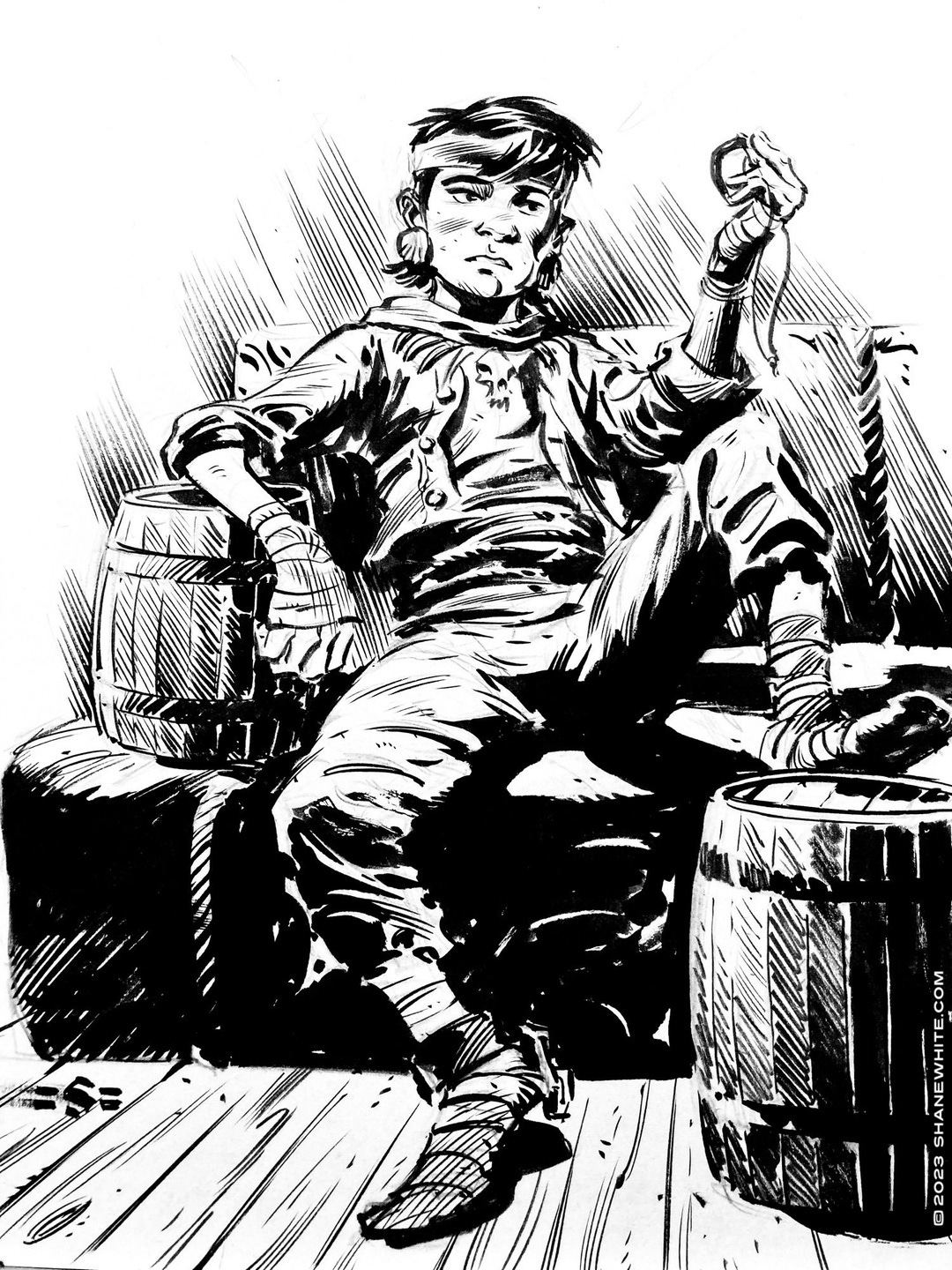
That was what I was telling myself the entire time I was working on the above piece. I’m not sure why it was revelatory, but a simple mental shift can really be a helluva thing.
I was getting tired of the same-old same-old and needed to reexamine some of my favorite pieces of comic art that on my Pinterest boards. It got me to thinking about the evolution of blackline, something that was born out of illustration. So, like a mixtape I thought I’d try to put in order (more or less) it’s evolution in comics.
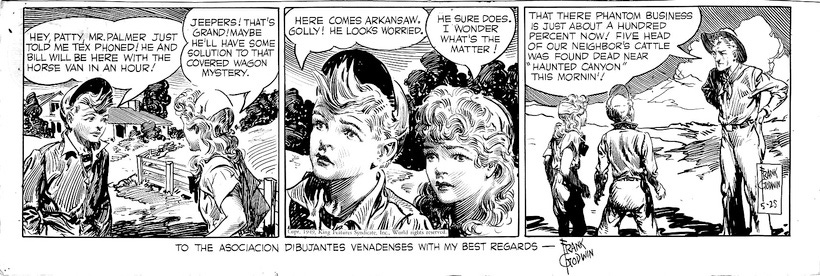
First of we have FRANK GODWIN‘s RUSTY RILEY strip. He did another strip a bit later called CONNIE and was also a well-known painter, illustrating several novels. I think my first introduction to his work was for both Treasure Island and Kidnapped! two sea-faring pirate adventures. His sense of realism in terms of lighting has always been stunning to me. While his characters seem a little stiff here, his pen and ink work flowed like some of the greats of his era. His work did eventually loosen up.
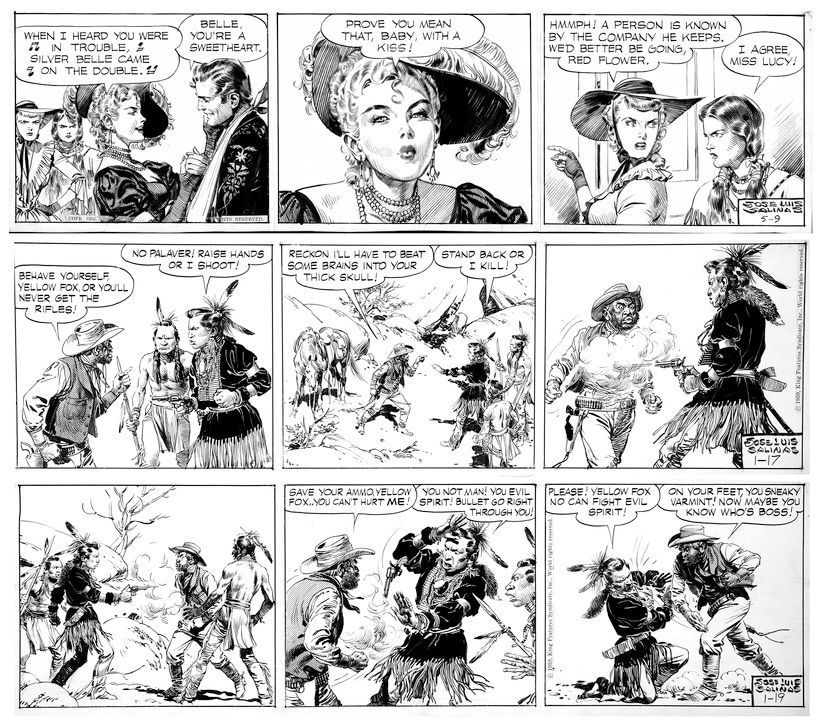
Next up is JOSE LUIS SALINAS‘s CISCO KID. His characters have a bit more liveliness than the aforementioned strip. I don’t know a lot about the strip or Jose but he’s definitely further investigation. The books of his work I’ve seen a very poorly printed, so find what you can online. There’s something in his work that looks like it might have influenced artist, John Severin, especially the work in the bottom strip.
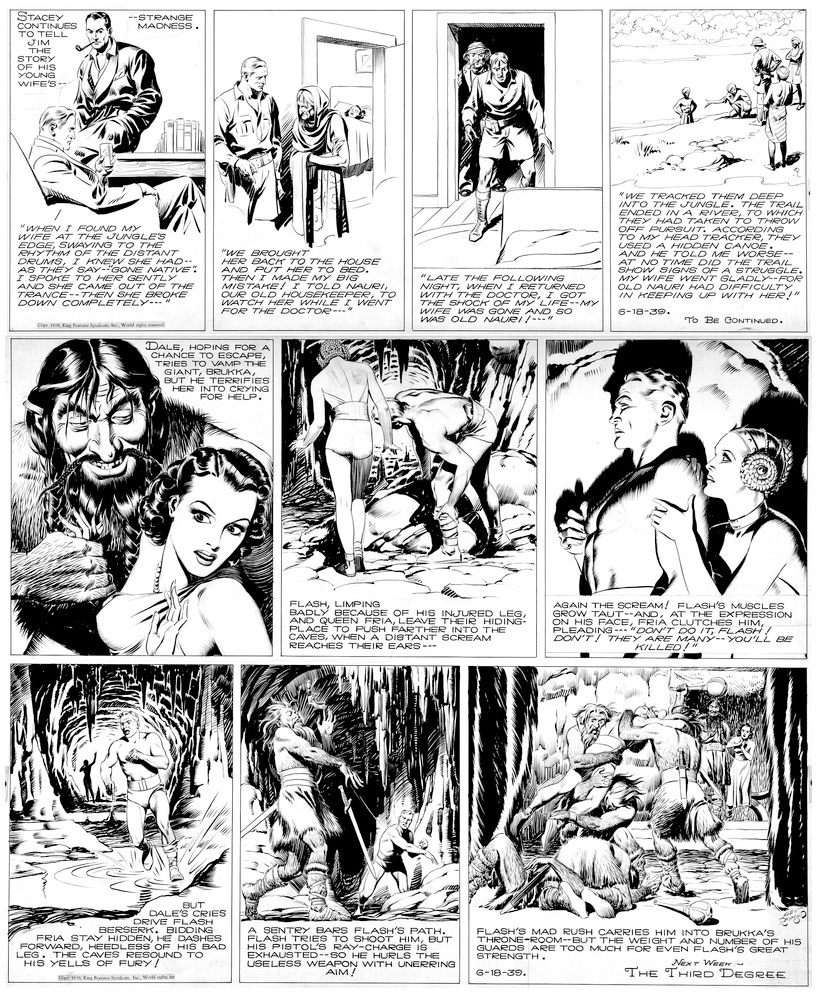
ALEX RAYMOND is a curious beast. A mega-talent who was hired to come up with not one, but three different strips came up with (along with ghost writer Don Moore) FLASH GORDON, JUNGLE JIM, and SECRET AGENT X-9. Below you can see how his style morphed with the times, starting with the classic strokes of old illustrators and eventually introducing more solid spotted blacks.
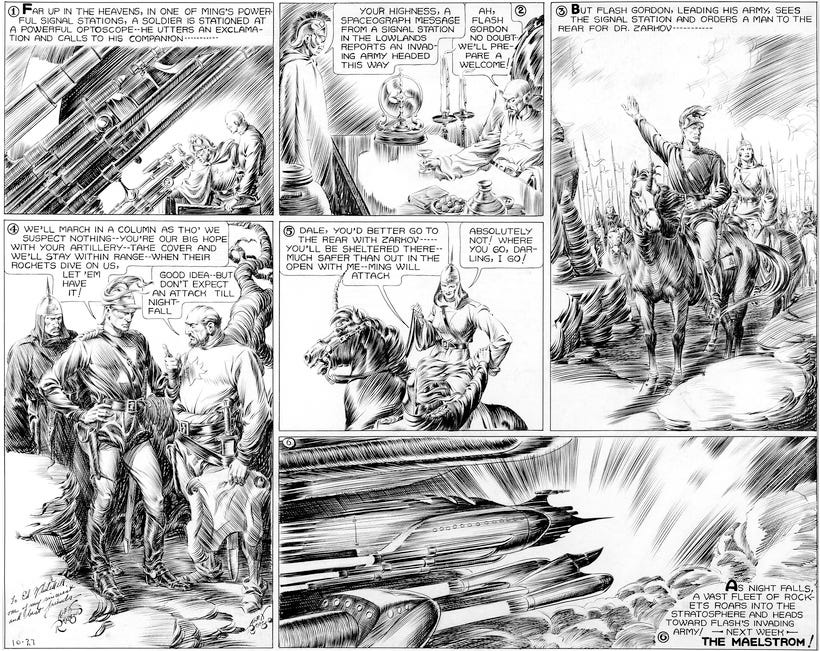
The contrast between the above and below pages is stunning, but fans of the strip would not have seen the transition which took place over the first several years of the strip.
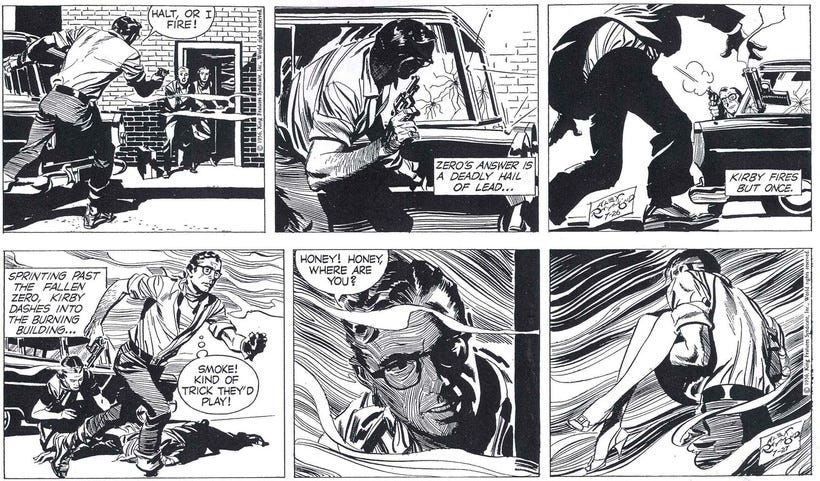
Raymond’s SECRET AGENT X-9 still focused on lighting but used harsher shadows to weight the strip. I like how the bottom set of panels harkens back to the older days of line to illustrate smoke in this instance. Raymond was known for having used models for much of his work, which also helped cement the realism he wanted to convey.
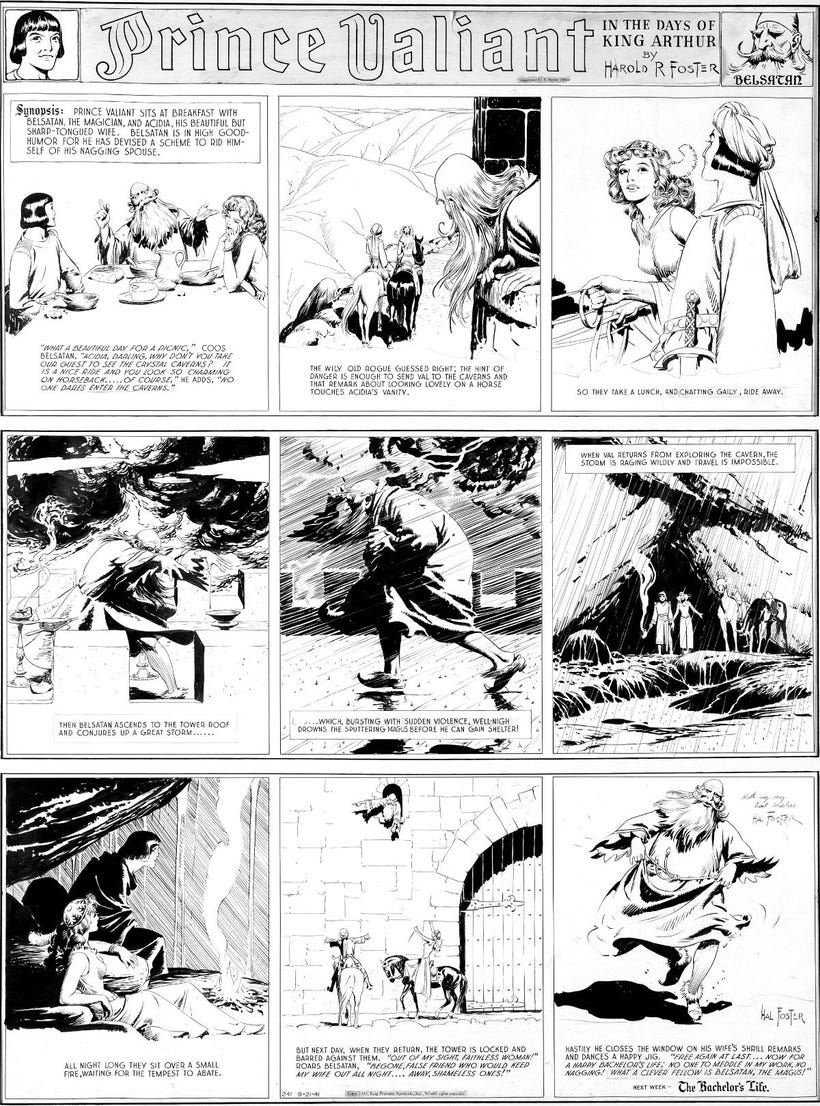
HAL FOSTER was another comic strip artist who did a lot in a way of pushing the medium. His steadfastness when it came to research made you believe that a real history was unfolding. He wasn’t afraid to let negative space help the page breathe. This was back in a time with the Sunday Comic Pages were nearly 18” x 24”, so the audience was getting some Big Screen comics for the time.
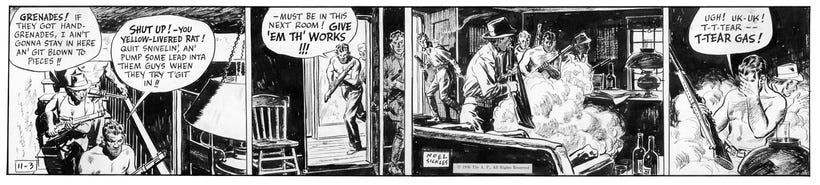
NOEL SICKLES was a major influence on comics. While his was a simpler more direct approach with strips like SCORCHY SMITH he was revered for how he handled lighting scenarios and his storytelling. Guys like Milton Caniff (Terry & the Pirates | Steve Canyon) and Alex Toth (Hanna Barbara) really admired Sickles’ approach.
MODERN ERA
Even though by the 1960s comics were again taking another turn, guys like NEAL ADAMS were bringing back the techniques of using lots of photo reference that was a necessary part of illustration. He married filmic staging with the dynamism of comic storytelling while using illustrative brush work. Though in this example it’s TOM PALMER who brings his top-form inking game into the mix.
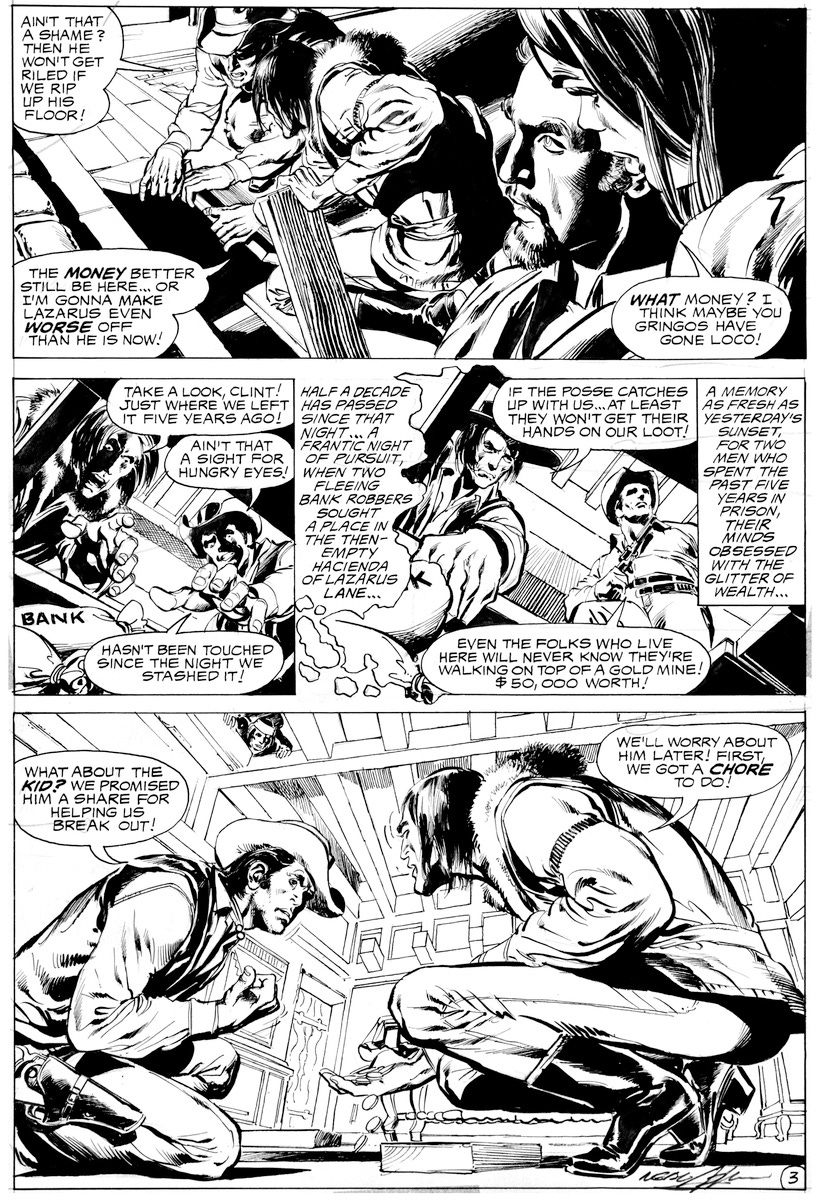
It’s not to say that modern artists had forgotten the days of old. In fact, Argentinian comic artist JORGE ZAFFINO tended to ignore any one approach to capturing light and mood. His pages were sometimes thick with white-out until he would get what he wanted.
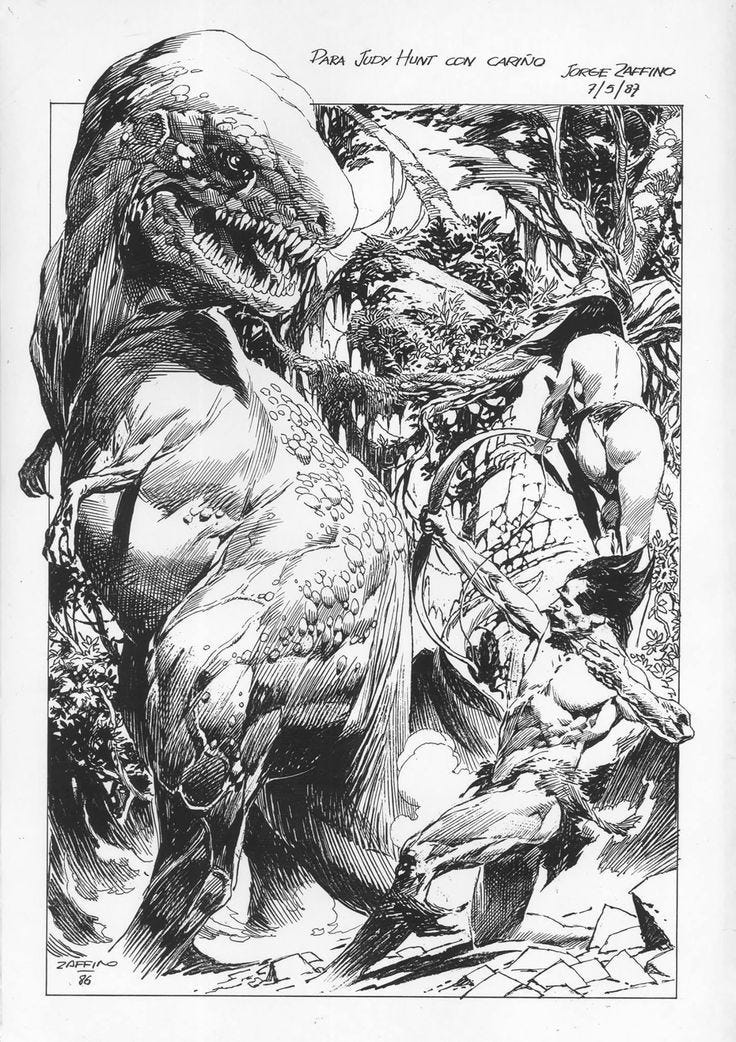
If you check out the differences between the page above and the one below you can see Zaffino REALLY dialing in how he wanted the light and his subjects captured. The contrast in the last two panels below is stunning for their perceived realism.
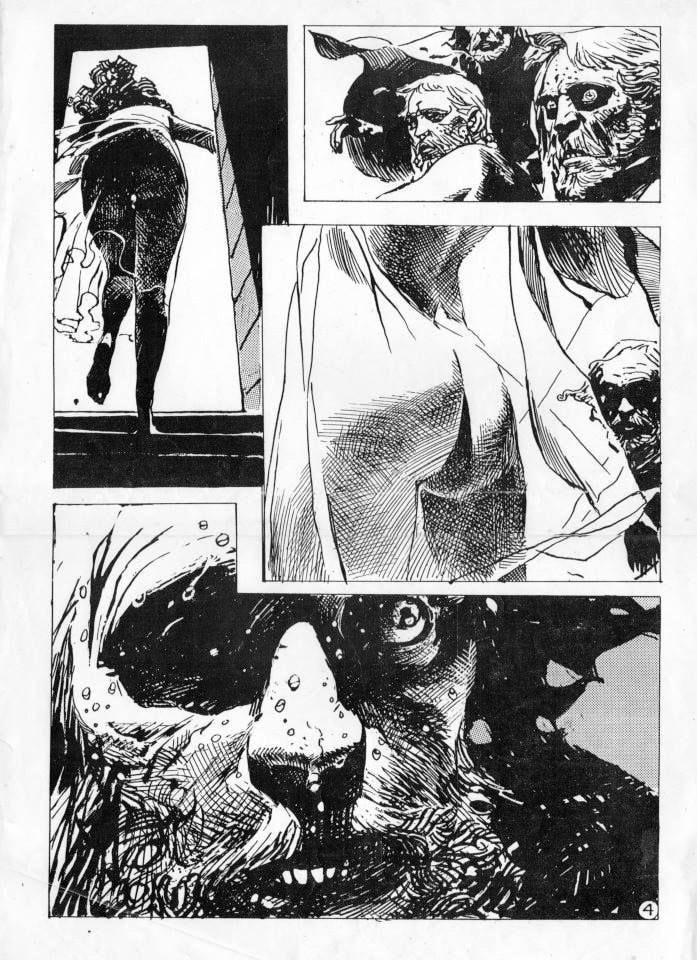
GARY FRANK is not only a purveyor of understated comics like some of his Superman work but when he wants, he really gets into the details using kind of a ‘dead line’ to capture light. It’s not as bouncy as something inked with a quill or brush, but it still reads incredibly well, making me wonder, “I hope he was paid well for the time put into it.”
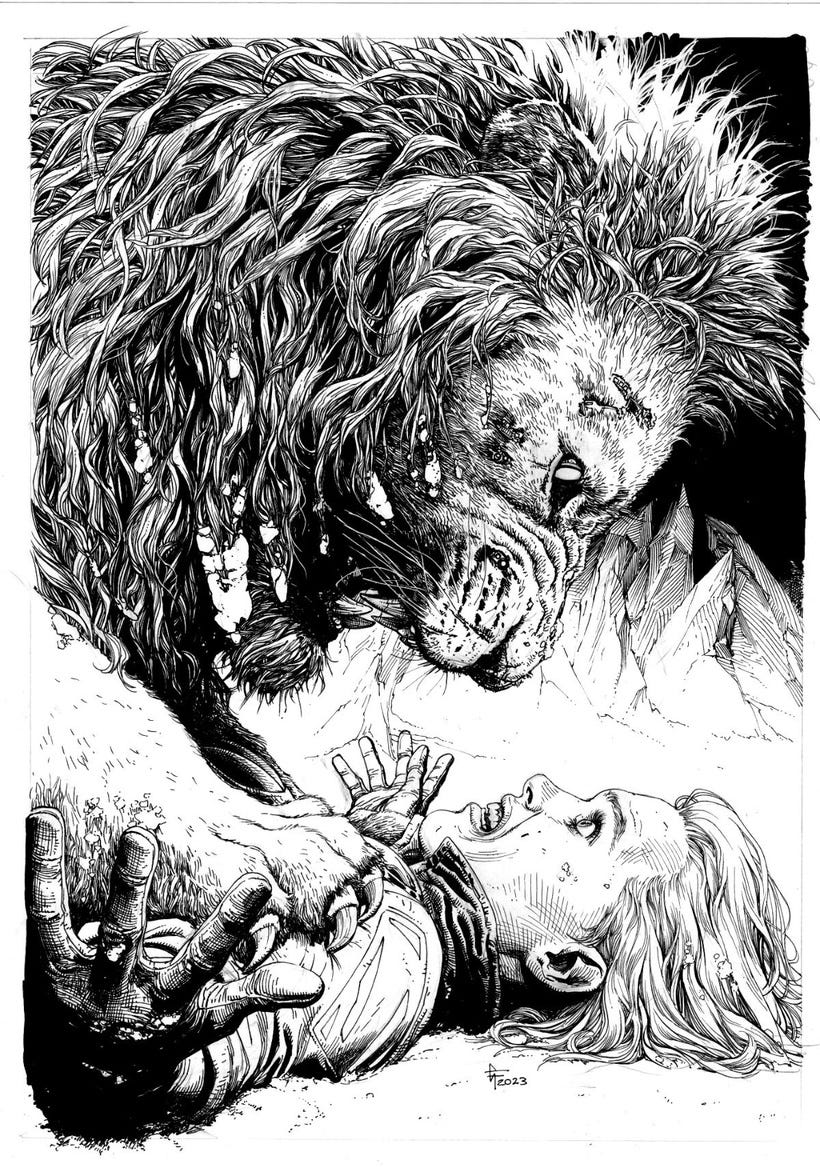
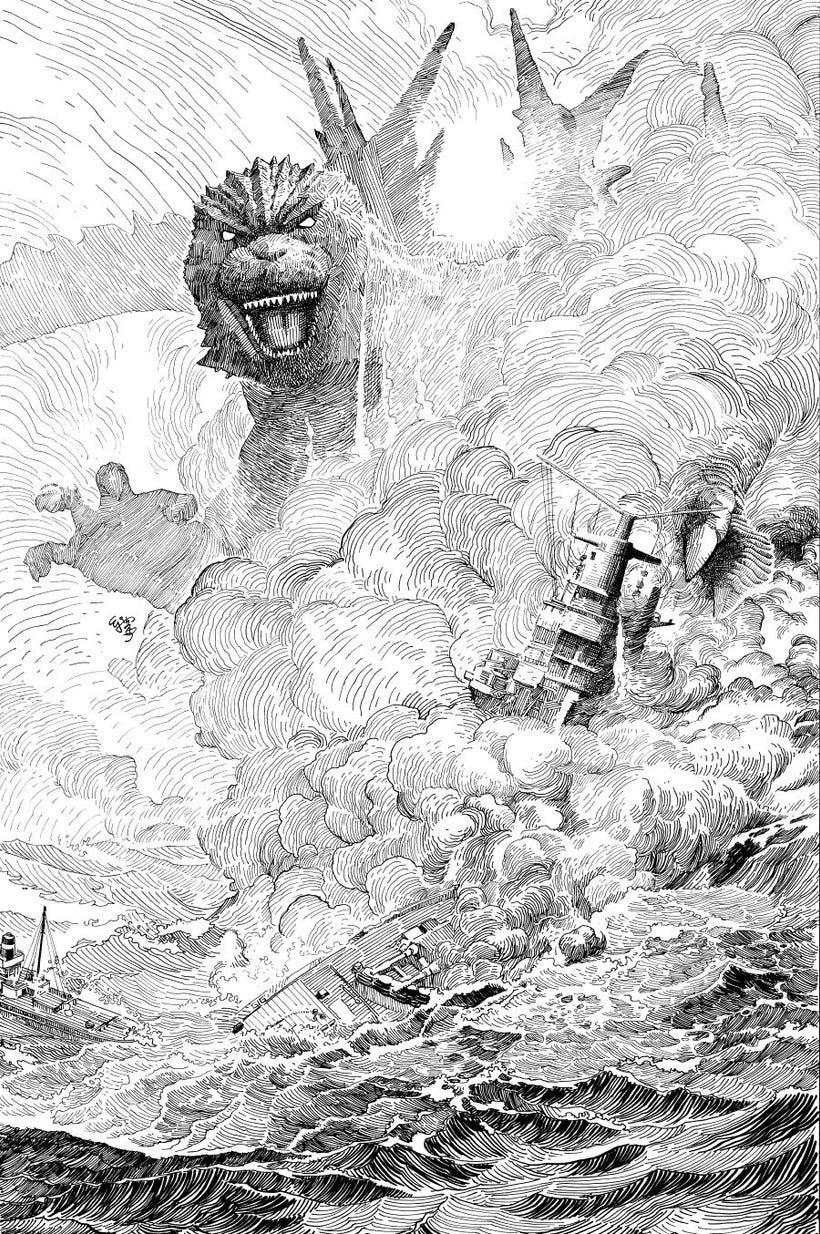
E.J. SU may be a name you haven’t heard much of. He did a book years ago called TECHJACKET with Robert Kirkman, and I think he has something new coming out later in 2024. I recently saw this piece and thought this is a great example of how going back to the illustrators of old can pay dividends in capturing light. The scale of the line and the amount of noise and depth help focus the eye where he wants you to look. If you SQUINT, you can really see the points of interest and how well they read.
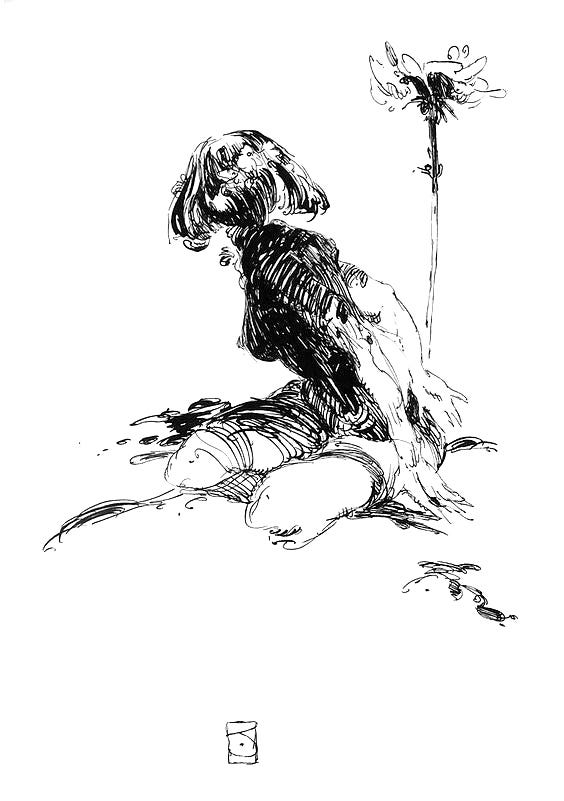
JEFFREY CATHERINE JONES was a phenom on many levels. I just watched a documentary on her life which is available on Kanopy. I wanted to put her work in earlier but she’s a modern artist with an old spirit. Much like her, a bit difficult to categorize and yet the work is undeniable and honest. She reminds me to let go and trust myself. I suppose out of most artists, this is where I’d like my work to land...and have a sense of effortlessness.
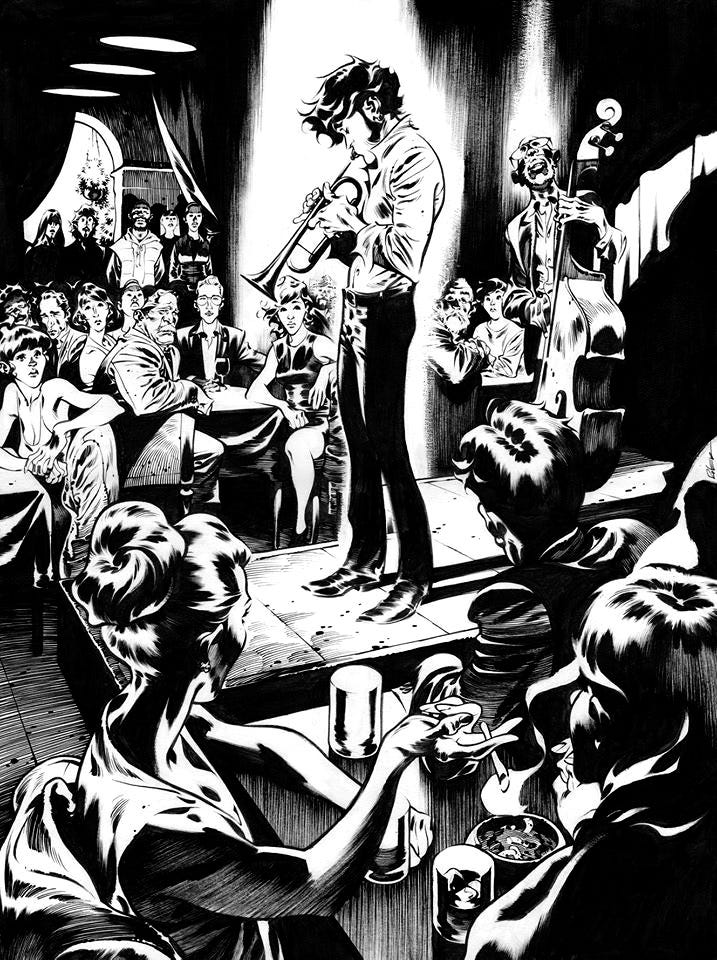
ROGER IBANEZ is a great comic artist who does a book called JAZZ MAYNARD. I picked up the three volume over-sized collection when I was in Angouleme, France back in 2013. I was dumbstruck how stylish his shadow-grouping was. He leaves lines unconnected asking the viewer to participate. He has a serious handle on the material and it’s people like him that make me feel like I should have made better life choices.
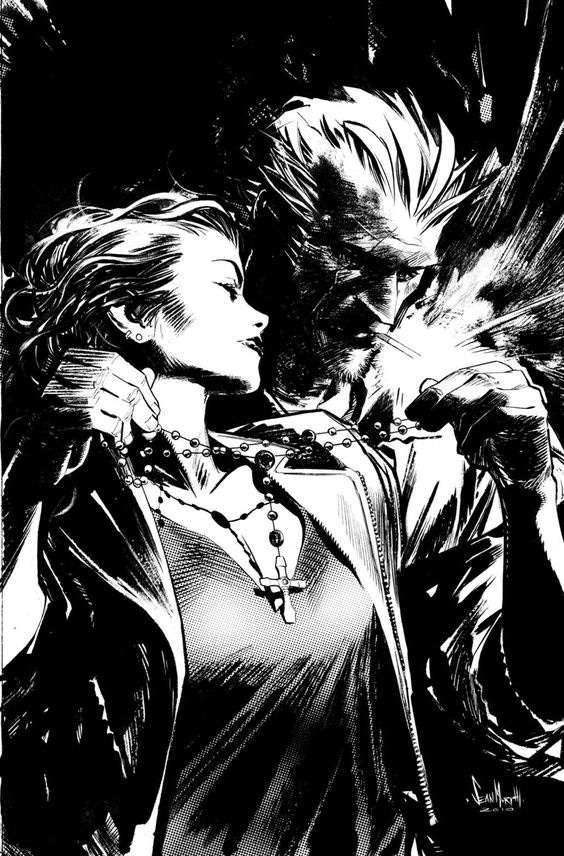
SEAN GORDON MURPHY is another solid artist in terms of his execution. His storytelling is second to his craftsmanship, but he really knows how to put over light in his work. You can see the Zaffino influence, but he also does other interesting things with dry brush and halftones. Definitely someone who comes off as hardworking and fearless.
Lastly MARK SCHULTZ is a singularly minded artist who is unapologetic for the amount of time it takes to do the work that needs done. He’s been working on a final installment of Cadillacs and Dinosaurs (Xenozoic Tales?) for years now. Something tells me he’ll be able to retire off it if it’s done as well as these one-off commissions have been done. I’ve tried to buy a commission from him repeatedly but can’t seem to get past the wall of his dealer who says he’ll let me know when Mark is open to do that work. That was over a decade ago.
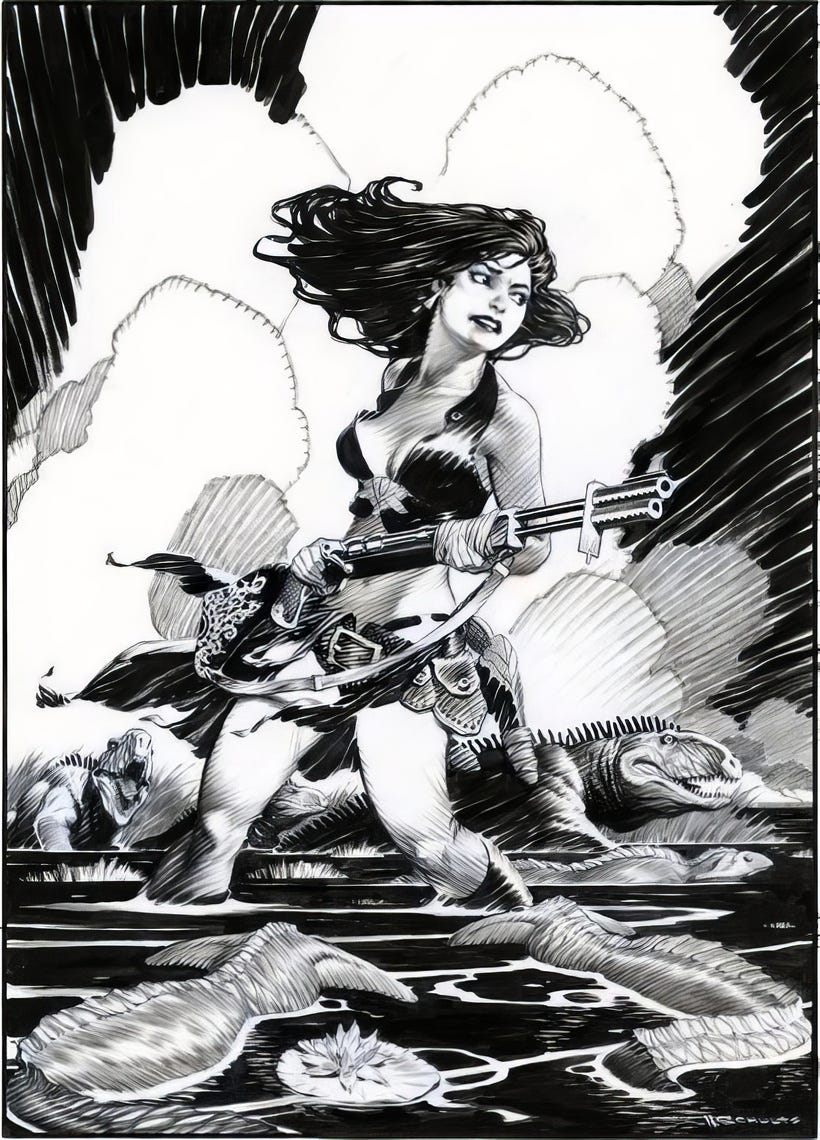
It’s easy to feel demoralized by such great work, but it often is a kick in the butt to remain dedicated in our craft. I know I’ll revisit this page again as it’s a solid reminder of what level I’d like to be working at. I may never get there but having a solid constant like these creatives will be a north star in case I ever am loss in the darkness of doubt.
=s=