What Happens When Your DRAWING HAND Fails?
How to REASSESS the Landscape of YOUR CREATIVITY and Move Forward

Back in 2010 I started having issues with my drawing hand. Actually, it was the wrist, and it wasn't carpal tunnel syndrome. It lasted for a year causing difficulty in my strength training and art. So, I went to a specialist, who drove a needle half-way through my wrist, injected a dye solution and had me lie down in an MRI machine facedown with my armed raised over my head.
The results were mixed. She found a black area where the nerves were pinched by the bones. A surgery may or may not fix it and it was my decision as to what to do next.
Prefer a downloadable PDF? Get it here.
The whole time, my concern for the future as an artist was mounting. Even though I'd been using my left hand more and more for sketching and drawing, it would take years to get even close to where my right hand was. And that's when I started down the path of photography.
RESEARCH and DESTROY
As you can imagine opening up the proverbial can of worms on photography was daunting. There was soooo much information out there now. Luckily, I found a great starting point with DIGITAL PHOTOGRAPHY REVIEW. But even that was an enormous amount of reading. But I learned a lot about the language and what to look for in a camera. Still, it brought up a lot more questions than I'd anticipated:
Did I just want to be a photographer in my later years or did I also want to shoot video?
Did I want to do this for a living? Shoot weddings? Products? Models?
How much is this going to cost?
At the time, I was about to turn 40. I felt like I could probably get a good enough at it in the next five to ten years and perhaps answer some of those questions along the way. I wasn't about to worry over them...except maybe the last one.
First things first, I started researching cinematographers as well as digital film makers. The Canon Mark II 5D was the hotness at the time and local filmmakers like KEITH RIVERS were winning awards and at such a young age, too. His was the typical, "local kid makes it big" story. But his work captured my attention. The quality of the 5D had a look that rivaled expensive cinematic cameras because of it's depth of field (DOF) that you could see in real-time on a monitor or the little 3" back screen.
Around that time as well, I heard about guys like SHANE HURLBUT, who you may remember famously for disrupting Christian Bales performance in Terminator Salvation causing him to go ballistic. Another director on the scene was VINCENT LAFORET, an early adopter of the Canon DSLRs. [NOTE: DSLR stands for Digital Single Lens Reflex Camera.]
Upon seeing the results these guys were getting I was becoming increasingly intrigued with the video side of things. I've always been a film fanatic! To the point where I used to be able to tell people after watching a about 15 seconds of a film what year the movie came out and the title...and I didn't even have to have seen the entire movie (that skill also ended when I turned 40).
A lot of this "skill" had to do with the film grain, film stock or the processing of the film. It's something that stuck with me as a kid, because I watched a lot of television and would memorize the TV guide. For instance, color film came into mainstream in the late 40s early 50s and the color was juicy, like Kodachromes of that same period. The 60s were similar but then there was more variation in hue and subtlety. The 70s colors seemed to be high-contrasty and a lot of browns and golds. The story is, a lot of the filmstock from that period was rather poor and was degrading a decade later. The 80s had a lot of "rock star" lighting using every color under the sun. So...as you can imagine, these touchstones stuck with me.
Anyway...after a bunch of research (Blogs, Youtube, etc.) I decided I needed to rent some gear from Glazers Camera. They supply a lot of gear for commercial photographers and directors. Having researched a bunch of things I wanted to test both the Canon Mark II 5D and the Canon 7D bodies with several lenses. I picked up other gear that I didn't end up purchasing, but I'll try to avoid that rabbit hole so we can get through this. All in, I spent $600 to rent everything. Luckily, I could write it off at the end of the year.
I had one weekend to play with them and ended up shooting a few videos. For SUNDAYZED, I used both camera bodies along with a 100-200mm long lens and a 20-70mm lens. Both were L-Glass lenses and some of the best on the market at the time.
What is L-Glass? L Series lenses are demarcated by a red ring around their focusing ring. They're made to resist weather, dust, and water, making them compatible with outdoor photography. They feature super optics and high-quality glass elements that minimize distortion, aberration, and other negative optical characteristics.
I also took the cameras for a spin around the neighborhood. But being a February, it was pretty cold, and time was running out. But I had all the information I needed. These cameras did amazing work with natural light and good lenses were going to be key.
So, here's the gear I chose to buy in 2010:
*CANON 7D- Very sturdy body, good weather sealing and native 24fps format
50mm L Glass- A bit better portrait lens that feels a little more natural than a 35mm
*20-70mm L Glass- It offered options for wide angle at low light
100-200mm L Glass- Satisfying reach which helps flatten viewing planes (more on that later)
Rode Mic w/ Gimbal mount- for in-camera "run and gun" audio recording
*Zoom H4N audio recorder- I can also mount this on the camera if I want better sound
Glidecam 2000- for handheld steadicam work
Sennheiser Wirelss Lav EW 112p- for wireless audio setups
CF-CARDS- 32gig several. The faster the card the better.
Extra Batteries
Cleaning tools
Lowe Pro Camera bag to hold everything
Essentially, I wanted to be a one-person production company. I wanted to be able to do interviews or filming that required very few people. My investment came to about $12,000.00!
Believe me, even though I knew what I was getting into, it was still a shock. But boy oh boy, I was surely going to have some fun.
Here's why photography is so important to me. When shooting people I'm wired to anticipated moments of human behavior in ways I'm normally not. When shooting architecture or landscapes, composition choices just have to be grabbed out of thin air. After only three straight hours of shooting your art will get better...it just does. Your eye will lock into easy compositions and your sense of light and dark is at your command.
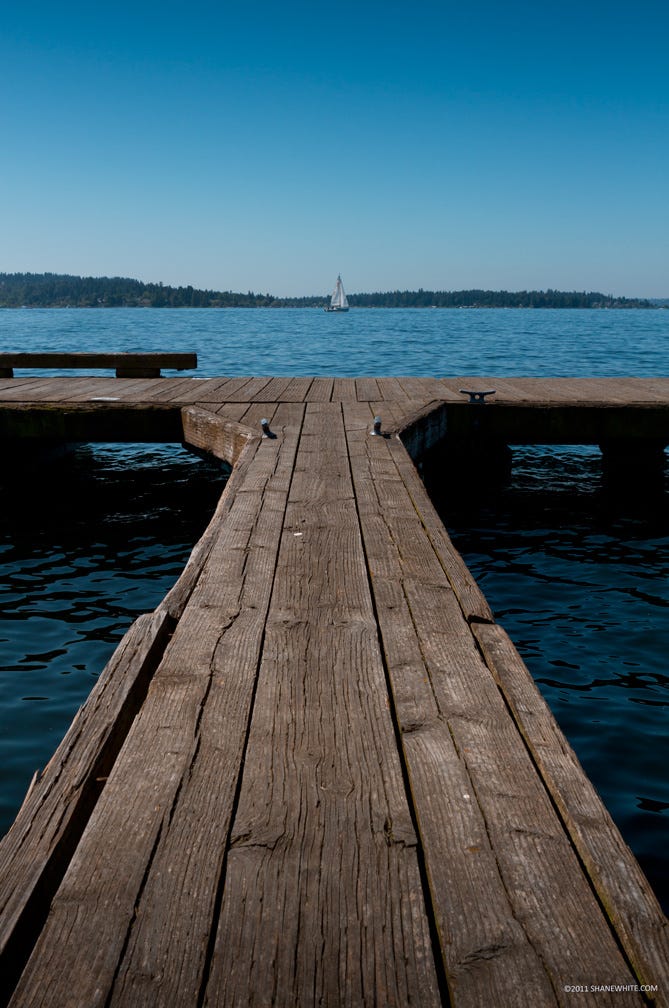
You can tune into lighting scenarios that you might not have seen at first. In the digital processing phase where the artistry happens, you can make even greater choices to render your images truer to your vision.
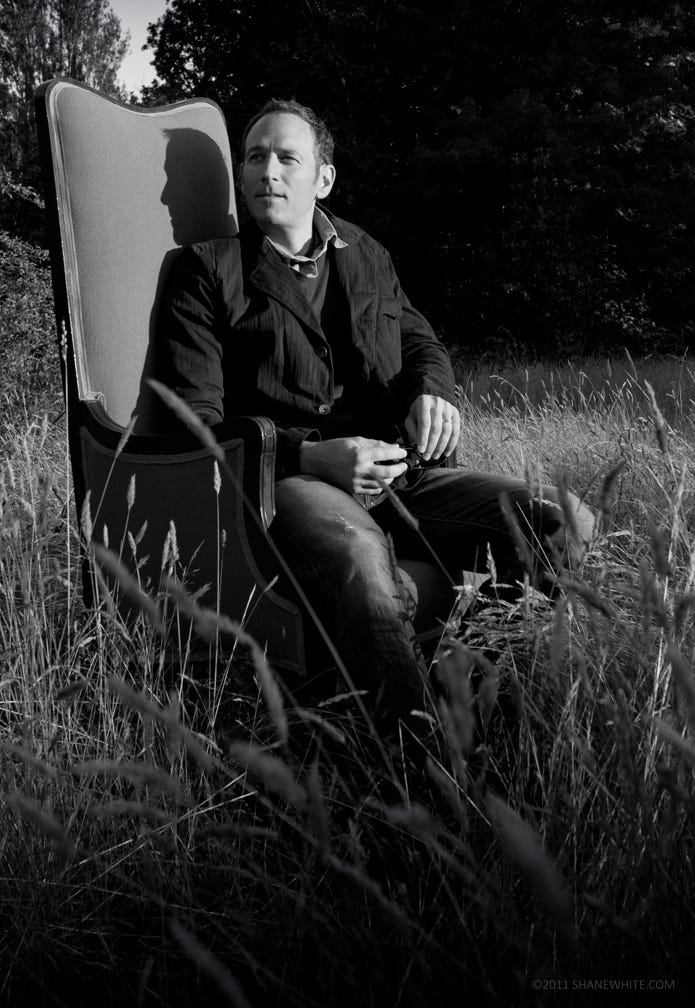
While camera-phones are an extension of this, they're not the whole picture. Interacting with the gear, dialing in your exposures and lighting can expand your capabilities in untold ways. I was starting to think I might have a future beyond drawing if my wrist fails completely.
What I ended up doing was something I hadn't considered. I went to an acupuncturist to help with my insomnia. I'd tried everything and I was narrowing in on acupuncture and hypnosis. The lady administering the needles asked me if there was anything else I wanted to address, I casually mentioned my wrist. She hooked me up to some electrodes that sent little pulses of electricity through me.
After about six sessions my insomnia was still the same, but my wrist pain was gone. Who knows? Maybe it worked or maybe it worked its way toward healing on its own. I don't know, but I was glad to have my ability to draw AND I'm glad I have some competency in a new area of creativity that I never had before. It's expanded my output and ability to share videos and artwork in new ways.
Of course, a lot of the above equipment is older now. New products have come into the marketplace. My friends and I have been making films on a more regular basis not only using Super8 cameras but also the line of Sony a7 cameras that have come out. They are a lot of fun.
Hopefully some of the above information will help. The gear with the (*) is a good basic setup. I also have a pair of Lowell Tota lights on Manfrotto bases with a couple of cheap umbrellas to soften the light. You can get things like a softbox or a beauty light if you're considering more portraiture stuff. Newer and Aputure make some inexpensive LED lights that throw a lot of wattage. A reflector is good for bouncing light around, especially on overcast days. Investing in a good tripod with a fluid head is also something I've yet to do. I have some older video tripods as well as a carbon-fiber tripod with a gimbal head for my painting setup that I use for filming sometime.
I understand all this terminology might seem new, but trust that you'll pick it up quickly enough when you take that first step.
As a side note, years later I ended up illustrating storyboards for Keith Rivers who was shooting a commercial for one of my clients. Having followed his work, it helped communicate quickly and clearly his shooting style.
Anyway, good luck on your journey!
=s=